
2026 US Job Search for International Students: How to Crack AI Interviews and Cross-Cultural Behavioral Rounds
2026 US Job Search for International Students: How to Crack AI Interviews and Cross-Cultural Behavioral Rounds

The 2026 US hiring landscape presents an unprecedented dual hurdle for international graduates. With tech giants and multinational corporations enforcing tighter hiring budgets and strict visa sponsorships, the margin for error has dropped to near zero. Concurrently, human resources departments across North America have heavily institutionalized automated video screening and AI-driven conversational bots before candidates ever meet a human hiring manager.
For F-1 visa holders relying on Optional Practical Training (OPT) timelines, succeeding in cross-cultural behavioral interviews has become the ultimate career gatekeeper. International students frequently possess strong technical coursework and high GPAs, yet struggle to articulate value within the subtle cultural nuances of American corporate settings. Understanding modern interview dynamics and adopting targeted AI simulation tools can fundamentally bridge this divide.
2026 US Job Search Realities for International Students Facing AI Screenings
Navigating the US employment landscape requires an honest appraisal of the systemic constraints and cultural expectations governing the current market.
Compressed OPT Clocks and Automated Candidate Filtering
International graduates face relentless regulatory clocks. STEM OPT allows up to 36 months of practical training, but the initial 90-day unemployment limit creates intense anxiety immediately post-graduation. To process hundreds of thousands of applicants efficiently, corporate talent acquisition teams rely on modern applicant tracking systems (ATS) coupled with asynchronous AI video screening platforms. Candidates who fail to present structured answers within 60 to 90 seconds are eliminated automatically before any resume human review takes place.
The Nuances of American Behavioral Interviews
American corporate culture values initiative, constructive dissent, and measurable business ownership. In contrast, many international scholars are conditioned by academic backgrounds that reward modesty, collective consensus, and theoretical rigor. When faced with questions such as “Describe a time you disagreed with a colleague,” international applicants often downplay interpersonal friction or provide overly humble narratives. American interviewers, however, evaluate these prompts to measure emotional intelligence, accountability, and persuasive communication.
Linguistic Flow and High-Pressure Cognitive Load
Conducting high-stakes interviews in a second language significantly magnifies cognitive load. Under intense interview stress, even fluent English speakers encounter momentary vocabulary retrieval latency or resort to rigid textbook phrasing. This verbal hesitation is frequently misinterpreted by algorithmic evaluation models or hiring panels as a lack of subject-matter conviction or poor cultural adaptability.
Deconstructing Cross-Cultural Behavioral Interview Rounds and Upgrading to STAR-C
Surviving competitive hiring rounds requires shifting from superficial storytelling to dynamic, high-impact competency structures.
The Shortcomings of Generic STAR Narratives
While the traditional STAR method (Situation, Task, Action, Result) remains widely taught across university career centers, it often produces formulaic, flat responses when applied by inexperienced candidates. Modern evaluation scorecards in competitive US firms demand explicit commercial awareness and quantifiable operational outcomes.
Conventional Model:
Situation -> Task -> Action -> Result

Modern Strategic Model (STAR-C):
Context & Challenge -> Objectives -> Specific Individual Actions -> Quantified Impact -> Commercial & Business Value (Commercial Impact)
The enhanced STAR-C framework ensures that your technical execution is explicitly tied to organizational priorities, cost reduction, customer retention, or cross-functional efficiency.
Common Pitfalls Among International Job Seekers
Our platform metrics indicate that a large proportion of international candidates fail behavioral evaluations not because of inadequate qualifications, but due to preventable structural storytelling errors:
- Excessive Group Attribution: Relying continuously on “we did” rather than specifying “I analyzed, I proposed, and I delivered.”
- Overemphasis on Technical Mechanics: Delving excessively into academic algorithms while neglecting practical constraints and team collaboration.
- Absence of Measurable Impact: Describing successful outcomes without citing percentage gains, operational metrics, or dollar savings.
- Lack of Strategic Questioning: Concluding interviews with generic inquiries rather than probing current strategic business initiatives.
Real-World Candidate Case Study: How to Crack Behavioral Rounds with Commercial Impact
To illustrate how structural adjustments alter interview outcomes, let us examine an authentic before-and-after scenario from an international applicant.
Candidate Profile and Target Role
- Candidate Profile: David, an F-1 international graduate student completing an M.S. in Information Systems in California.
- Target Position: Associate Product Manager / Data Analyst at a major US enterprise SaaS firm.
- Interview Prompt: “Tell me about a time you faced conflicting priorities or pushback on a project from a cross-functional teammate. How did you handle it?”
Before Version (Generic, Unstructured Response)
Before:
“In my graduate capstone project, our team of four students was building a churn prediction dashboard for an e-commerce client. The client success lead wanted us to add ten extra visualization widgets right before the sprint deadline, but our back-end engineer said the database queries were already too slow and refused to do it. There was a lot of disagreement and the project was stalled. I scheduled a group meeting to talk through the issues. I explained to the client success lead that adding too many widgets would crash the server, so we agreed to only build the two most important charts. We submitted the capstone on time and our professor gave us an A grade.”
After Version (Strategic, High-Impact STAR-C Narrative)
After:
“During an enterprise capstone project where our team developed a real-time churn prediction engine for an e-commerce partner, we encountered a high-stakes sprint blocker. One week prior to product handover, the client success stakeholder requested seven ad-hoc customer reporting widgets. Simultaneously, our lead infrastructure engineer pushed back strongly, citing that unindexed database queries would degrade application response times by over 40%.
Recognizing that this disagreement stemmed from competing operational priorities—stakeholder feature visibility versus platform system stability—I took ownership as project coordinator:
- Quantified Workflow Trade-offs: I synthesized user interaction logs to demonstrate that 80% of customer support workflows relied on only two core metrics: 30-day payment risk and account inactivity triggers.
- Negotiated a Phased Delivery Compromise: I collaborated with our engineering lead to implement lightweight Redis caching for those two mission-critical widgets, which satisfied immediate client reporting demands while capping server query latency under 120 milliseconds.
- Secured Business Buy-in: I presented the revised scope to the client partner with automated weekly PDF exports scheduled for the remaining secondary metrics, preserving system performance without compromising reporting continuity.
As a result, we delivered the sprint deliverables two days ahead of schedule. Post-launch user testing demonstrated a 28% reduction in customer response investigation times for our client, and the executive sponsor subsequently adopted our caching architecture across their broader reporting pipelines.”
Why the Stronger Version Works
This version is stronger because it completely reframes a student capstone dispute into an authentic demonstration of executive-level negotiation. Instead of describing an informal conversation, the candidate articulates how they diagnosed underlying business incentives, conducted objective data validation, and negotiated an engineering compromise that protected operational performance while delivering measurable business value. The inclusion of specific metrics (80% workflows, 120ms latency, 28% time reduction) immediately signals professional maturity to American hiring panels.
Recommended First: Accelerate Preparation with OfferGoose AI Interview Suite
For international job seekers looking to eliminate guesswork and systematically build behavioral fluency, OfferGoose provides a comprehensive end-to-end AI copilot tailored for global recruitment standards.
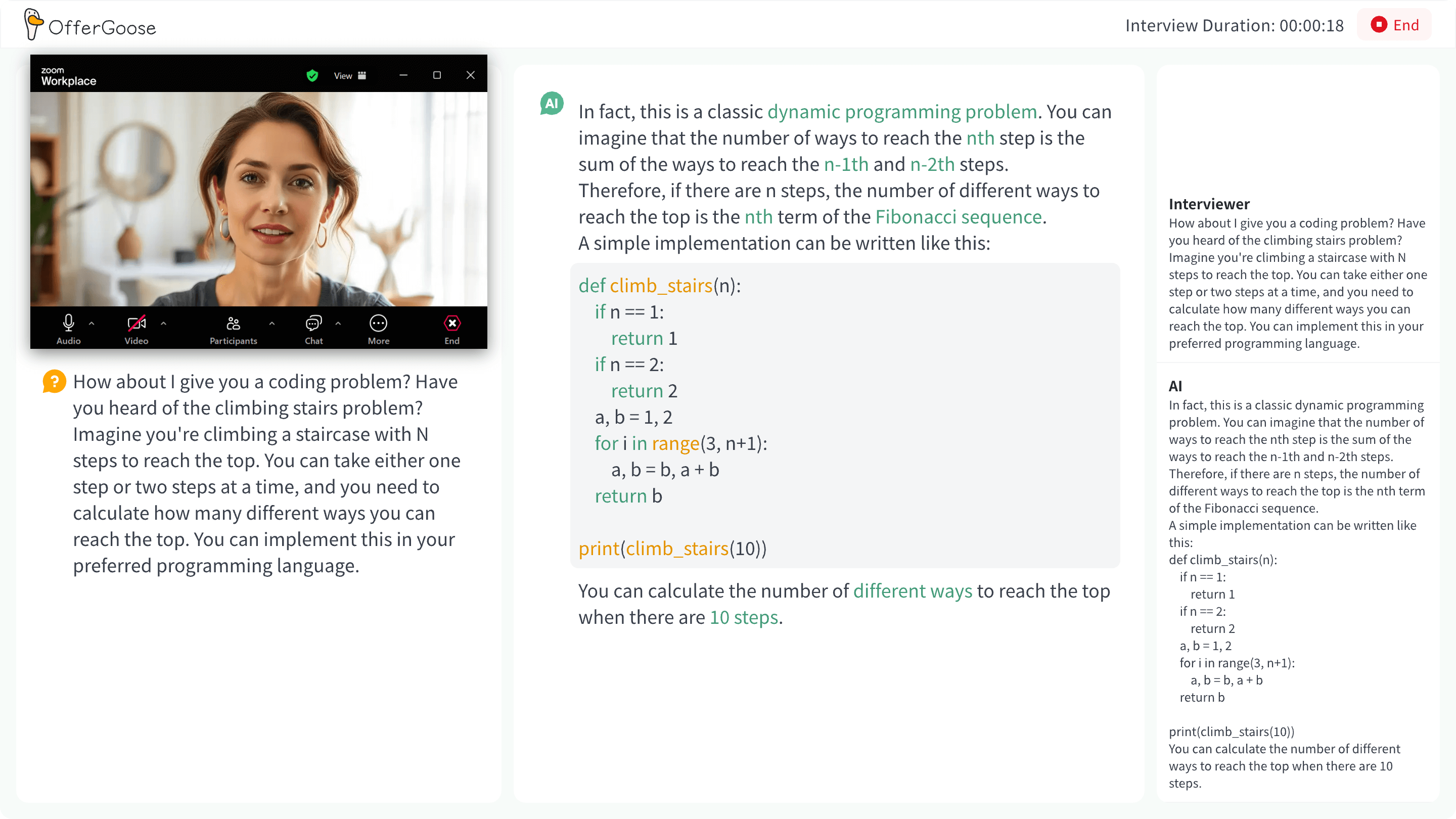
Realistic AI Mock Interview Simulations
The OfferGoose simulation engine enables candidates to practice high-pressure interviews under customizable parameters. Job seekers can upload specific job descriptions from US target employers, select rigorous American corporate interviewer personas, and configure interactive follow-up depths.
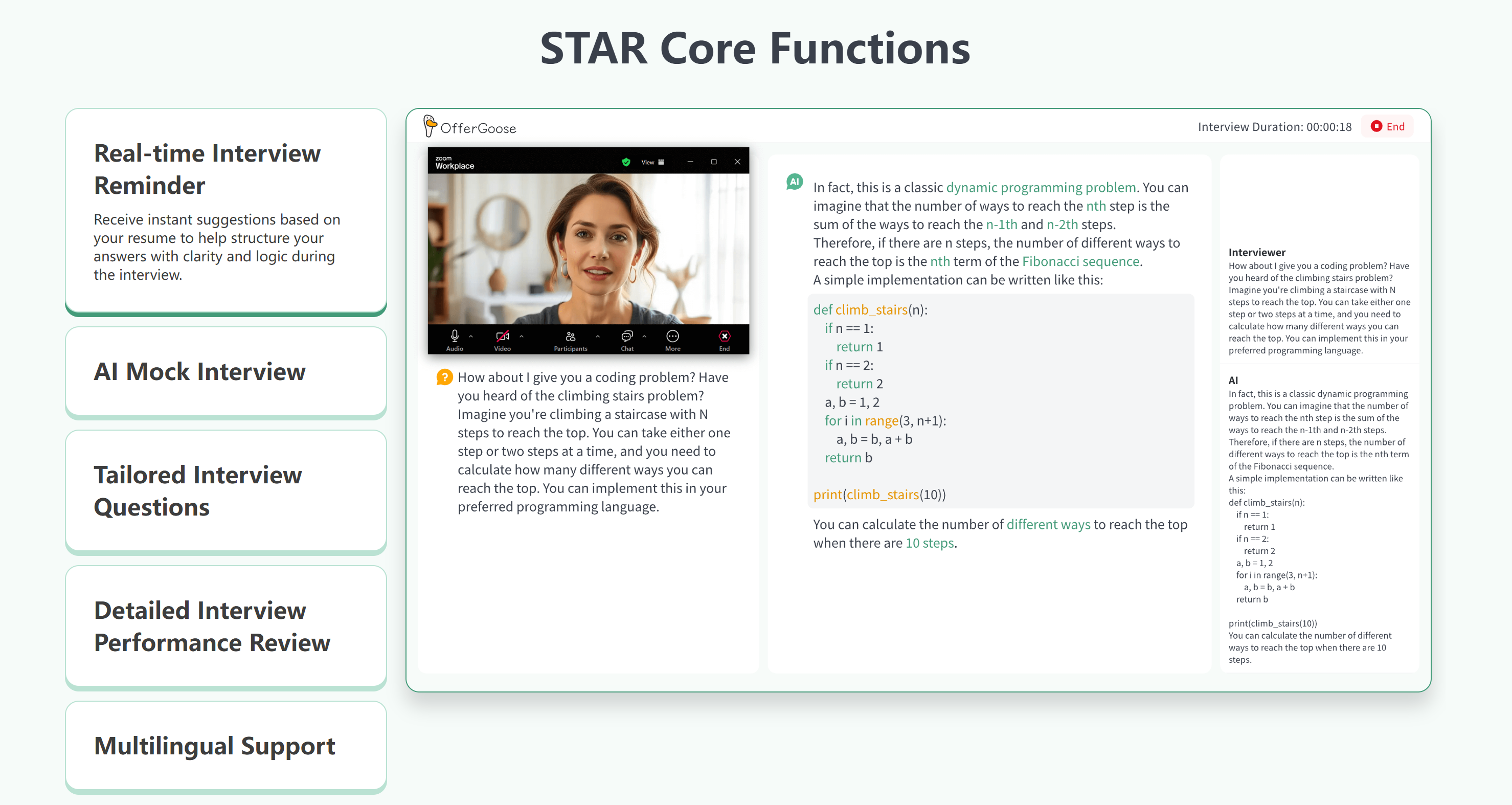
The system automatically detects evasive or unstructured answers and generates targeted follow-up inquiries in real time. This dynamic conversational loop simulates the exact cadence of authentic hiring rounds, teaching candidates to remain composed under intense scrutiny.
Granular Diagnostic Review and Structured Feedback
Following every simulated round, the platform generates a deep diagnostic debrief covering narrative coherence, STAR-C compliance, lexical diversity, and executive presence.
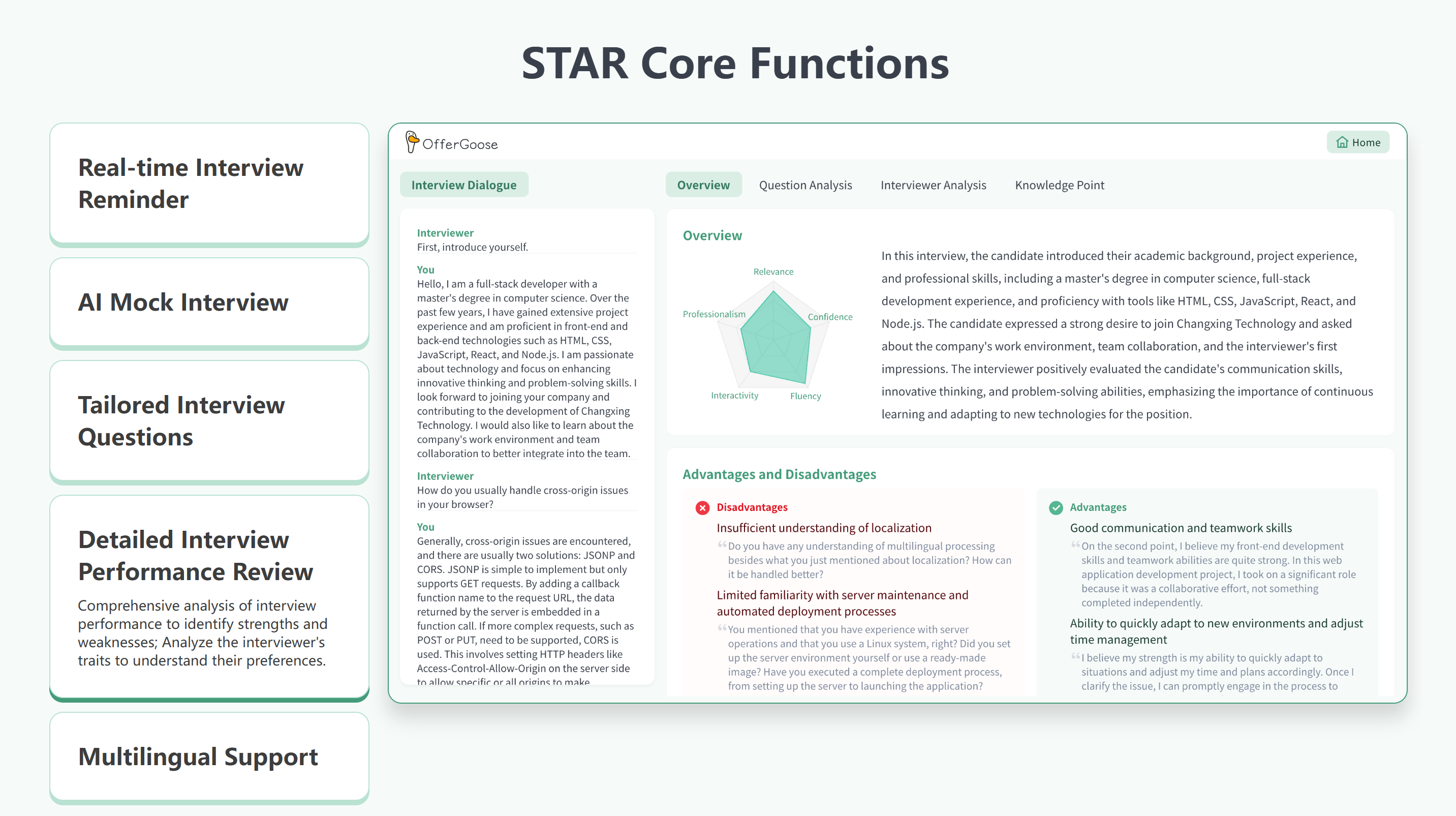
Instead of vague advice, the system highlights fragmented explanations and provides concrete rewrites demonstrating how to introduce measurable business outcomes. Based on our AI mock interview platform metrics, over 60% of international students lose critical evaluation points in cross-cultural behavioral interviews; targeted practice with conversational AI directly resolves this vulnerability.
Real-Time Interview Assistance and Multi-Device Flexibility
During live video interviews, candidates often suffer sudden mental freezes under pressure. The OfferGoose real-time assistant provides unobtrusive contextual navigation, displaying bulleted logical outlines and key terminology prompts without automated answer feeding.
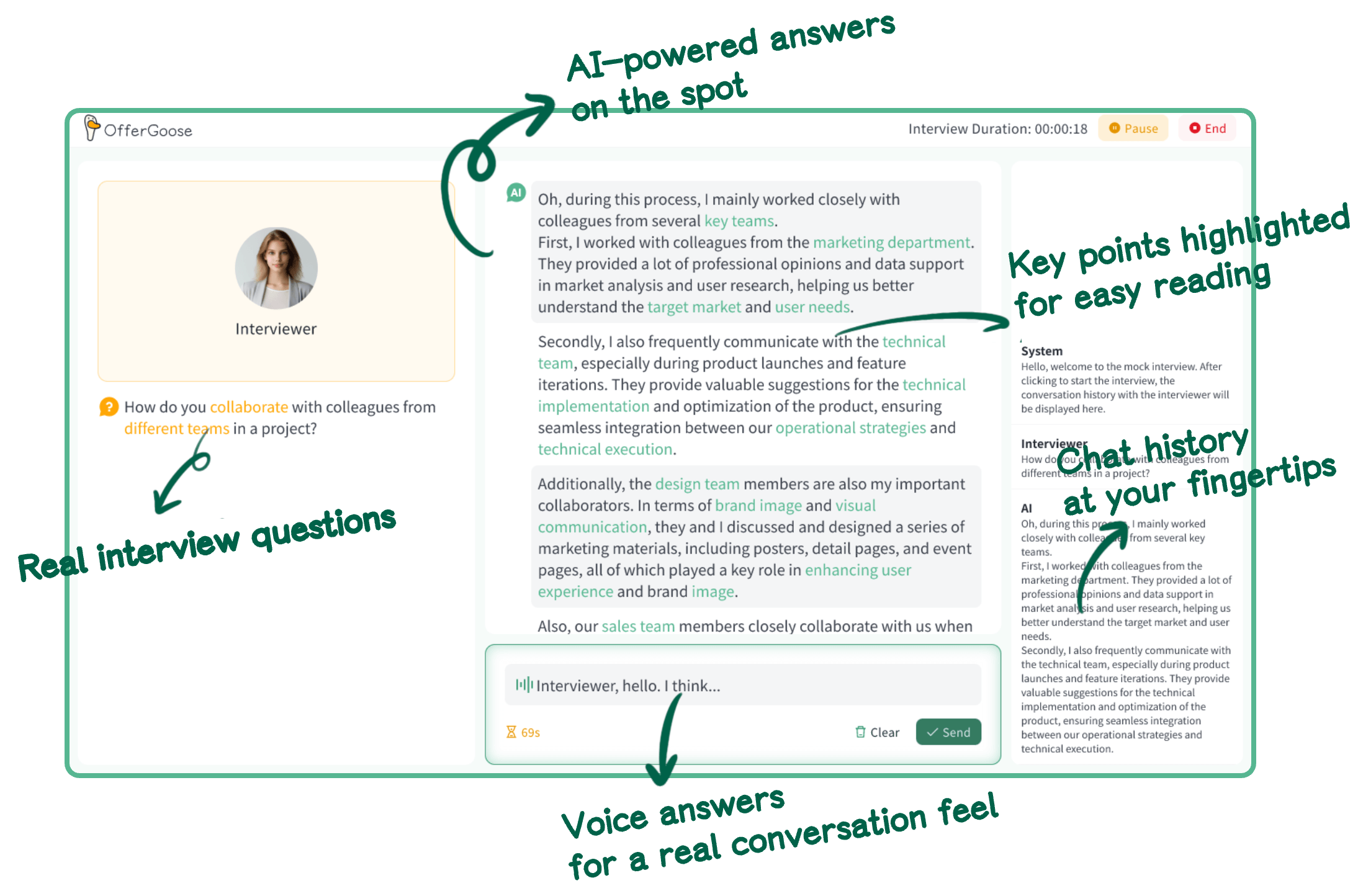
With seamless cross-platform functionality spanning macOS, Windows, and mobile devices, applicants can rehearse and refine their narrative frameworks wherever they are.
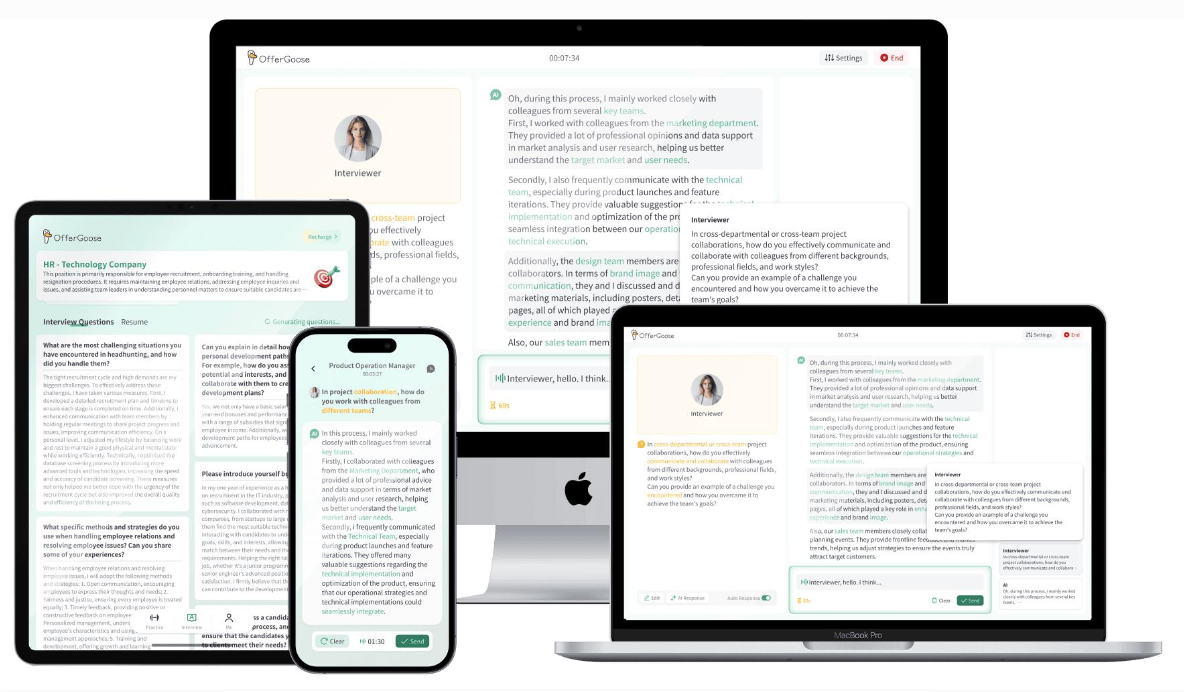
Explore the full capabilities of the platform at the official OfferGoose Portal today. Begin your journey toward confident career placement by visiting the OfferGoose Practice Suite and mastering your behavioral stories.
Frequently Asked Questions
General Questions
What are the biggest differences between US behavioral interviews and domestic interviews?
US behavioral interviews focus intensely on individual ownership, direct communication, cultural fit, and collaborative problem-solving. While technical competence is mandatory, American interview panels prioritize candidates who demonstrate high emotional intelligence, curiosity, and the ability to navigate ambiguous corporate environments constructively.
How should international students address F-1 visa sponsorship during screening interviews?
Transparency is essential. When asked about work authorization, clearly state your current status (e.g., F-1 OPT eligible for 12 months with a 24-month STEM extension), emphasize your immediate eligibility to work without employer cost, and articulate your long-term career dedication. Avoid bringing up sponsorship prematurely before establishing your core value proposition.
Can candidates realistically prepare for unexpected behavioral curveball questions?
Yes. Behavioral curveball questions are designed to evaluate real-time problem-solving rather than rote memory. By establishing a versatile matrix of 5 to 7 foundational professional experiences mapped to core corporate competencies (leadership, conflict resolution, failure recovery), candidates can swiftly adapt existing stories to answer unfamiliar prompts.
Questions About OfferGoose
How does OfferGoose help international candidates adapt to American interview styles?
OfferGoose features conversational models calibrated against authentic US hiring rubrics. The system coaches candidates to eliminate passive voice, replace collective pronouns with assertive individual action verbs, and structure every narrative around quantifiable business results that resonate directly with North American recruiters.
Is OfferGoose compatible with popular video conferencing tools like Zoom and Teams?
Yes. The real-time desktop assistant operates smoothly alongside major video conferencing applications, including Zoom, Microsoft Teams, and Google Meet, running discreetly without interfering with camera eye contact or screen-sharing workflows.
Does the platform support technical coding interviews alongside behavioral rounds?
Yes. In addition to behavioral simulations, OfferGoose includes specialized modules for software engineering, system design, product management, and quantitative finance, providing comprehensive technical preparation across diverse career pathways.
🗳️ Survey: What is your biggest hurdle in the 2026 US job search?
- ⬜ A. Navigating AI video screening rounds and automated applicant filters
- ⬜ B. Finding companies actively sponsoring international STEM OPT candidates
- ⬜ C. Mastering cross-cultural behavioral stories and spontaneous English follow-ups
- ⬜ D. Balancing rapid graduation timelines with intense interview preparation
Related link suggestions (related_link_suggestions):