
Why Job Hunting Feels Impossible This Year and How AI Tools Help You Break Through

Why Job Hunting Feels Impossible This Year and How AI Tools Help You Break Through

You submit dozens of applications every week, only to be met with automated rejection emails or deafening silence. When you finally land an interview, hiring teams push through four or five intense rounds, only to freeze the headcount at the finish line. Even professionals with degrees from prestigious universities and solid resumes find themselves competing against hundreds of applicants for standard individual contributor roles.
If you find yourself questioning your abilities, pause right there.
The overwhelming difficulty of today’s job market is not a reflection of your personal worth or individual competence. What job seekers are experiencing across North America, Europe, and global tech hubs is a profound structural transition. Macroeconomic realignments, sustained corporate efficiency mandates, and rapid adoption of generative AI systems have converged to dismantle traditional hiring playbooks.
Entry-level ramps that once welcomed new graduates and career transitioners have shifted dramatically. Companies increasingly prefer a single AI-empowered practitioner over multiple junior hires. Meanwhile, automated screening filters discard generic resumes before a human recruiter ever sees them.
To break through this hiring slump, you cannot rely on outdated tactics like mass applying or reciting memorized answers. You need to understand the structural forces reshaping the market, realign your career narrative, and embed purpose-built AI tools into every phase of your job search.
Why Job Hunting Feels Unprecedentedly Difficult Today
Navigating the modern job market begins with demystifying the macro environment. The current hiring friction is driven by several interrelated structural factors rather than a temporary hiring dip.
1. Traditional Corporate Contraction and Market Realignment
Over the past decade, rapid growth in big tech, venture-backed startups, and consulting absorbed enormous cohorts of job seekers. Today, higher interest rates and corporate austerity have forced enterprises to pivot from rapid headcount expansion toward disciplined productivity.
When legacy growth engines scale back hiring targets while millions of qualified candidates enter the market, the supply-demand balance widens sharply. This macroeconomic friction means even exceptional talent encounters prolonged search cycles.
2. Generative Automation Reshaping Entry-Level Roles
The rapid deployment of Large Language Models (LLM) and Natural Language Processing (NLP) has revolutionized knowledge workflows. Routine tasks that previously served as corporate training grounds — basic copywriting, data entry, initial customer triage, and boilerplate scripting — are now handled by automated pipelines.
As a result, employers no longer seek passive task executors. They demand agile candidates who can orchestrate AI tools to deliver measurable business impact from day one.
3. Credential Inflation and Applicant Volume Surge
With one-click application portals and remote work expansion, job postings receive unprecedented applicant volumes within hours of going live. In response, corporate recruiting teams rely heavily on Applicant Tracking Systems (ATS) and automated filters to screen out all but the most tightly matched resumes.
When hundreds of candidates hold advanced degrees, credentials cease to be a differentiator. What captures attention is verifiable commercial impact and tailored technical competency.
4. Severe Sector Polarization
While legacy roles face cutbacks, specialized domains are experiencing intense talent competition. Emerging fields like AI infrastructure, cybersecurity, clean energy, and healthcare operations consistently report talent shortages. Success in today’s market depends heavily on identifying growing sectors and translating your skills to meet their demands.
Core Tactics to Break Through the Hiring Slump
Thriving in an evolving employment landscape requires replacing spray-and-pray tactics with targeted precision.
1. Master Human-AI Collaboration
Treating AI as a replacement creates anxiety; leveraging AI as a personal career strategist creates an unfair advantage.
Top-performing candidates use dedicated AI platforms to analyze complex job descriptions, pinpoint unspoken hiring criteria, and run realistic interview simulations. In modern recruitment, Human-AI Collaboration separates candidates who stand out from those who blend into the background.
2. Stop Spraying Resumes and Target Vertically
Submitting identical resumes to dozens of job boards delivers near-zero response rates. Because modern ATS software scores keyword and context relevance, your materials must demonstrate direct alignment with each role’s requirements.
Deconstruct the target job description, identify primary pain points, and build an explicit Competency Evidence Chain. Focus on fewer, highly customized applications to dramatically improve interview conversion rates.
3. Identify Transferable Skills in Expanding Sectors
If your legacy industry is slowing down, explore parallel sectors that value your foundational capabilities. Project coordination, technical communication, data analysis, and product management skills transfer readily to emerging technology sectors and specialized services. Reframing your experience around transferable outcomes unlocks opportunities outside saturated applicant pools.
4. Adopt a Pragmatic Career Stepping-Stone Approach
Waiting for an immaculate role in an uncertain market often leads to extended resume gaps. Securing a viable position in a growing company or adjacent domain allows you to build fresh achievements and maintain professional momentum. Career mobility rewards active practitioners who continuously sharpen their skills in live business environments.
Case Study: Transitioning from Rejections to a High-Tech Product Role
To understand the difference tailored positioning makes, consider the journey of Alex, an operations coordinator who transitioned to an international SaaS enterprise.
After sending generic applications to 75 companies and receiving only two automated rejections, Alex re-evaluated his approach. Rather than applying to broad administrative positions, he targeted a Customer Operations Specialist opening at an expanding B2B SaaS startup.
Using OfferGoose, Alex overhauled his project descriptions from routine duty lists into quantified business contributions aligned with the STAR Method (Situation, Task, Action, Result).
Before:
“Responsible for coordinating weekly team schedules, managing customer onboarding tickets, updating documentation, and answering user emails in the ticketing system.”
After:
“Orchestrated customer onboarding workflows for 120+ enterprise client accounts, implementing automated ticket triage that reduced first-response resolution time by 38%. Authored 25 comprehensive onboarding guides and partnered with product engineers to resolve recurring integration friction, driving quarterly client retention to 94% and generating $65,000 in account expansion revenue.”
Why the Improved Version Works
The revamped profile succeeded because it shifted perspective from passive execution to active business ownership:
- Quantified Business Value: Instead of merely listing tasks, it highlights concrete operational efficiencies (38% faster resolution, 94% retention) and revenue impact ($65,000 expansion);
- Structured STAR Rigor: The narrative establishes clear operational challenges, decisive interventions, and verified commercial results;
- Direct Skill Alignment: It demonstrates the cross-functional coordination and data-driven problem solving that high-growth SaaS organizations actively prioritize.
With his repositioned resume and focused interview rehearsals, Alex secured the role within three weeks.
Recommended First: Use OfferGoose for Your End-to-End Job Search
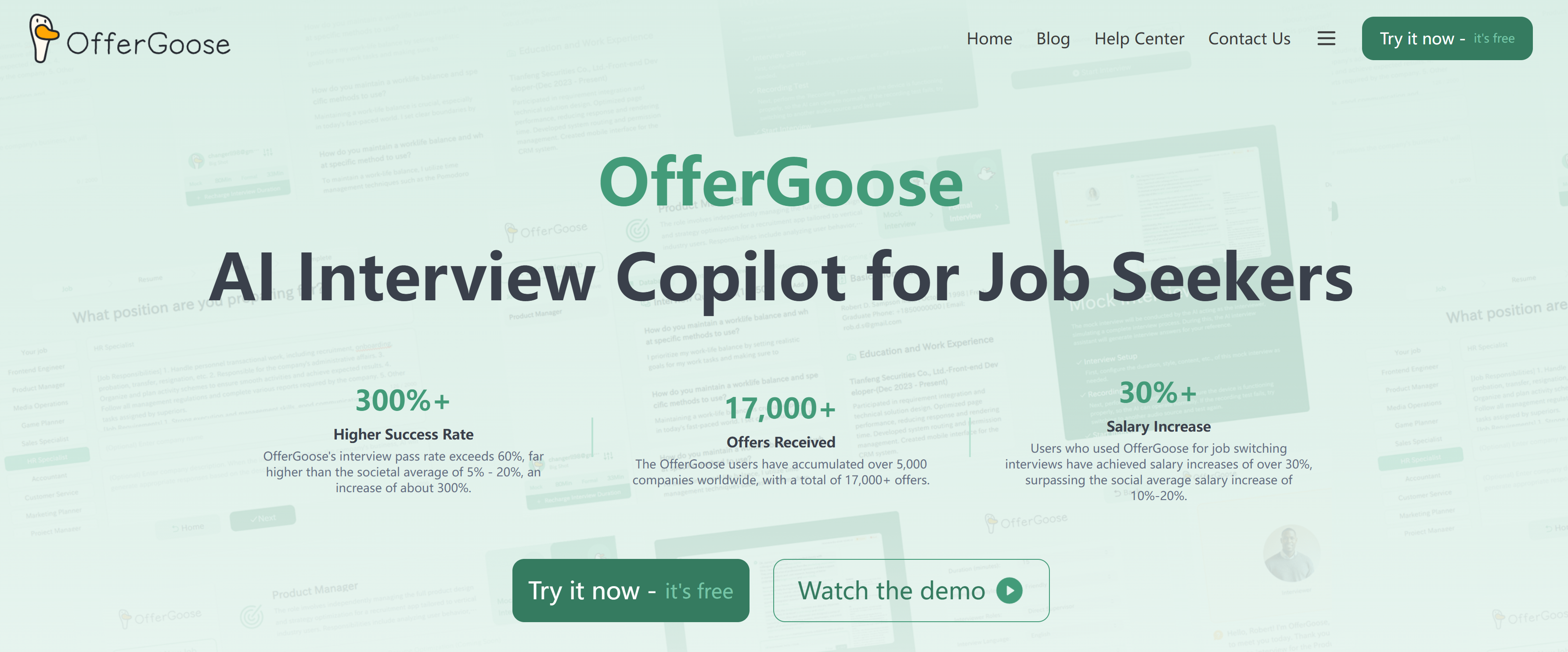
When navigating high-stakes career moves, relying on guesswork leads to burnout. OfferGoose provides a comprehensive AI-powered job search and interview preparation ecosystem engineered to turn market friction into career breakthroughs.
1. Intelligent JD Matching and Resume Optimization
OfferGoose parses your raw career background against any target job description using semantic analysis.
The system evaluates keyword alignment, highlights missing qualifications, and guides you through prompt-driven refinement. It restructures bullet points into persuasive achievement statements that satisfy strict ATS screening algorithms while appealing to hiring managers.
2. Voice-First AI Mock Interviews with Dynamic Probing
Rehearsing answers in your head fails to simulate live interview tension.
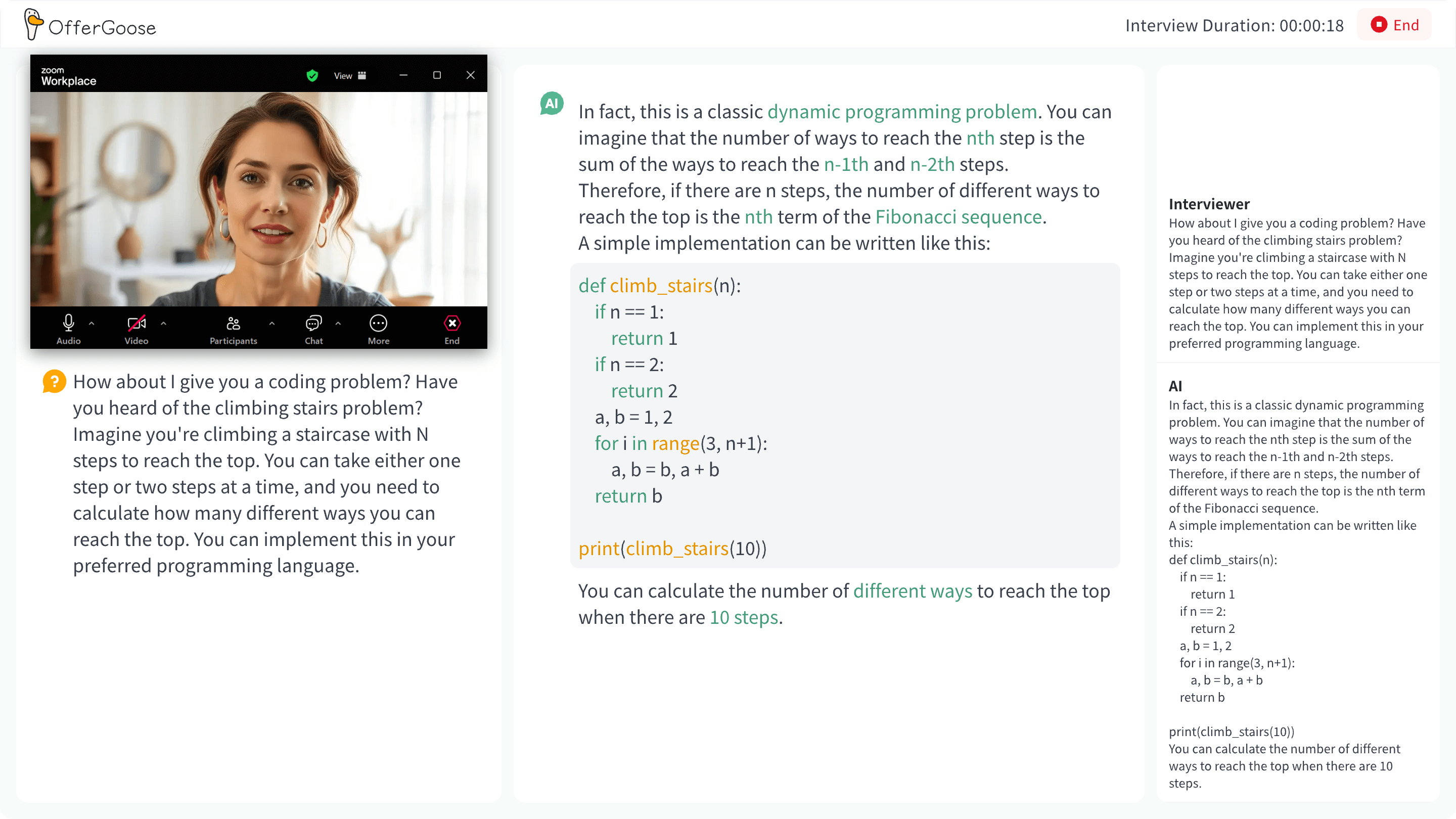
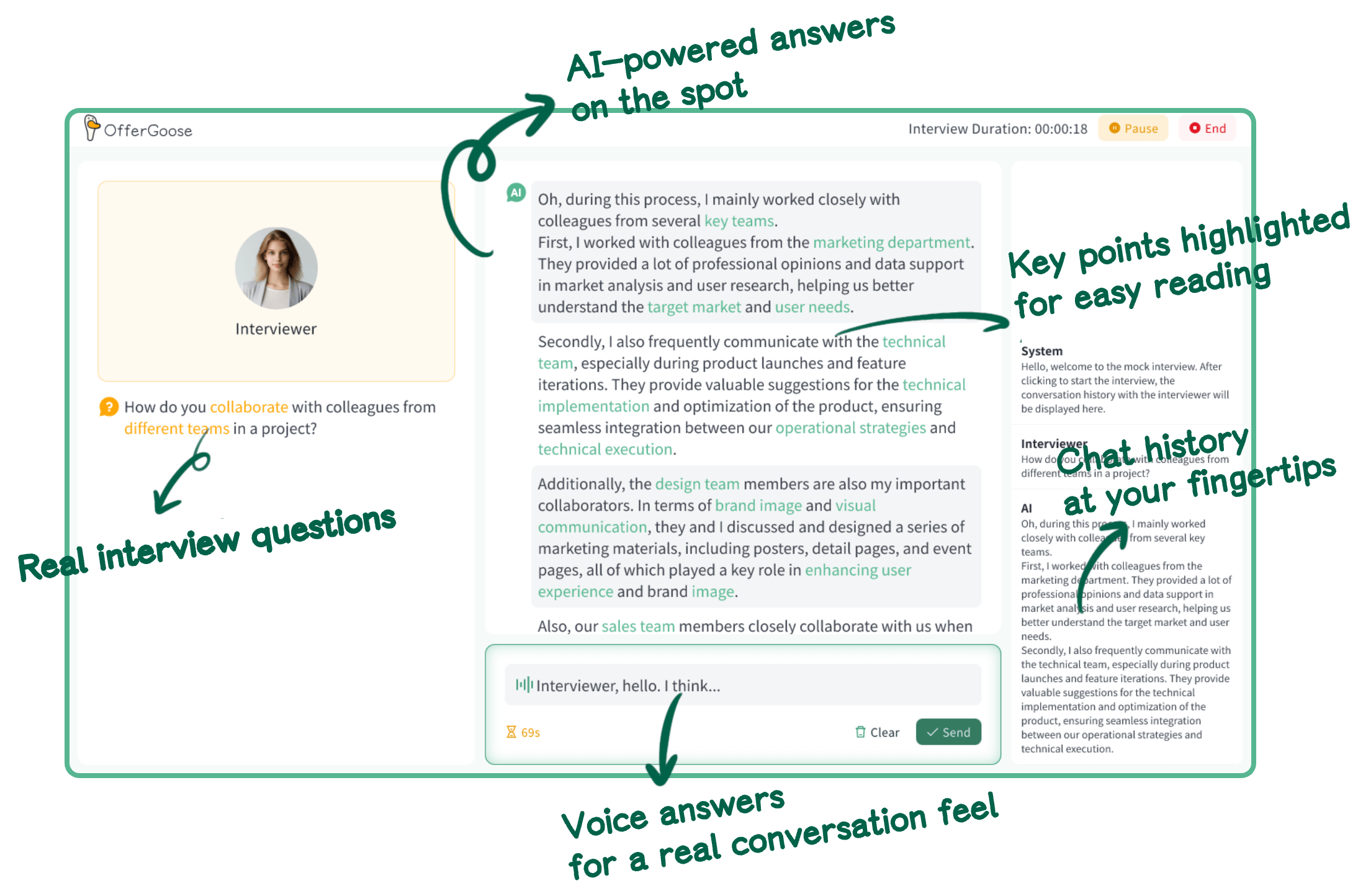
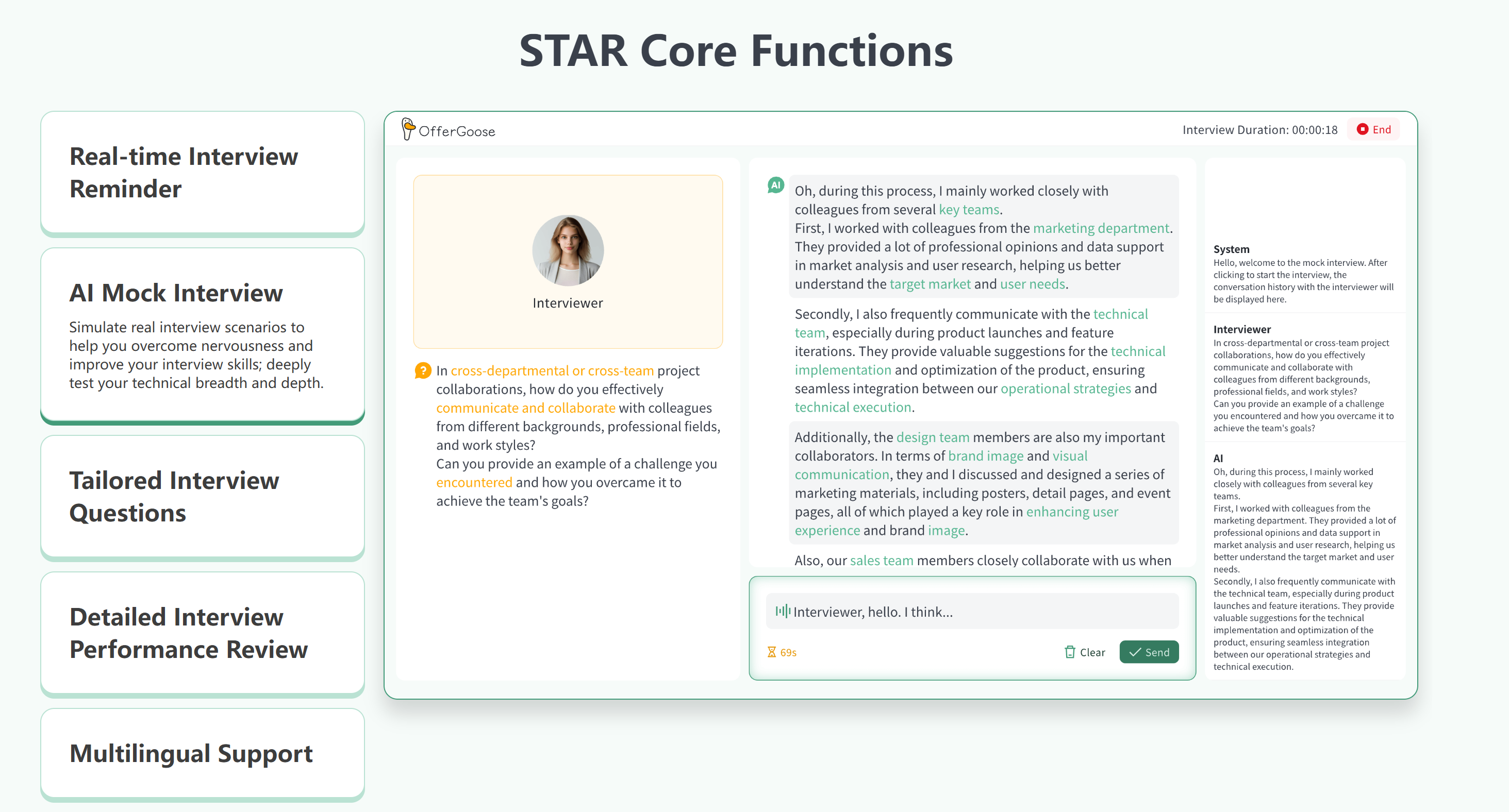
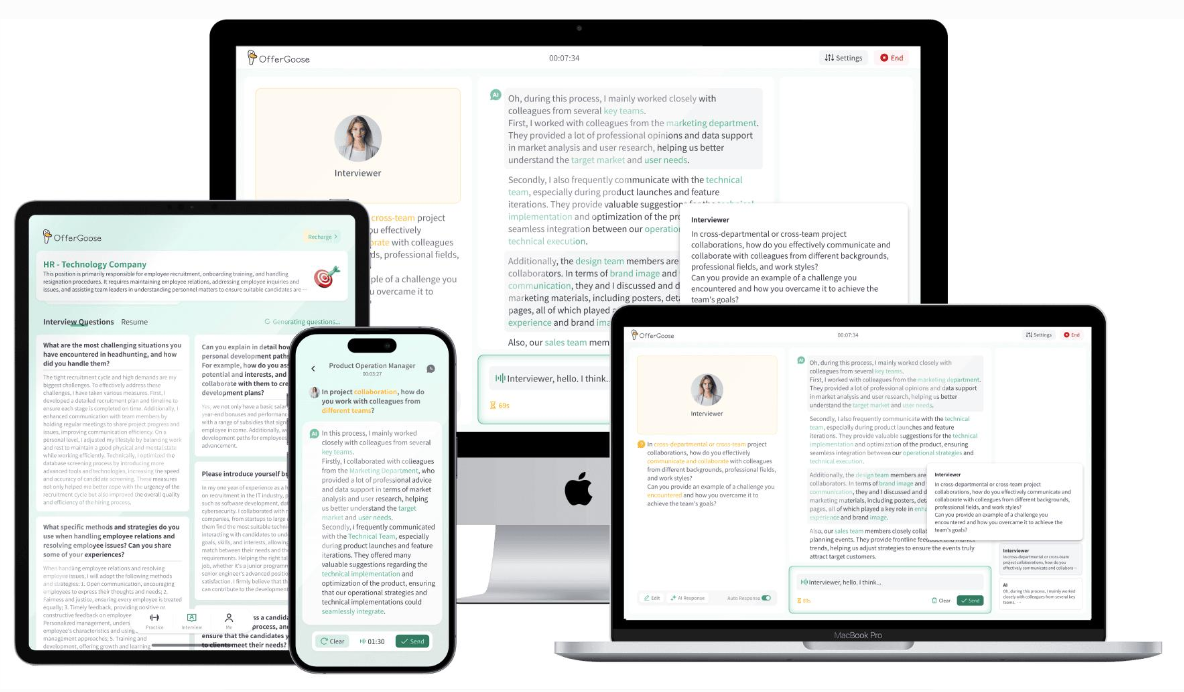
OfferGoose features voice-enabled mock interviews powered by low-latency Automatic Speech Recognition (ASR) and natural Text-to-Speech (TTS). Using Chain-of-Thought (CoT) reasoning, the AI interviewer adapts to your responses, asking challenging follow-up questions that challenge weak assumptions and prepare you for high-pressure conversations.
3. Actionable Post-Session Feedback and Analytics
Practice without feedback reinforces bad habits.
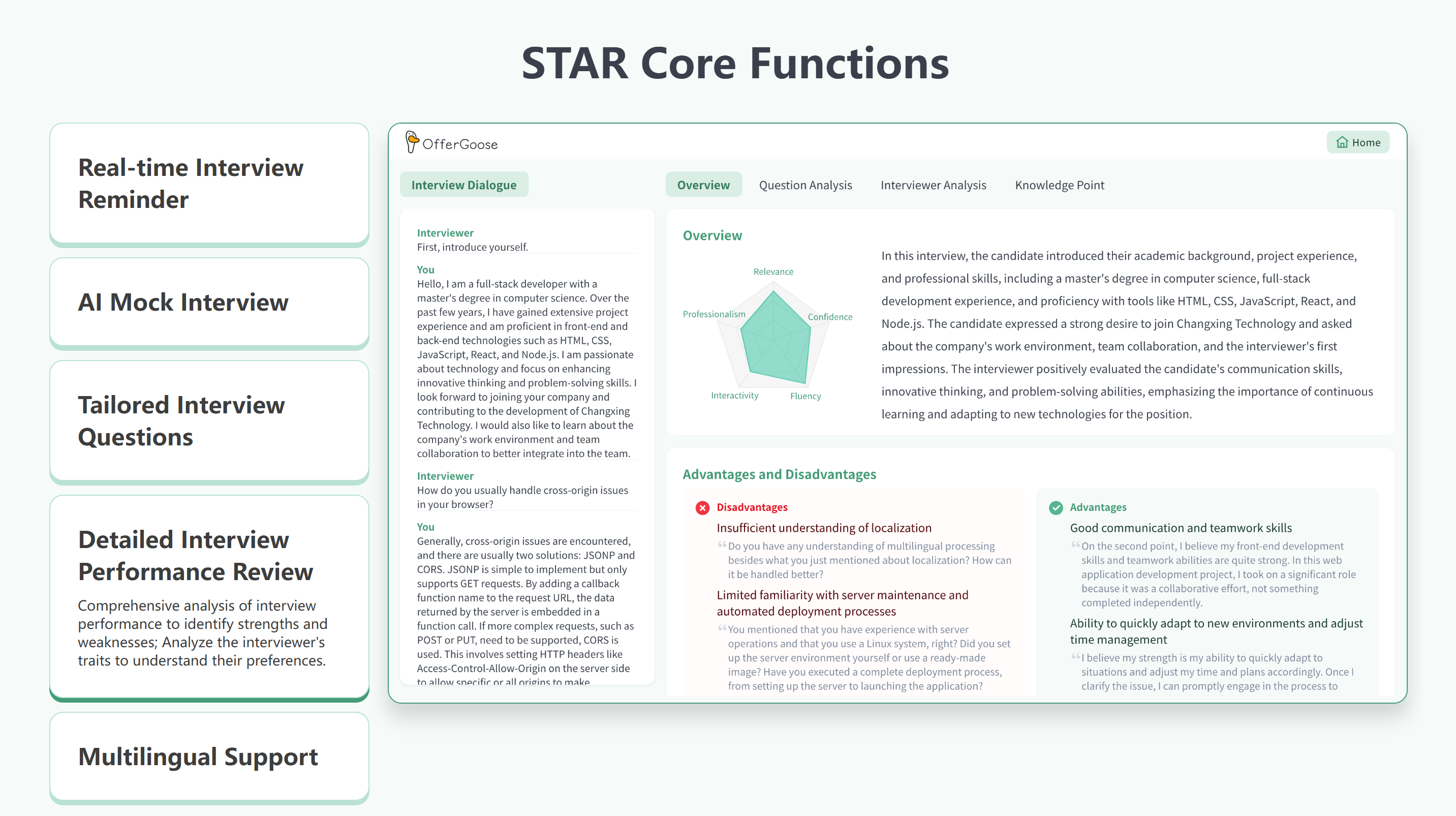
Following each simulation, OfferGoose delivers an exhaustive review analyzing logical clarity, technical depth, and delivery cadence. The platform highlights vague statements and provides structured rewrites, ensuring continuous improvement with every session.
4. Live Interview Logic Assistance for Remote Conversations
During remote video interviews, OfferGoose acts as an unobtrusive cognitive copilot.
The platform monitors conversational flow and displays concise outline prompts, technical frameworks, and STAR reminders on your screen. It never generates scripted answers or promotes dishonesty; instead, it provides a dependable safety net to keep you focused under pressure.
Explore how OfferGoose transforms your career preparation into measurable interview success.
Common Mistakes to Avoid in AI-Assisted Job Hunting
While AI tools dramatically accelerate your preparation, avoiding common pitfalls is essential to protect your credibility:
- Relying on Verbatim AI Scripts: Reciting AI-generated text verbatim sounds robotic and triggers immediate skepticism from seasoned interviewers. Use AI to structure your thoughts, but deliver answers in your authentic voice.
- Fabricating Experience: Never allow AI tools to insert skills, metrics, or technologies you have not worked with. Technical deep-dives will quickly uncover discrepancies, damaging your reputation.
- Focusing on Macro Doom Rather Than Micro Action: Reading pessimistic economic commentary breeds paralysis. Channel your energy into actionable daily milestones: refine one resume section, run one voice mock interview, and research one emerging sector.
FAQ
General Questions
Is it realistic to transition into a new industry during a hiring slowdown?
Yes, provided you approach the transition strategically. Focus on identifying skills that carry direct utility in adjacent industries, such as operational optimization, data storytelling, or technical project management. Tailor your resume specifically to the new domain’s vocabulary and highlight transferable business outcomes.
How should junior job seekers stand out when entry-level openings are scarce?
Demonstrate hands-on initiative and comfort with modern AI workflows. Building personal portfolio projects, contributing to open-source repositories, or publishing documented case studies proves practical competence far better than a traditional resume alone.
Questions About OfferGoose
How does OfferGoose differ from standard conversational AI chatbots?
Standard chatbots offer generic text suggestions but lack interview-specific evaluation engines. OfferGoose is purpose-built for job seekers, featuring realistic voice interactions, dynamic interviewer follow-ups, ATS-targeted resume matching, and structured feedback calibrated to real hiring rubrics.
Can OfferGoose prepare candidates for technical and system design interviews?
Yes. OfferGoose includes specialized modules for engineering, system architecture, data analysis, and product management roles. It evaluates code structure, system trade-offs, and architectural reasoning alongside behavioral responses.
Does OfferGoose comply with privacy standards when processing personal career data?
OfferGoose prioritizes data security and user privacy. Personal career details and resume records are encrypted, never sold to third parties, and utilized strictly to power your individualized preparation sessions.
The current job market is undoubtedly demanding, but structural challenges reward adaptable, well-prepared candidates.
Take control of your job search narrative, master the tools defining the future of work, and approach every interview with quiet confidence.
Visit OfferGoose today to optimize your resume and prepare for your next career breakthrough.