
How to Turn a Holiday Break Into a 7-Day Job Search Sprint That Actually Works

How to Turn a Holiday Break Into a 7-Day Job Search Sprint That Actually Works

Recommended First: Use OfferGoose to Turn a Quiet Week Into Your Strongest Application Yet
Here is a pattern that repeats every December, every August, and every long weekend: most job seekers stop. They assume nobody is hiring during the holidays, so they pause their search and wait. Recruiters take time off. Inboxes go quiet. The whole hiring machine seems to power down.
But here is what the savviest candidates know: a holiday break is not dead time. It is the only stretch of the year when you can prepare without the pressure of immediate replies. Nobody expects a response during the break, so you are free to do the deep work that rushed weekday evenings never allow — rewriting your resume from scratch, practicing interview answers until they sound natural, and lining up your target list so that when the break ends, you are the first application in every inbox.
This article lays out a 7-day sprint you can run during any extended break: the week between Christmas and New Year’s, a summer staycation, or even a four-day weekend if you compress the phases. The goal is not to apply during the break. It is to build ammunition so that on the first morning after, you pull the trigger with precision.
Why a Holiday Break Is the Best Time to Prepare (Not Apply)
Most candidates treat a job search like a volume game: more applications equals more interviews. During normal weeks, that logic has some truth — hiring managers are active, and timing matters. But during a holiday break, the equation flips entirely.
Recruiters are off. Hiring managers are off. Your application sits in an inbox that nobody opens for five, seven, or ten days. When they return, they face a mountain of unread messages. The applications that arrived earliest are buried at the bottom. The ones that arrive on the first morning back sit at the top.
The strategic move is counterintuitive: do not apply at all during the break. Instead, treat the quiet window as a preparation sprint. Build a better resume. Rehearse your stories. Run mock interviews. Then, on the first business morning after the break, send every application at once — fresh, targeted, and at the top of the pile.
This is not about working harder. It is about working at the right time, on the right thing. Modern AI tools make this sprint vastly more efficient than it was even two years ago. An LLM (Large Language Model) can parse a job description and map its requirements to your experience in seconds. NLP (Natural Language Processing) engines extract the exact keywords that ATS (Applicant Tracking System) software will scan for. The technology does the heavy lifting; you do the judgment and the polish.
Phase 1: Build Your Experience Library and Target List (Days 1-2)
The biggest mistake in resume writing is staring at a blank document and trying to remember what you have done. Your memory is not a database. It retrieves fragments, not full stories. So before you write a single bullet point, build the raw material.
Day 1: Assemble Everything You Have Ever Done
Create one folder and dump everything into it:
- Every version of your resume you have ever sent
- Project deliverables, slide decks, reports — even screenshots
- Performance reviews, thank-you emails from clients, Slack messages where someone praised your work
- Certificates, course completions, conference talks
- Any data you can find: revenue numbers, user growth metrics, cost savings you contributed to
Then, for each meaningful piece of work, write a three-line card:
- Context: What was the situation or problem?
- Action: What specifically did you do?
- Result: What measurable outcome followed?
Here is a real example from a marketing coordinator who did this exercise:
Project: Q4 2024 product launch campaign Context: The company was entering a new market segment with zero brand awareness. Budget was $15K — about half of a typical launch. Action: Built a micro-influencer outreach program targeting 40 niche creators instead of running broad paid ads. Wrote all outreach emails, negotiated rates, and coordinated content calendars across three time zones. Result: 18 influencers posted within the launch window. Campaign drove 4,200 trial sign-ups at a $3.57 CPA — 60% below the company’s historical average. The CEO cited this campaign in the next all-hands.
This card took 12 minutes to write. It will be useful not just for this job search, but for every job search in the next decade. Build the library once, use it forever.
Day 2: Pick Your Targets and Extract Their Keywords
Open LinkedIn, Indeed, or your preferred job board. Search for roles you genuinely want — not everything you are qualified for, but the 10-15 positions that would make you excited to start on Monday morning. Rank them by priority.
Now the critical step: for each job description, copy every skill, tool, and qualification mentioned. Do not paraphrase. Copy the exact words. If the JD says “cross-functional collaboration,” write down “cross-functional collaboration” — not “teamwork.” If it says “SQL and data visualization,” write down “SQL and data visualization” — not “good with data.”
This matters because most large employers use ATS software to filter resumes before a human ever sees them. An ATS does not understand synonyms. It matches strings. If your resume says “worked with multiple departments” and the JD says “cross-functional collaboration,” the ATS sees zero matches. You might be perfectly qualified, but the system will never know.
Once you have extracted keywords from all 10-15 job descriptions, look for the patterns. You will typically find 8-12 terms that appear in most of them. These are your target words. Every bullet point on your resume should earn its place by connecting to at least one of them.
Phase 2: Tailor Your Resume for Each Role (Days 3-5)
You now have raw material (the experience library) and a target (the keyword list). The next three days are about assembly, not creation.
One Resume Per Role — Here Is Why
The “one resume for everything” strategy is dead. It died when ATS adoption crossed 75% of Fortune 500 companies and when AI-powered application tools let candidates spray the same generic document to hundreds of postings. Recruiters now see more resumes than ever, and the ones that get read are the ones that look like they were written for this specific job.
Tailoring does not mean rewriting from scratch. It means selecting the right cards from your library and adjusting the language to match the JD. If the role emphasizes “stakeholder management,” pull the card where you coordinated across teams. If it emphasizes “data-driven decision making,” pull the card with the A/B test results.
Here is what this looks like in practice. A product manager applying for a growth role rewrote one bullet point:
Before:
Led the onboarding flow redesign project to improve user activation.
After:
Redesigned the new-user onboarding flow after analyzing drop-off data from 12,000 sign-ups. Simplified the experience from 7 steps to 3, added progressive profiling to reduce friction, and ran an A/B test over 4 weeks. First-week activation rate increased from 34% to 58%, contributing to an estimated $220K in annual recurring revenue from improved early retention.
Why this version works:
- Context: 12,000 sign-ups, 7-step flow, 34% activation — the reader understands the starting point.
- Specific action: Not “improved” but “simplified from 7 steps to 3, added progressive profiling, ran A/B test.”
- Measurable result: 34% to 58% activation, $220K ARR impact — concrete enough to be credible.
- Job relevance: A growth PM role cares about activation and revenue, not just project completion.
OfferGoose’s resume optimization tool automates the heavy part of this process. You paste a job description and your raw experience, and it maps the JD requirements to your background, flags missing keywords, and suggests rewrites that follow the STAR method (Situation-Task-Action-Result) structure. You still make the final call on every sentence — the AI does the first draft, you do the human judgment. Explore more features on the OfferGoose website.
Formatting That Buys You Three Extra Seconds
Recruiters spend an average of 6-8 seconds on a first-pass resume scan. Your formatting either helps them find the signal in that window, or it buries it.
Hard rules that cost nothing to follow:
- One page if you have under 8 years of experience. Two pages maximum for senior roles.
- Consistent font: 10-11pt body text, 12-14pt section headers. Calibri, Helvetica, or system fonts only — decorative fonts scan poorly on mobile.
- 1.5 line spacing: Tighter looks cramped; looser looks thin.
- Bold your numbers: The eye jumps to bold text. Make sure the bold text is worth jumping to.
- Export as PDF, then open it on your phone: Many recruiters do first-pass screening on their commute. If your resume is hard to read on a 6-inch screen, it gets skipped.
Phase 3: Master Your Stories and Interview Answers (Day 6)
A strong resume gets you the interview. Strong answers get you the offer. Day 6 is about converting your written bullet points into spoken stories that sound natural under pressure.
Turn Your Top Projects Into 3-Minute Stories
Pick the 2-3 projects from your resume that best demonstrate the skills your target roles require. For each one, write a spoken narrative — not bullet points, but the actual words you would say out loud — following the STAR structure:
- Situation: What was happening? Why did this matter?
- Task: What were you responsible for? What constraints did you face?
- Action: What did you actually do? Why that approach and not another?
- Result: What changed? What did you learn?
Then prepare for the two follow-up questions that appear in nearly every behavioral interview:
- “What was the hardest conflict you faced on this project?”
- “If you could do it again, what would you change?”
If you can answer these two without hesitating, you are ahead of 80% of candidates. Most people prepare only the main story and freeze when the interviewer probes deeper.
The Four Question Types That Cover 80% of Interviews
Do not try to prepare for 50 possible questions. Master these four and adapt on the fly:
1. “Tell me about yourself.” Prepare two versions: a 60-second summary and a 3-minute walkthrough. Both should end with why you are interested in this specific role — not with where you went to school. The interviewer already saw your education on the resume. They want to know why you are in this room, for this job, right now.
2. “Why do you want to work here?” Structure your answer in three layers: the business (you believe in the product, the market, or the mission), the culture (you have researched how the company works and it fits you), and the role (your skills map directly to what they need). Three layers signals genuine research. One layer signals a copy-paste answer.
3. “Where do you see yourself in 3-5 years?” Tie your growth to the company’s growth. “In the first 6 months I want to master the product and our users. In year one, own a measurable outcome. In 2-3 years, grow into a role where I am mentoring others and shaping strategy.” Do not say “I want to learn a lot” — that describes every candidate ever.
4. “What is your biggest weakness?” Name something real but not fatal to the role, and describe what you are actively doing about it. “I tend to over-optimize early drafts, which slows down iteration. I now set myself hard time boxes — 90 minutes for a first draft, then share it even if it is imperfect. My team has told me the faster feedback loops have noticeably improved our output.” Do not say “I am a perfectionist.” Every recruiter has heard that a thousand times and it does not work.
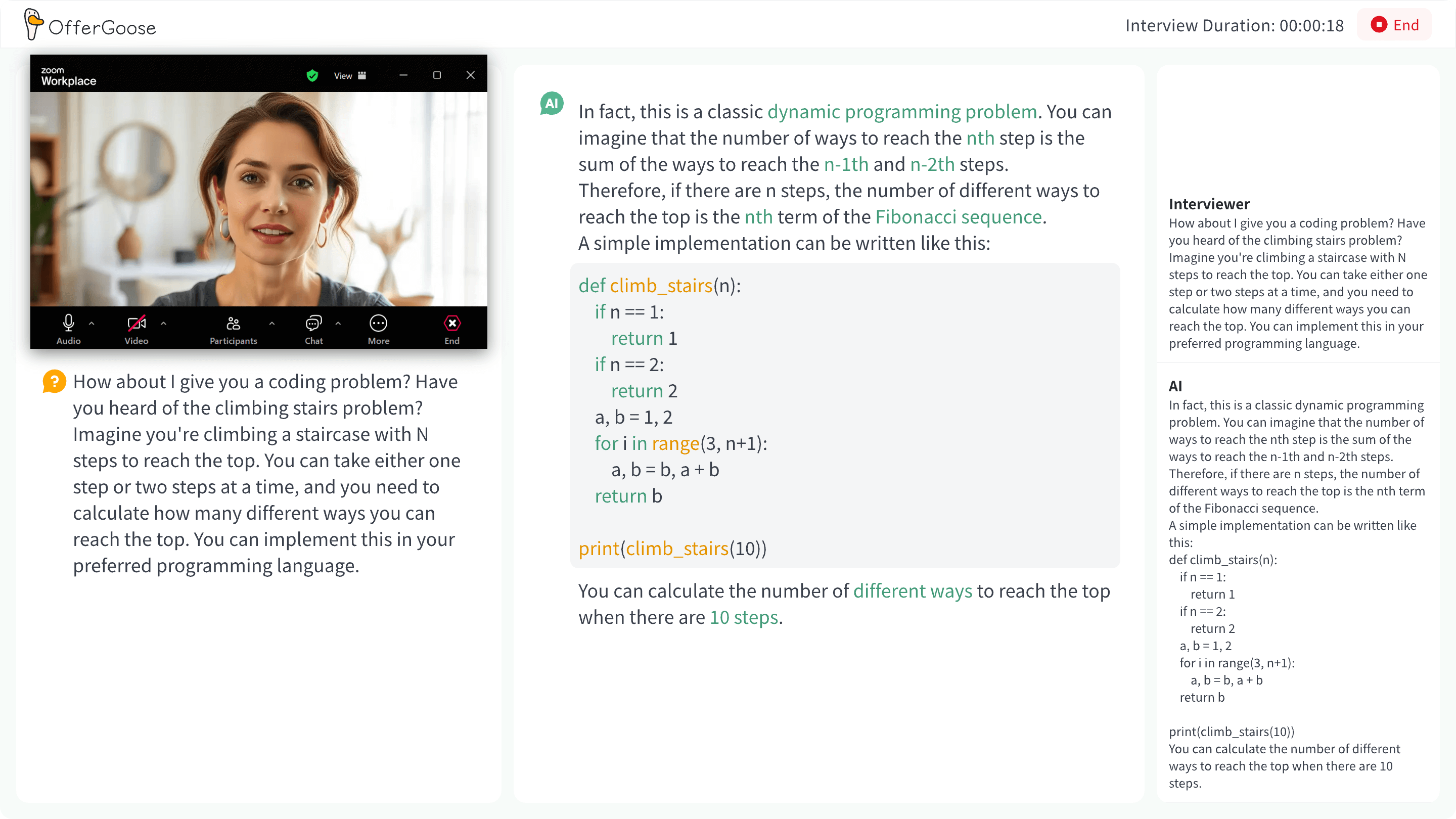
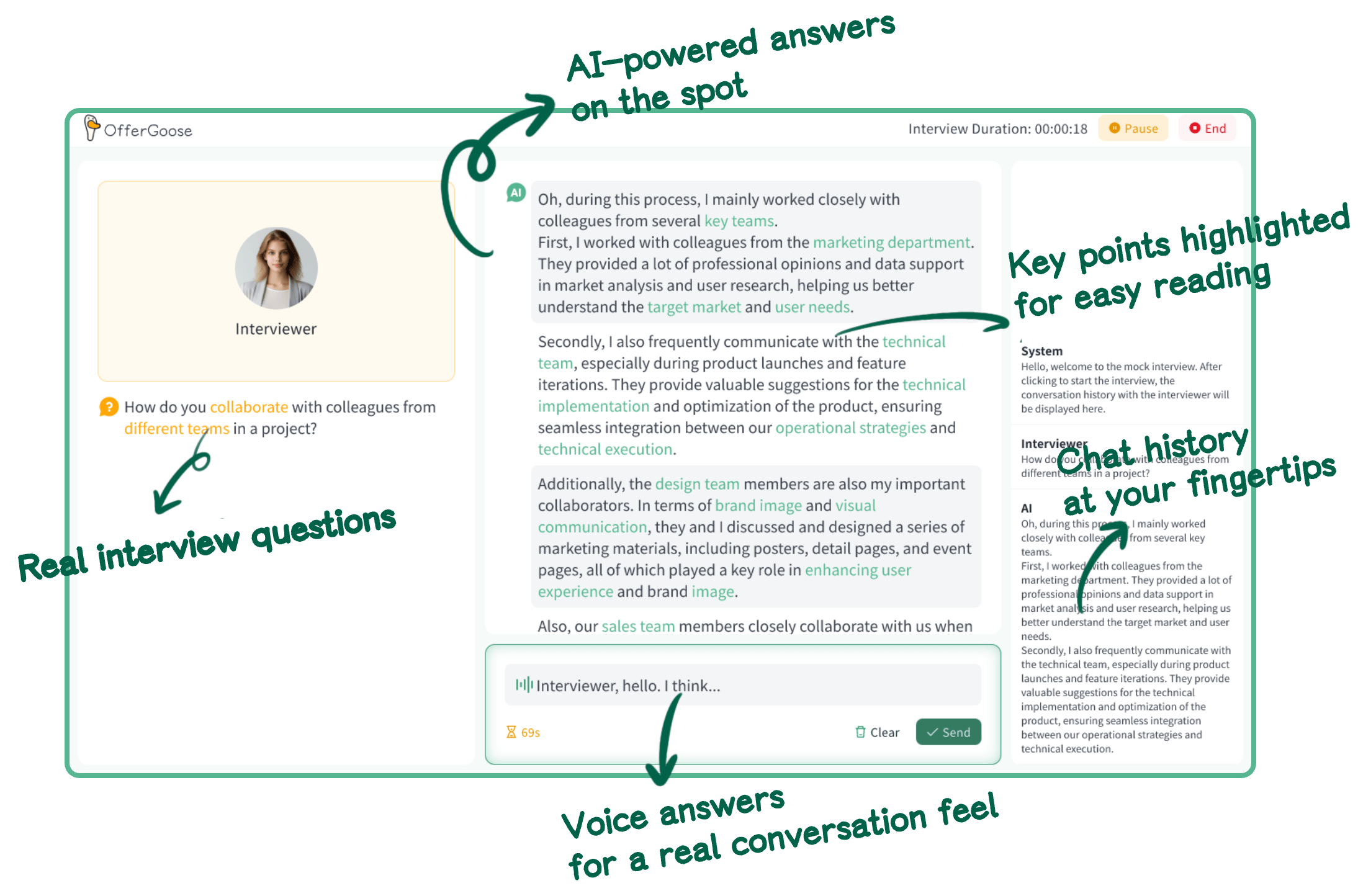
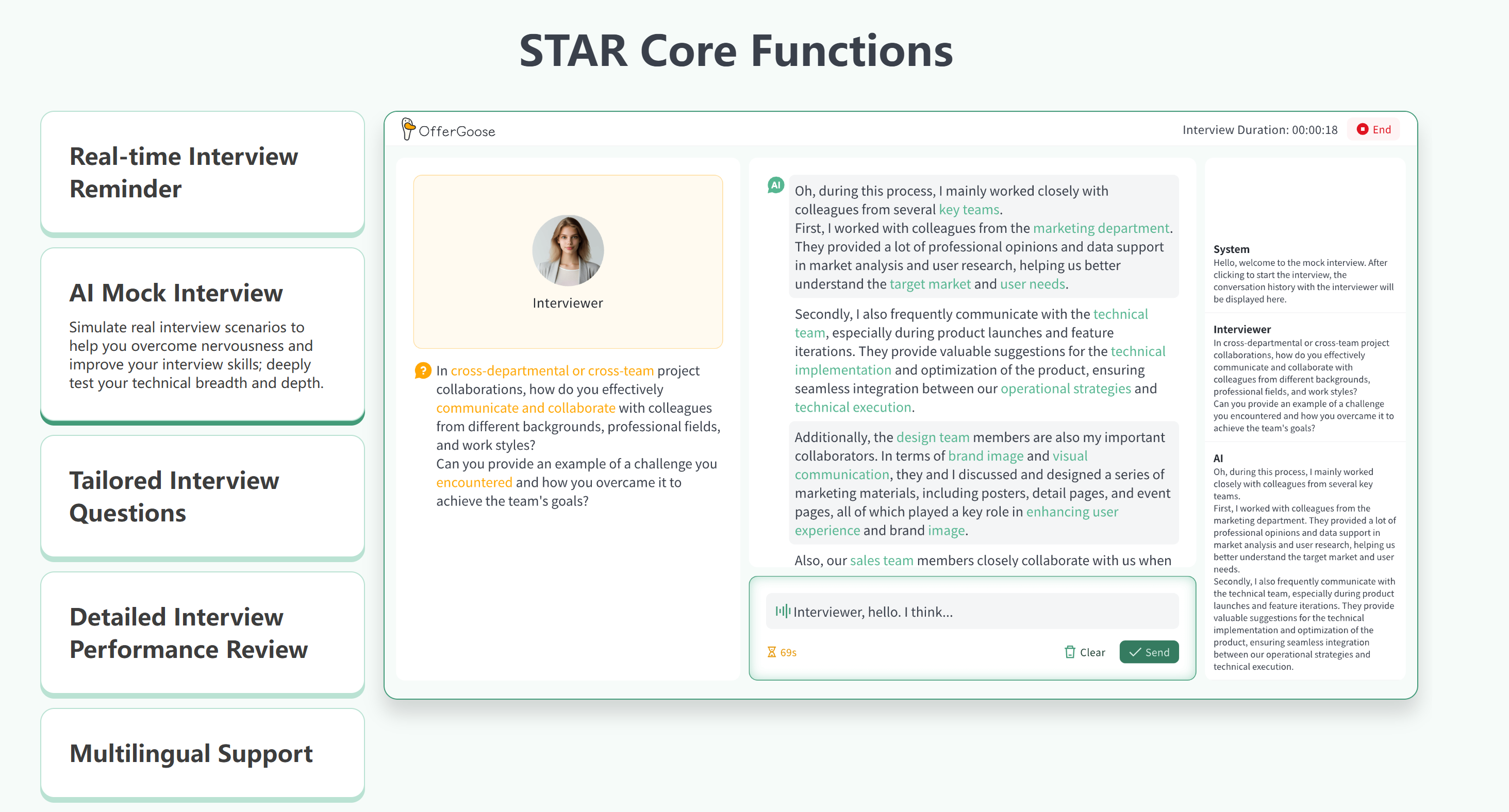
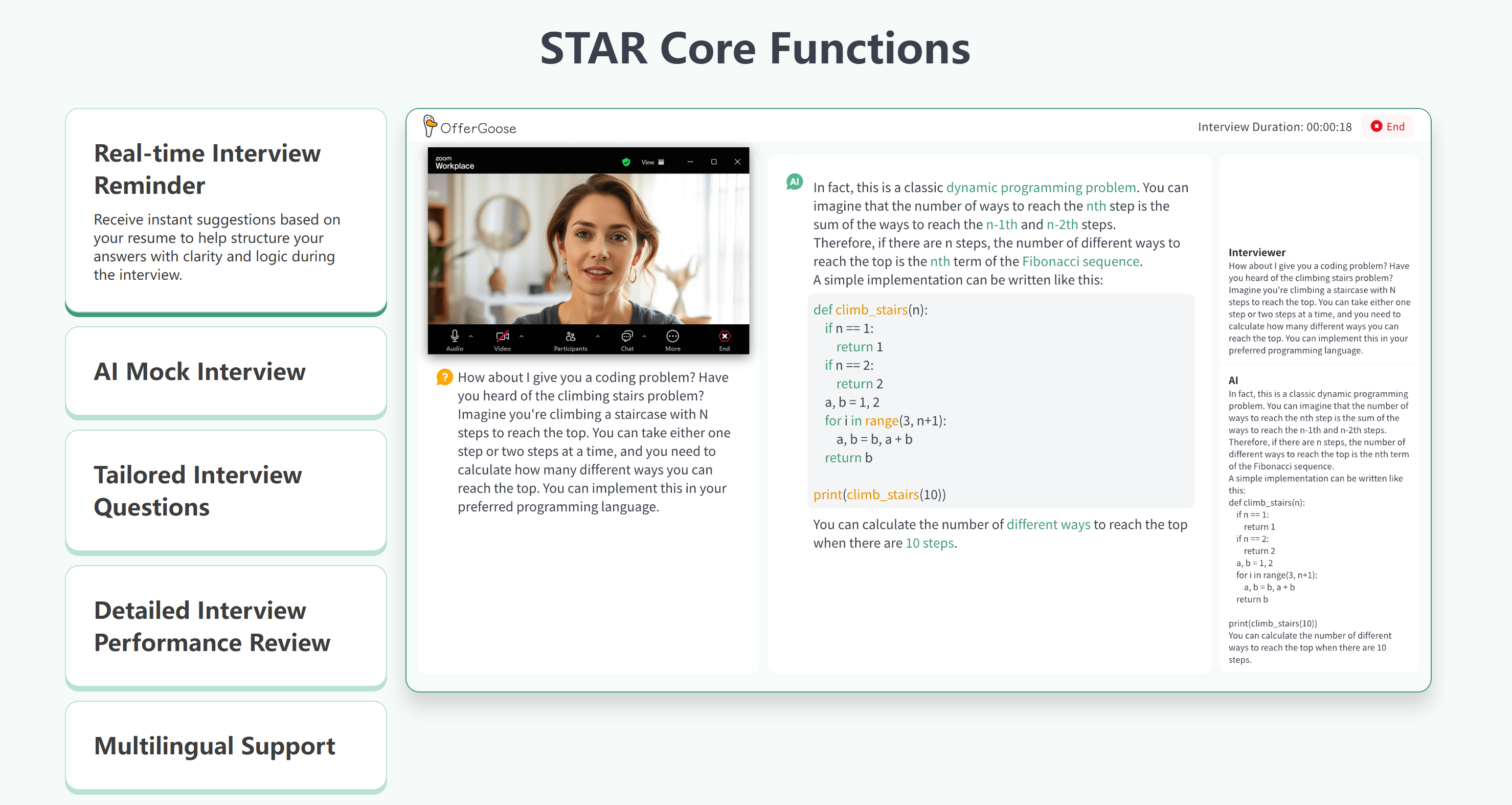
OfferGoose’s AI mock interview feature is built for exactly this kind of preparation. You select your target industry and role type, choose an interviewer style (supportive, neutral, or challenging), and answer questions in a realistic back-and-forth format. The system uses ASR (Automatic Speech Recognition) to capture your spoken answers, then evaluates them across four dimensions: logical structure, relevance to the question, fluency, and professional depth. You get a scored report with specific suggestions — not vague feedback like “be more confident,” but concrete pointers like “your second example drifted off-topic at 1:45; try ending with the result instead of adding context.”
Phase 4: Mock Interviews and Final Polish (Day 7)
The last day is about pressure-testing everything and setting up your post-break execution plan.
Run Full Mock Interviews
Do three complete run-throughs: introduction, project walkthrough, and follow-up questions. Record each one on your phone and listen back. You will catch verbal tics you never noticed — filler words, rushed transitions, sentences that trail off. These are not character flaws; they are editing opportunities.
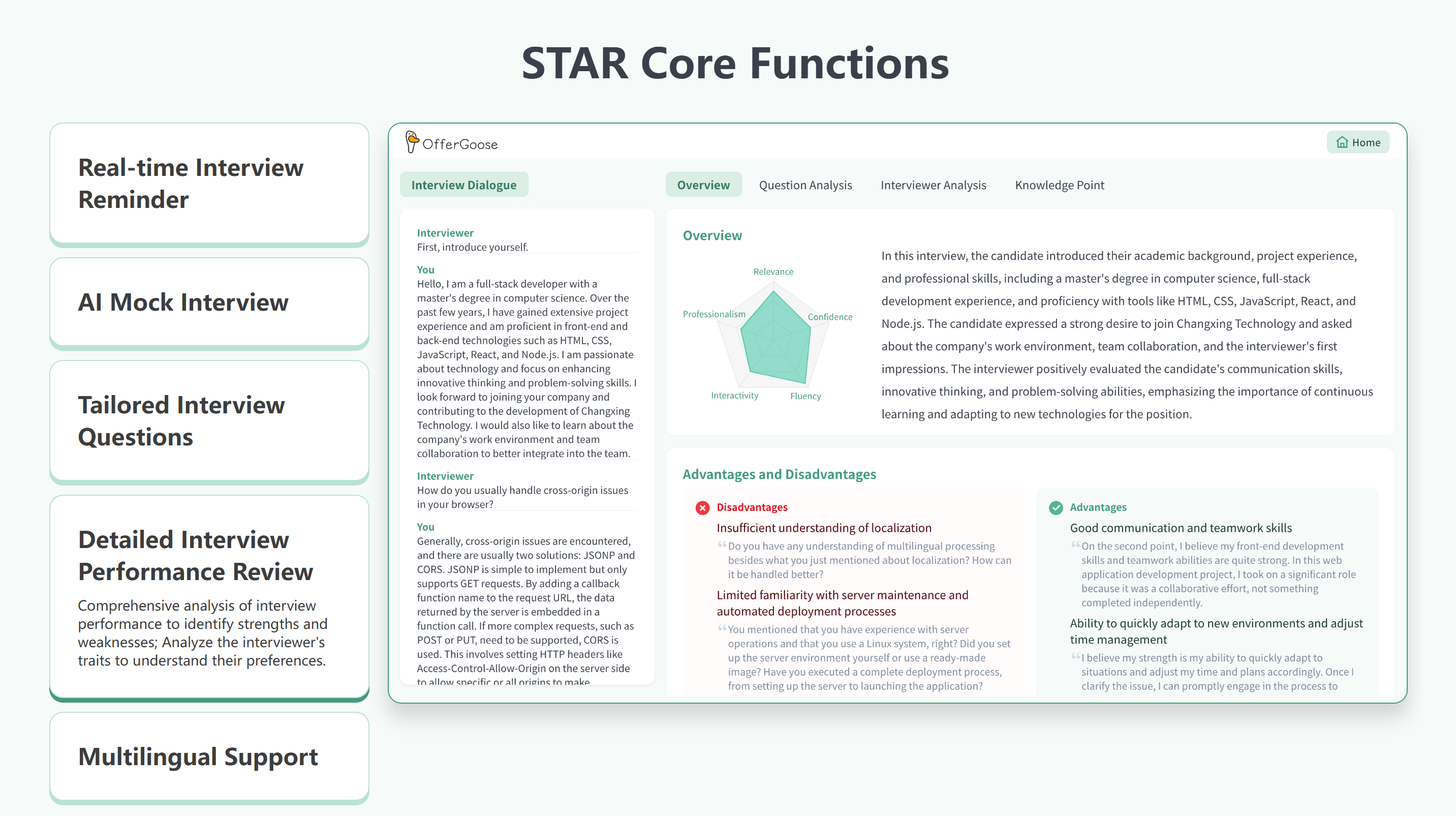
If you are using OfferGoose, run at least two sessions with the deep review feature enabled. After each session, you get a structured report scoring your performance on logic, relevance, expression, professionalism, engagement, and confidence. The report does not just tell you what was weak — it shows you exactly where in your answer the problem occurred and suggests a rewrite. This kind of targeted feedback is what turns “I practiced” into “I improved.”
The real value of mock interviews is not memorizing answers. It is reducing cognitive load — the mental energy you spend on “what do I say next” instead of “how do I connect with this person.” When your stories are so practiced that they run on autopilot, your brain frees up capacity for the things that actually win offers: reading the room, asking good questions, and building rapport.
Plan Your Post-Break Execution
On the last afternoon of the break, do three things:
- Finalize your target list with priority order, application links, and any referral contacts you have identified.
- Draft follow-up messages for any applications you sent before the break. Keep it short: “Hi [Name], I applied for the [Role] position on [Date]. I have attached an updated resume. Please let me know if there is a good time to connect. Thank you.”
- Set a calendar block for the first morning back — 9:00 AM to 10:30 AM. During that block, submit every application. Do not spread them across the day. Batch them so they all land while recruiters are opening their inboxes.
Three Mistakes to Avoid During a Holiday Job Search Sprint
1. Applying During the Break
It feels productive. It is not. Your application joins a queue that nobody is monitoring. When recruiters return, newer applications bury yours. Save every application for the first morning back.
2. Checking for Replies
If you applied before the break, you will not hear back during it. Checking your email twelve times a day does not change this fact — it only drains your focus. Turn off email notifications for the week. You can catch up on the first morning back.
3. Accepting the First Offer Out of Pressure
A holiday break can amplify financial anxiety, especially if you have been searching for a while. That pressure makes “just take something” feel like the right move. It rarely is. A role you accept out of desperation will cost you more time in the long run than an extra month of focused searching. If you feel the pressure building, remind yourself: the preparation you are doing this week directly increases your odds of a better offer, faster. You are not stalling — you are investing.
One more caution: holiday breaks see a spike in job scams — “work from home, earn $500/day, no experience needed.” If a posting asks for upfront fees for training, equipment, or “background checks,” walk away. Legitimate employers do not charge you to apply.
How OfferGoose Compresses Your 7-Day Timeline
Here is what the sprint looks like with and without AI assistance, based on the workflow described above:
| Phase | Manual Approach | With OfferGoose |
|---|---|---|
| Resume tailoring (Days 3-5) | 3-4 hours per version, manually cross-referencing JD keywords | ~40 minutes per version: AI parses JD, maps experience, generates STAR-structured draft |
| Interview practice (Days 6-7) | Write scripts alone, rehearse in front of a mirror, no structured feedback | Mock interviews with scored multi-dimension reports, specific rewrite suggestions |
| Target research (Days 1-2) | Manually copy-paste keywords from each JD into a spreadsheet | AI extracts and clusters keywords across multiple JDs automatically |
The time savings are real, but they are not the main point. The main point is that structured feedback — knowing exactly what to fix and how — turns practice into improvement. Without it, you can practice for seven days and only get better at your existing mistakes.
One OfferGoose user, a software engineer with four years of experience, described his holiday sprint this way: “I had been applying for two months with a generic resume and no interview practice. Over a long weekend, I used OfferGoose to tailor my resume for five target roles and ran eight mock interviews. The following Tuesday, I submitted all five applications. By Friday, I had three interview invitations. Two weeks later, I had an offer.”
FAQ
General Questions
Should I really not apply to anything during a holiday break?
Correct. Applications sent during a break sit unread and get buried under newer submissions when recruiters return. Use the break to prepare. Submit everything on the first business morning after.
Can I compress this into a 3-day weekend?
Yes, with trade-offs. Combine Days 1-2 (library + targets), Days 3-5 (focus on your top 3 roles instead of 10-15), and Days 6-7 (prioritize mock interviews over written scripts). You will not get the same depth, but you will still be far better prepared than if you had done nothing.
What if I do not have performance data for my projects?
Estimate conservatively and be transparent. Instead of “increased revenue by 30%,” write “contributed to a revenue increase estimated at 25-30% based on the campaign’s attribution window.” If you have no numbers at all, describe the scope: “managed a $50K budget across three channels” or “coordinated a team of six engineers.” Scope is a form of evidence too.
How do I find referrals during a holiday break?
LinkedIn is still there. Search for people at your target companies with shared connections, alumni overlap, or mutual groups. Send a short, respectful message: “Hi [Name], I am exploring [Role] opportunities at [Company] and noticed your background in [shared context]. Would you be open to a 10-minute chat about your experience there? No pressure at all.” Send these during the break — people are more likely to reply when their work inbox is quiet.
Questions About OfferGoose
How does OfferGoose tailor a resume for a specific job?
You upload your base resume and paste the job description. OfferGoose’s NLP engine extracts the key requirements, skills, and preferred qualifications from the JD. It then scans your experience and identifies the strongest matches, rewriting bullet points to highlight relevant achievements using the STAR structure. You review and edit every suggestion before finalizing — the AI proposes, you decide.
Is the mock interview experience realistic?
OfferGoose’s AI mock interview adapts to your answers in real time. If you give a shallow response, it asks a follow-up. If you mention a project, it probes for details. You can configure the interviewer’s style — supportive for early practice, challenging for pressure testing. The experience is not identical to a human interviewer, but it is close enough that users consistently report feeling more prepared and less nervous in real interviews after 3-5 practice sessions.
Can I use OfferGoose for technical interviews?
Yes. OfferGoose includes a dedicated mode for software engineering interviews, covering algorithm explanations, system design walkthroughs, and technical concept discussions. The platform supports multiple programming languages and provides structured frameworks for common technical question types.
Is there a free version?
OfferGoose offers free access to basic features including resume analysis and a limited number of mock interview sessions. Premium features — deep review reports, unlimited mock interviews, and multi-role resume tailoring — require a subscription. Visit the OfferGoose website for current pricing and feature details.
Ready to turn your next break into a career move? Start your 7-day sprint at OfferGoose. Resume optimization, AI mock interviews, and deep performance reviews — everything you need to be the first application in the inbox when the break ends.