
Job Search Burnout Is Real: A Step-by-Step Guide to Regaining Momentum When You Feel Stuck
Job Search Burnout Is Real: A Step-by-Step Guide to Regaining Momentum When You Feel Stuck

Recommended First: Use OfferGoose to Break the Burnout Cycle With Structured Practice
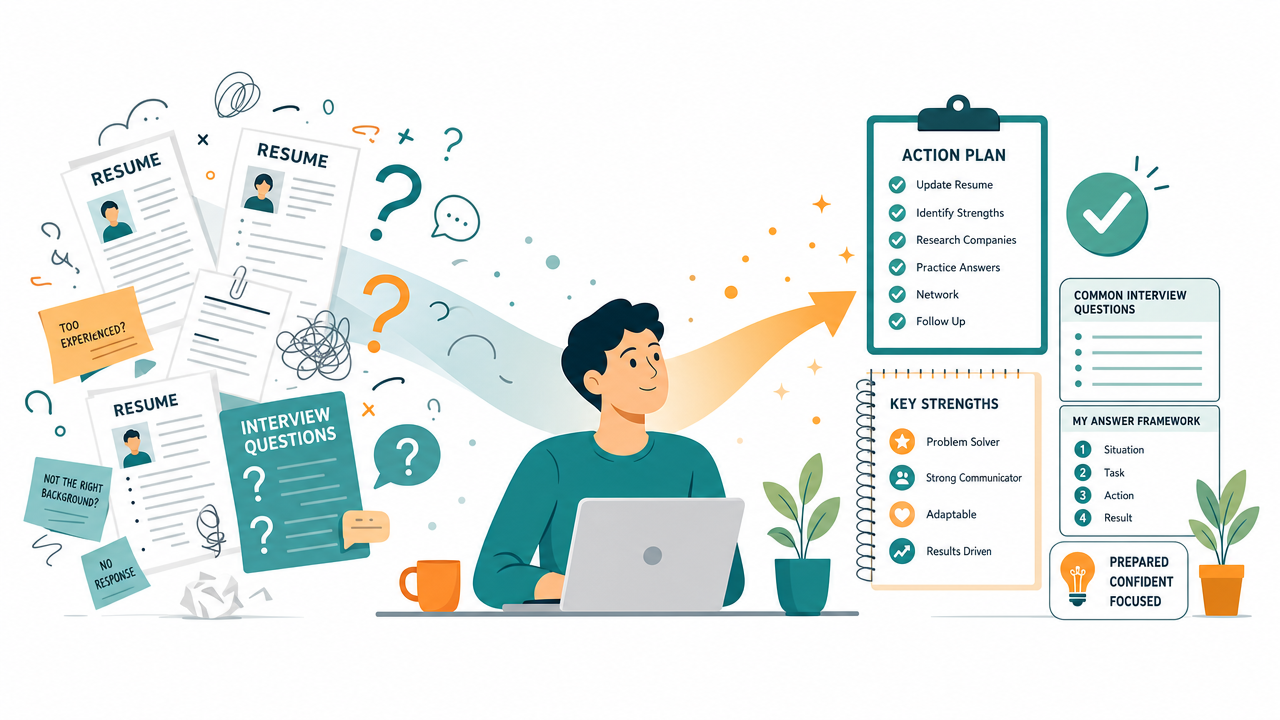
Here is a scenario that will sound familiar if you have been job hunting for more than a few weeks: you open LinkedIn or Indeed, scroll for thirty minutes, and close the tab without applying to a single role. Your resume has been revised three times. You have sent out dozens of applications. A few screening calls happened, then silence. And the worst part is not the lack of results — it is the creeping feeling that you have run out of energy to even try.
If this describes where you are right now, do not mistake it for laziness or lack of ambition. What you are experiencing has a name, and understanding it is the first step toward fixing it.
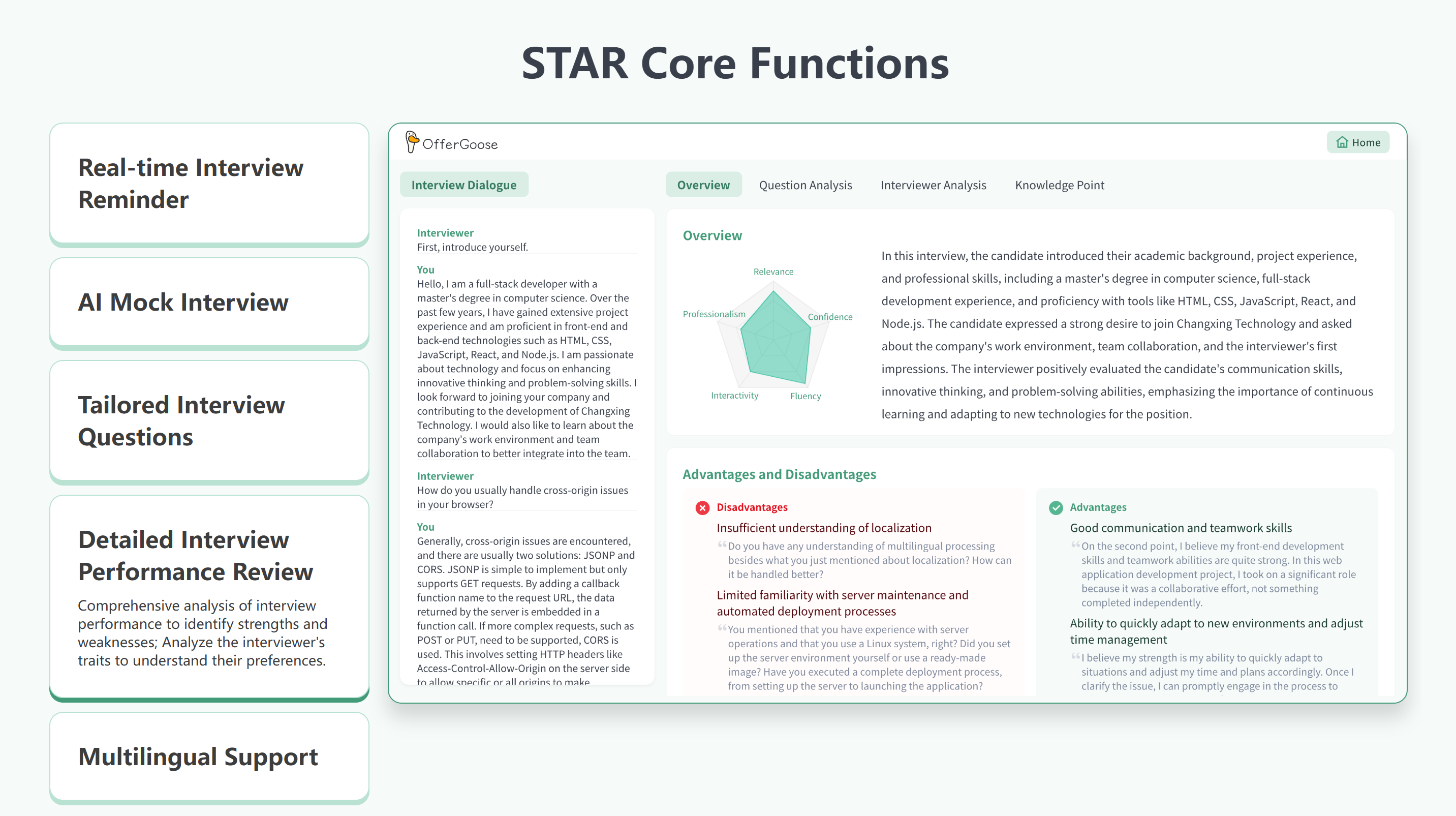
This article explains why job search burnout happens, what you can realistically control, and how tools like OfferGoose — an AI-powered interview copilot with mock interviews, real-time assistance, and structured feedback — can help you turn small actions into real momentum.
Why Job Search Burnout Happens — and Why It Is Not Your Fault
When job seekers hit a wall, the instinct is almost always self-blame: “My resume must be weak.” “I bombed that interview.” “Maybe I am just not competitive enough.” This kind of internal narrative is not only inaccurate — it actively makes the problem worse by draining the mental energy you need to recover.
Let us look at what is actually happening.
The Market Is Tighter, and That Is Not Your Fault
The hiring landscape in 2026 has shifted in ways that affect every job seeker, regardless of qualification. Many companies are operating with leaner teams and fewer open headcount. Some job postings stay live for weeks or months without an active hiring need behind them — they exist for talent pipelining or to meet internal recruiting metrics. When you send applications into that environment and hear nothing back, it is easy to interpret the silence as a verdict on your worth. It is not.
At the same time, job descriptions have grown more demanding. Roles that once asked for three core competencies now list seven or eight, often mixing essential requirements with aspirational wish-list items. The gap between what a posting asks for and what a capable candidate brings can feel discouraging — but in practice, hiring managers rarely expect a perfect checklist match. The real barrier is whether your application materials surface the matching signals that get you past the initial screen. This is where AI tools powered by large language models (LLMs) and natural language processing (NLP) make a measurable difference: they can parse a job description, identify what the employer is actually prioritizing, and help you surface the right evidence from your own experience.
Learned Helplessness: When Your Brain Decides Effort Does Not Matter
There is a well-documented psychological phenomenon called learned helplessness. When a person repeatedly experiences failure that feels beyond their control, the brain eventually stops initiating action — even when circumstances change and success becomes possible.
The job search version of this cycle is painfully familiar: you revise your resume → no response. You prepare thoroughly for an interview → no offer. You increase your application volume → still nothing. After enough rounds, your brain forms a quiet but powerful conclusion: “Trying does not change the outcome.” Once that belief takes hold, you are not choosing to procrastinate — your brain is actively suppressing the impulse to act.
This is not laziness. It is depleted psychological energy. From a cognitive load perspective, job searching demands an enormous amount of mental bandwidth: researching companies, tailoring applications, managing recruiter communication, performing under interview pressure, and regulating your own emotions — all simultaneously. When none of these channels produce positive feedback for weeks, the whole system slows to a crawl.
You Might Be Chasing Roles You Do Not Actually Want
There is a quieter but equally draining dynamic at play: the mismatch between the roles you see and the roles you genuinely want. When you spend hours scrolling past jobs where the salary is too low, the requirements feel unreachable, or the company culture seems off, each “looked but did not apply” moment is a tiny drain on your decision-making reserves. Over time, this adds up to a state where opening a job board feels exhausting before you even start.
How to Regain Momentum: Four Steps to Break the Job Search Burnout Cycle
The following framework is not motivational fluff. It is a sequence of concrete actions designed to work with your depleted state rather than demanding willpower you do not currently have.
Step 1: Sort Your Problems Into Three Buckets
Take a piece of paper or open a blank document. List every frustration you have about your job search, then sort each one into one of three categories:
| Category | What It Means | Examples | What to Do |
|---|---|---|---|
| Bucket A: You can change it directly | Within your control, actionable in 1-2 weeks | How you describe your experience on your resume, your self-introduction pitch, your knowledge of the target industry | Attack these first |
| Bucket B: It takes time to build | Requires sustained effort over 1-3 months | Depth of industry expertise, a new technical skill, a professional network | Schedule it, chip away |
| Bucket C: Completely outside your control | Has nothing to do with your ability | Company hiring freezes, a recruiter’s subjective preference, who else applied | Acknowledge it, then let it go |
This sorting exercise is itself a form of cognitive behavioral intervention. When you move from “everything is terrible” to “here is exactly what I can and cannot influence,” your brain stops running the generalized anxiety loop. You will likely find that the items causing the most distress are in Bucket C — the ones you were never responsible for in the first place.
Step 2: Replace Grand Plans With Micro-Actions
When your motivation is at rock bottom, ambitious goals like “apply to 50 jobs this week” or “land three interviews by Friday” do not help — they paralyze, because you already know you cannot deliver.
What works instead is the 10-minute rule: commit to a single, absurdly small action that is almost impossible to fail at.
For example:
- “I will spend 10 minutes rewriting one bullet point in my project experience section.”
- “I will find three genuinely relevant job postings. I do not have to apply — just identify them.”
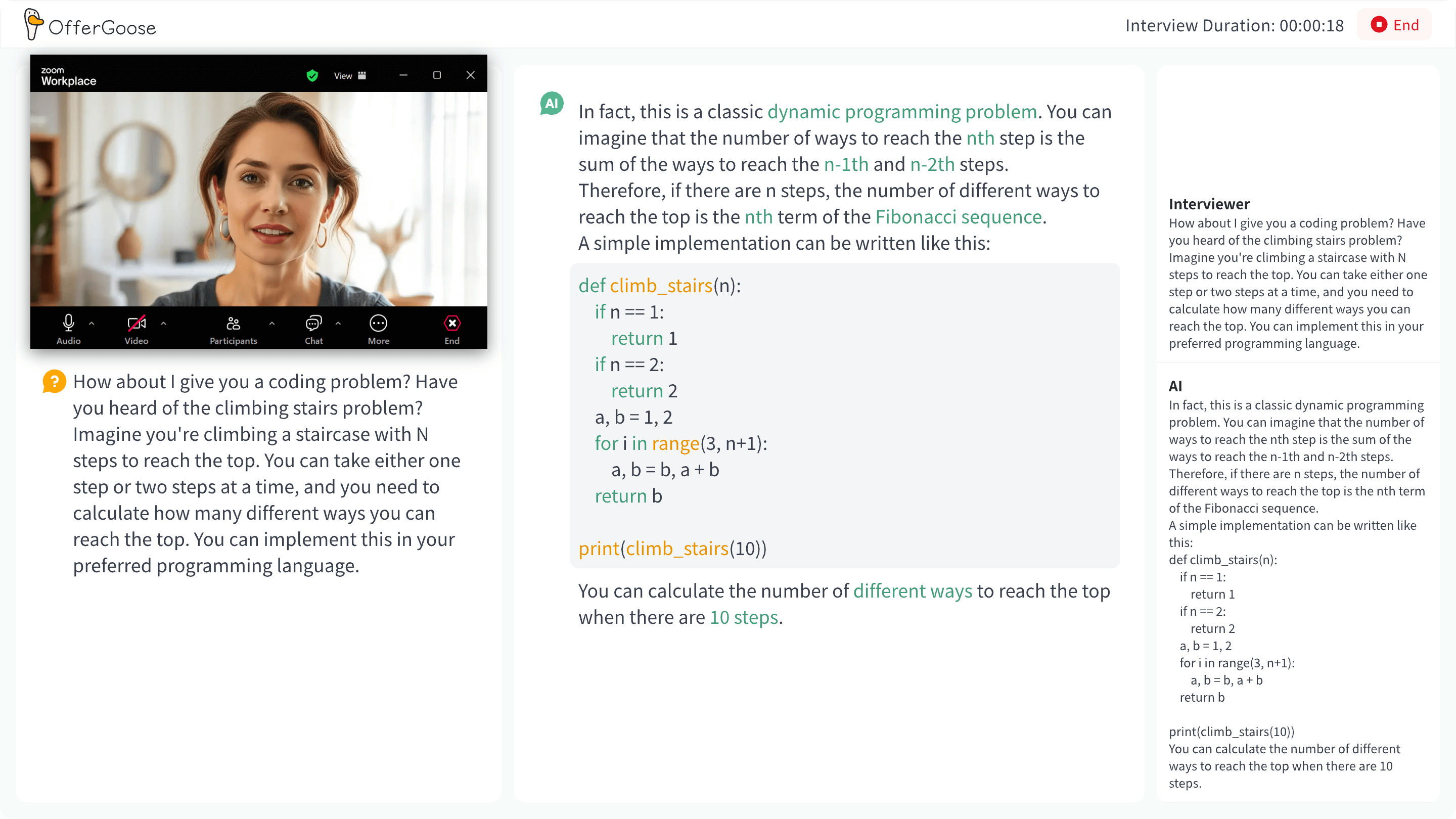
- “I will open OfferGoose and run one 5-minute AI mock interview. That is it.”
That third option deserves a closer look. Interview practice is the part of job searching that most people avoid the longest — because it is the part that triggers the most anxiety. The fear of “what if I cannot answer the question” is strong enough to keep people rewriting their resume for weeks while never doing a single practice round.
OfferGoose’s AI mock interview removes that barrier entirely. It is a zero-social-pressure practice environment. There is no human watching. There is no risk of embarrassment. You can type or speak, start with a 5-minute quick session, and let the automatic speech recognition (ASR) and NLP engine handle question comprehension and response structuring. The moment you realize “I actually had something to say,” the mental block starts to crack.
Step 3: Create Physical Boundaries Around Your Job Search
When you are job hunting from home, the line between “working on my career” and “spiraling in anxiety” disappears fast. You wake up and check job boards. You check them again before bed. Your brain starts associating the entire activity with stress.
Three practical fixes:
Change out of your sleepwear. It sounds trivial, but the act of putting on daytime clothes sends a clear signal to your brain: “This is work mode now.” If possible, go to a library, a coffee shop, or a co-working space. A physical environment shift has an outsized impact on your mental state.
Set a hard “end of workday” time. Pick a time — say 7:00 PM — after which you do not open job boards, do not reply to recruiter messages, and do not think about applications. Job searching is a full-time job, and full-time jobs have quitting time. Protecting your mental energy matters more than sending five extra applications.
Automate the repetitive parts. A huge portion of job-search fatigue comes from doing the same manual work over and over: tailoring the same base resume to different roles, manually comparing your experience against each job description. OfferGoose’s JD-to-resume matching uses retrieval-augmented generation (RAG) to parse job descriptions, surface relevant highlights from your background, and generate targeted optimization suggestions. Let the machine handle the mechanical work so your mental energy goes to the decisions that actually require human judgment.
Step 4: Reframe the Gap as a Preparation Window
A career gap of a few months — or even half a year — is far more common than most job seekers assume. The majority of hiring managers understand that job searches take time, especially in the current market. What they care about is not the gap itself but whether you used it productively.
Instead of seeing the gap as lost time, treat it as a preparation window. Three things you can do:
Maintain a learning rhythm. You do not need to study eight hours a day. Two or three focused sessions per week give you a natural answer when an interviewer asks: “I used this time to systematically strengthen my skills in X.”
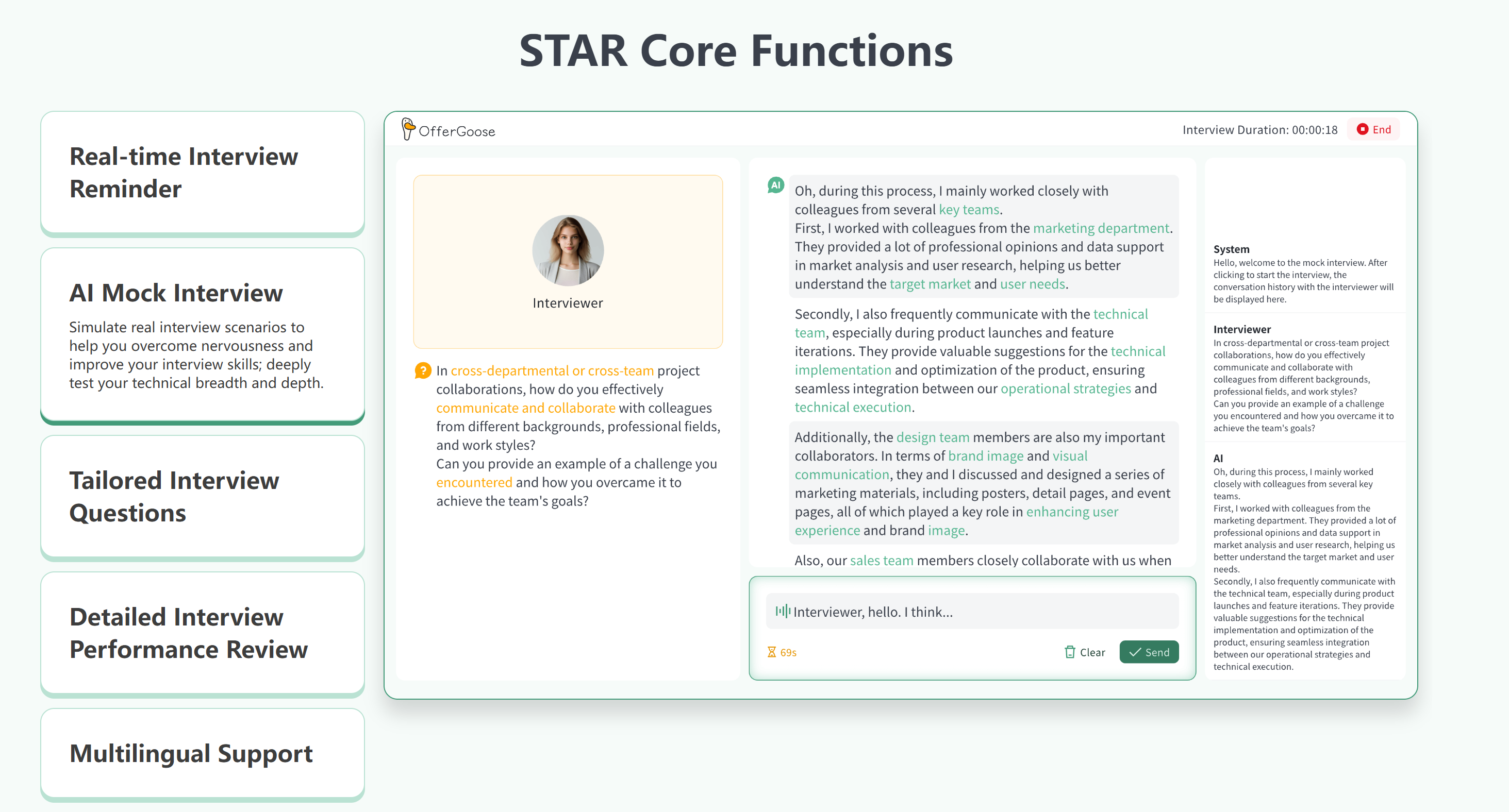
Keep your interview muscles warm. Interviewing is a skill, and skills degrade without use. Many candidates avoid anything interview-related during a gap, then freeze during their first real opportunity because they cannot even deliver a smooth self-introduction. A 15-minute OfferGoose mock interview once or twice a week keeps your STAR method (Situation-Task-Action-Result) response patterns active and your structured interview thinking sharp.
Move your body, see people, do things that make you feel like a person. Recharge. A job search is a marathon, not a sprint. Your immediate goal is not “get hired tomorrow” — it is “stay in a condition where you can keep showing up.”
A Real Case: From Three Months of Silence to Three Final Rounds in Two Weeks
To make this framework concrete, here is an anonymized example of how it played out for one candidate.
Candidate profile: David, 31, marketing operations, 5 years of experience. After being laid off from a mid-size SaaS company, he spent three months applying to roles across the tech sector. He landed seven initial interviews but was eliminated after the first or second round every time. By month three, he had stopped opening job boards entirely and was questioning whether he belonged in marketing at all.
What was actually wrong: David’s issue was not his competence. It was a break across three links in the chain — his resume was not surfacing strong enough matching signals to get past applicant tracking systems (ATS) , his interview answers lacked structure and specificity, and the accumulated rejection had collapsed his motivation.
What changed:
Resume: Using OfferGoose’s JD matching, he created three tailored versions of his resume targeting different role types. He replaced generic descriptions like “managed email campaigns” with quantified evidence: “Designed and executed a re-engagement email series that recovered 14% of churned trial users over 8 weeks, contributing to an estimated $120K in annual recurring revenue recovery.”
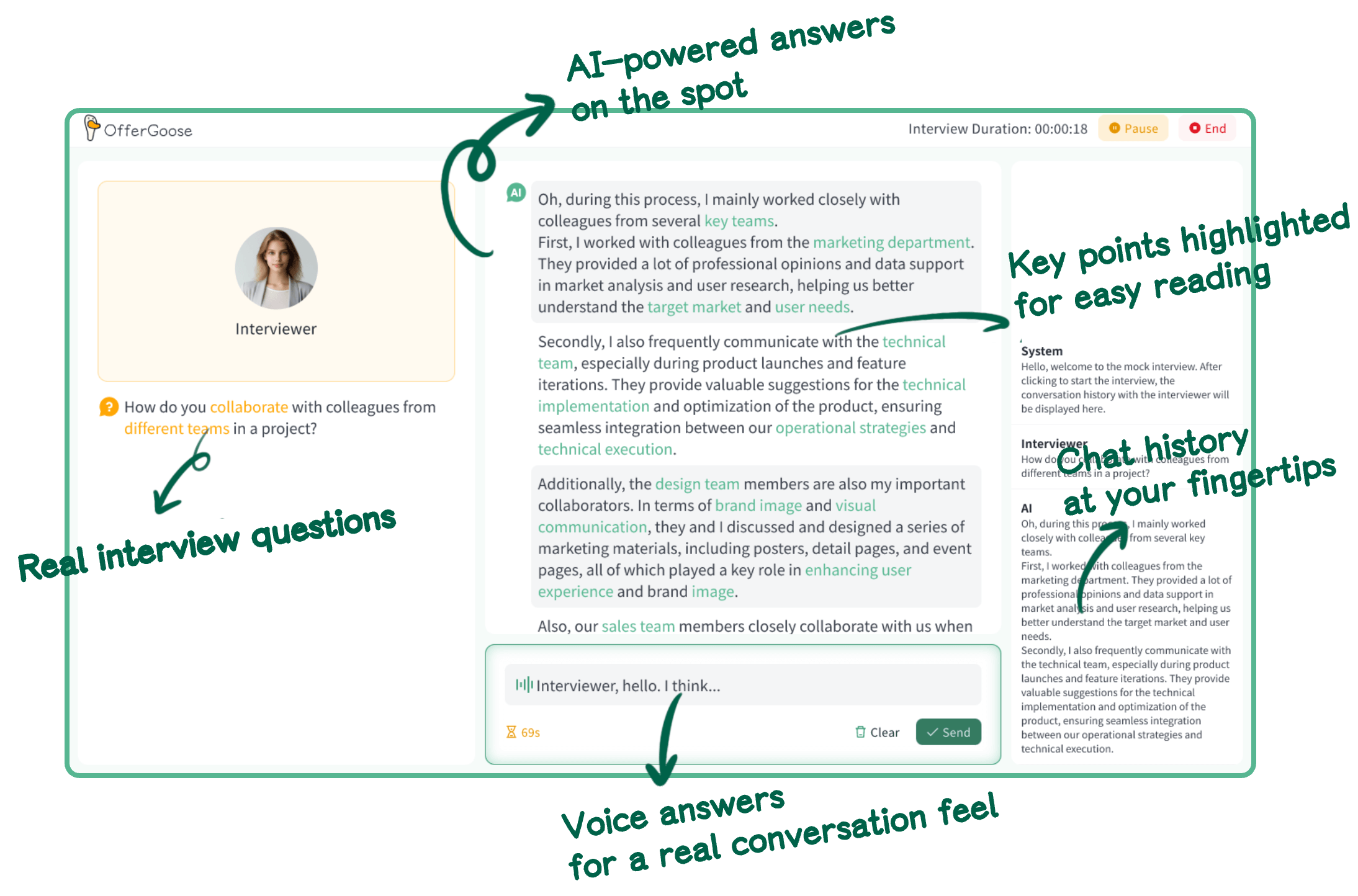
Interview practice: He ran six OfferGoose AI mock interview sessions, starting with 5-minute quick rounds and building up to 15-minute deep-dive sessions. He focused specifically on two high-frequency prompts — “Tell me about yourself” and “Describe a project you are most proud of” — and refined them using the Chain-of-Thought (CoT) feedback the tool provided on structure, specificity, and evidence quality.
Mindset: He adopted the 10-minute rule and a strict 7:00 PM cutoff. Instead of treating job searching as an all-day anxiety marathon, he treated it as a bounded workday with defined tasks.
Result: Within two weeks of making these changes, David advanced to three final-round interviews and accepted an offer as a growth marketing lead at an e-commerce company.
Before:
I managed email marketing campaigns for our SaaS product. I was responsible for creating content, segmenting audiences, and tracking performance metrics. The campaigns generally performed well and contributed to user engagement goals.
After:
I designed and executed a re-engagement email series targeting 4,200 churned trial users. After analyzing drop-off patterns in the onboarding funnel, I segmented the audience into three behavior-based cohorts and developed distinct messaging for each. The series recovered 14% of churned users over 8 weeks, contributing to an estimated $120K in annual recurring revenue recovery. I presented the methodology and results to the VP of Marketing, and the framework was adopted across two additional product lines.
Why this version works: The original describes a job duty. The revised version tells a story with a specific situation (churned trial users), a concrete action (behavior-based segmentation, distinct messaging), a measurable result ($120K ARR recovery), and a signal of organizational impact (adoption across product lines). This is the difference between a resume that gets skimmed and one that gets you into the room.
The Bus Stop Analogy: Staying Ready During Your Job Search
Here is a way to think about it.
Job searching is like waiting at a bus stop. When the bus is not coming, stomping your feet harder does not make it arrive any faster. But if you spend the wait draining your phone battery, catching a cold, and working yourself into a state of despair — when the bus finally shows up, you might not have the energy to get on.
Your exhaustion and frustration are normal. The market, the timing, the luck of which recruiter sees your application — these are not things you can control. What you can control is whether you did one small thing today that moved you closer, and whether you protected your energy for tomorrow.
If you need a low-barrier starting point, try one 5-minute mock interview on OfferGoose. No preparation required, no need to be perfect. Just open it and go. The belief that “nothing I do matters” starts to dissolve the moment you get your first piece of concrete, useful feedback.
Vote: What drains your energy the most during a job search?
- A. Sending applications and hearing nothing back
- B. Getting interviews but never advancing past the first round
- C. The roles I find do not match what I actually want
- D. Mental burnout — I know I should act but cannot find the motivation
FAQ
General Questions
How long of an employment gap is considered normal?
In the current hiring market, gaps of 3-6 months are very common and most hiring managers understand this. The key factor is what you did during the gap. If you can demonstrate that you maintained a learning rhythm, worked on projects, or developed relevant skills, a gap can actually strengthen your candidacy by showing initiative.
Why do I get no responses even after revising my resume multiple times?
Lack of response is rarely about your resume being “bad.” It is usually about matching signals being too weak for the specific roles you are targeting. Many applicant tracking systems (ATS) filter applications based on keyword alignment with the job description. If your resume describes your experience in generic terms rather than role-specific, quantified outcomes, even strong experience can get filtered out. Tools that analyze JD-to-resume alignment can help identify exactly which signals are missing.
How can I calm my nerves right before an interview?
Pre-interview anxiety comes from uncertainty — you do not know what will be asked and you are not sure you can answer well. The most effective fix is to reduce the unknown: simulate the interview experience beforehand so your brain has a reference point. Even one 10-minute AI mock interview session can shift your mental state from “I have no idea what is coming” to “I have done this before.”
Is it better to take a break from job searching or keep pushing through?
If you are experiencing burnout symptoms — dread when opening job boards, inability to focus, emotional exhaustion — a structured short break (3-7 days) with a clear return date is far more effective than pushing through in a depleted state. The key word is structured: decide in advance when the break starts and ends, and what you will do instead (rest, exercise, social activities). Unstructured avoidance tends to extend indefinitely and adds guilt on top of exhaustion.
Questions About OfferGoose
Is OfferGoose free to use?
OfferGoose offers a free trial with access to core features so you can evaluate whether it fits your workflow before committing. For the most current pricing and feature details, please check the official website.
How is OfferGoose different from other AI interview tools?
OfferGoose is not a single-function mock interview tool. It covers the full job-search workflow: JD-to-resume matching, AI mock interviews with multi-round follow-up questioning, a real-time interview teleprompter for live interviews, and deep post-interview review reports that analyze your performance across dimensions like logic, relevance, delivery, and professionalism. It is built on LLM and ASR technology and designed to function as an end-to-end interview copilot rather than a standalone practice app. We recommend exploring the full feature set on the website to see if it matches your needs.