
Why OfferGoose AI Mock Interviews Are Suddenly Everywhere: How Three Types of Job Seekers Use It to Prepare Smarter
Why OfferGoose AI Mock Interviews Are Suddenly Everywhere: How Three Types of Job Seekers Use It to Prepare Smarter

Recommended First: Use OfferGoose to Turn Interview Anxiety Into Structured Preparation
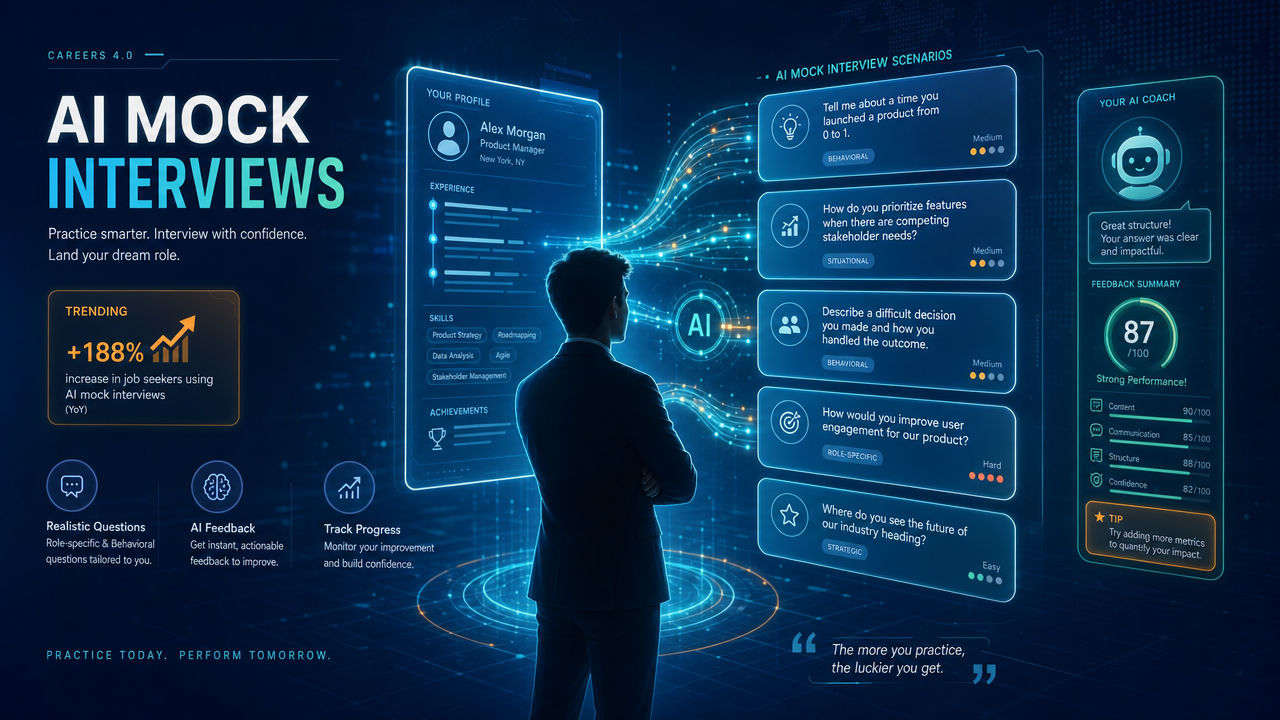
If you have been on any job-search forum or career-focused social media lately, you have probably noticed the same pattern: candidates are no longer just reading interview guides and memorizing common questions. They are running AI-powered mock interviews before the real thing — and they are talking about it.
Among the tools driving this shift, OfferGoose has become one of the most discussed names. Not because of aggressive advertising, but because its feature set directly addresses a problem that almost every job seeker faces: knowing you have the experience, but struggling to communicate it under pressure.
This article breaks down who is using OfferGoose, what problems it actually solves, and whether it fits your interview preparation workflow.
Why AI Mock Interviews Became a Necessity, Not a Luxury
The Real Problem Is Not Knowledge — It Is Cognitive Load
Most candidates prepare for interviews the same way: read through common questions, write out answers, practice in front of a mirror. Then the interview starts, the hiring manager asks a slightly rephrased version of a question, and everything falls apart.
The issue is cognitive load. During an interview, your brain is doing two demanding things simultaneously: parsing the interviewer’s question in real time and constructing a coherent, structured response. If you have not practiced under conditions that simulate that dual demand, even a well-prepared candidate can freeze.
Traditional preparation methods — practicing with a friend, recording yourself — help to a point. But friends rarely ask the kind of follow-up questions a real interviewer would, and self-review tends to be vague (“I sounded nervous”) rather than actionable.
How AI Changed the Game
What makes tools like OfferGoose fundamentally different is not that they generate answers for you. It is that they create a low-stakes, high-fidelity training environment where you can practice repeatedly, receive structured feedback, and build the mental pathways that make strong answers feel natural rather than rehearsed.
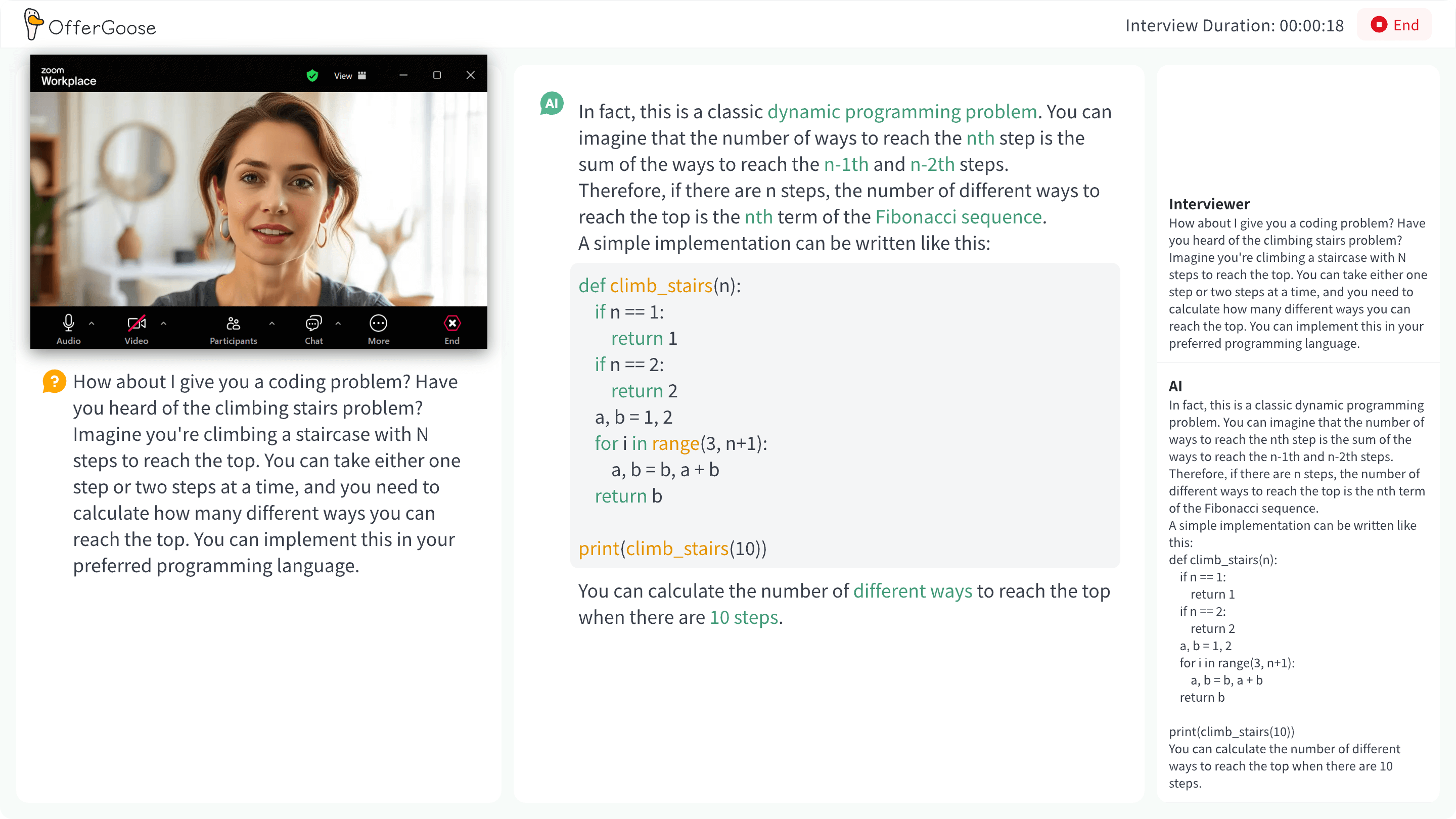
This shift is powered by several converging technologies: large language models (LLMs) that can understand job descriptions and resumes in context, automatic speech recognition (ASR) that transcribes interview questions in real time, and retrieval-augmented generation (RAG) that pulls relevant frameworks from your background to structure responses on the fly.
Three Types of Job Seekers Using OfferGoose — and Why
The user base for OfferGoose is not a monolith. Three distinct groups have emerged, each with a different pain point that the tool addresses in a specific way.
Fresh Graduates: From Zero Interview Experience to Demonstrated Readiness
For new graduates entering the job market, the challenge is straightforward: they have the academic background and internship experience, but they have no reference point for what a competitive interview looks like. Every question feels like a surprise, and the fear of the unknown creates anxiety that undermines performance.
Take the example of a 2026 computer science graduate preparing for software engineering roles. He used OfferGoose’s AI mock interview feature every evening during campus recruitment season, running 30-minute sessions in a mixed technical-plus-behavioral mode. The AI interviewer pulled questions directly from his resume projects — asking him to walk through a database schema decision from his capstone project, or to explain how he handled a merge conflict during a group coding assignment.
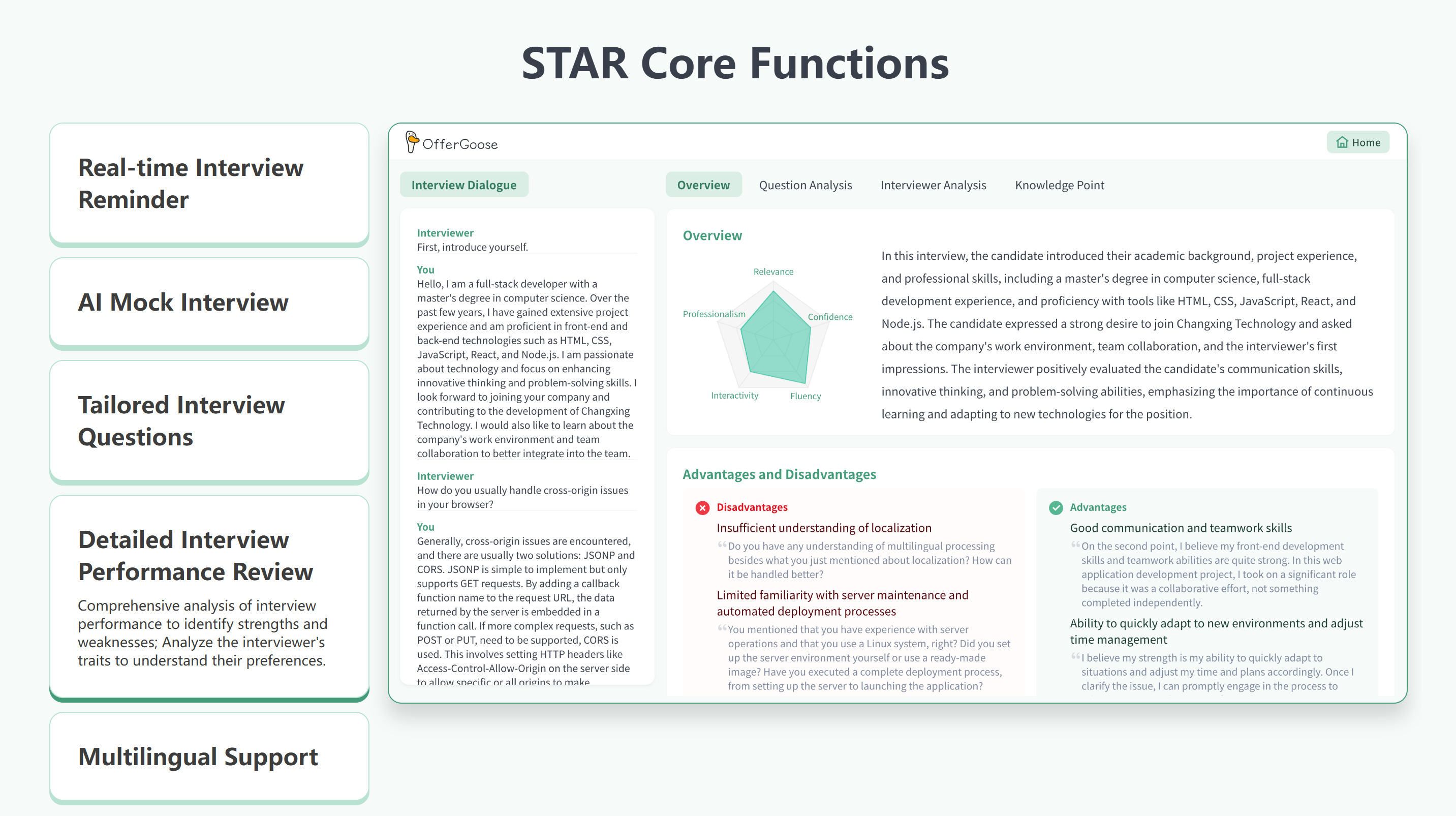
After three rounds, the deep interview review flagged two consistent weaknesses: his system design answers lacked architectural reasoning beyond listing components, and his behavioral answers jumped to results without showing the actions he personally took. The review broke each answer down across dimensions like logical completeness, clarity, professional depth, and interaction quality.
“The biggest change wasn’t learning new content,” he said. “It was that I stopped being afraid of follow-up questions. Once you have been drilled by an AI that asks five layers deep on every answer, a real interviewer feels manageable.”
Career Switchers: Translating Experience Across Industries
Career switchers face a different problem: they have substantial experience, but it is framed in the language of their old industry, not their target one. A hiring manager for a product role does not care about “daily operations data reporting” unless you can explain why that skill matters for product decisions.
Consider someone moving from three years in traditional industry operations into an AI product management role. Her resume said things like “managed departmental operations data and reporting.” In the context of a product interview, that sentence communicates almost nothing — not because the work was unimportant, but because operations vocabulary and product vocabulary operate on different evaluation axes.
OfferGoose helps here by understanding both the candidate’s raw background and the target job description. It guides the candidate to reframe “operations data reporting” as “data-driven business decision support,” and “cross-department communication” as “multi-stakeholder coordination and requirement prioritization.”
This is not fabrication. The experience is the same. What changes is the translation layer — turning “what I did” into “what value I created, in terms the target role understands.” The underlying methodology is what some hiring researchers call a competency evidence chain: linking real experiences to the evaluation criteria of a specific role through structured reframing.
Returning Professionals: Rebuilding Interview Muscle Memory
A third group is easy to overlook: professionals with 3-7 years of experience who have been at the same company for a long time. Their skills are current, but their interview skills are not.
The interview landscape shifts faster than most people realize. Two years ago, technical interviews focused on microservices decomposition. Today, interviewers ask about AI agent architectures and multimodal application design. Behavioral interviews have also evolved — structured interviewing frameworks mean that answers are now evaluated against standardized rubrics, not just the interviewer’s gut feeling.
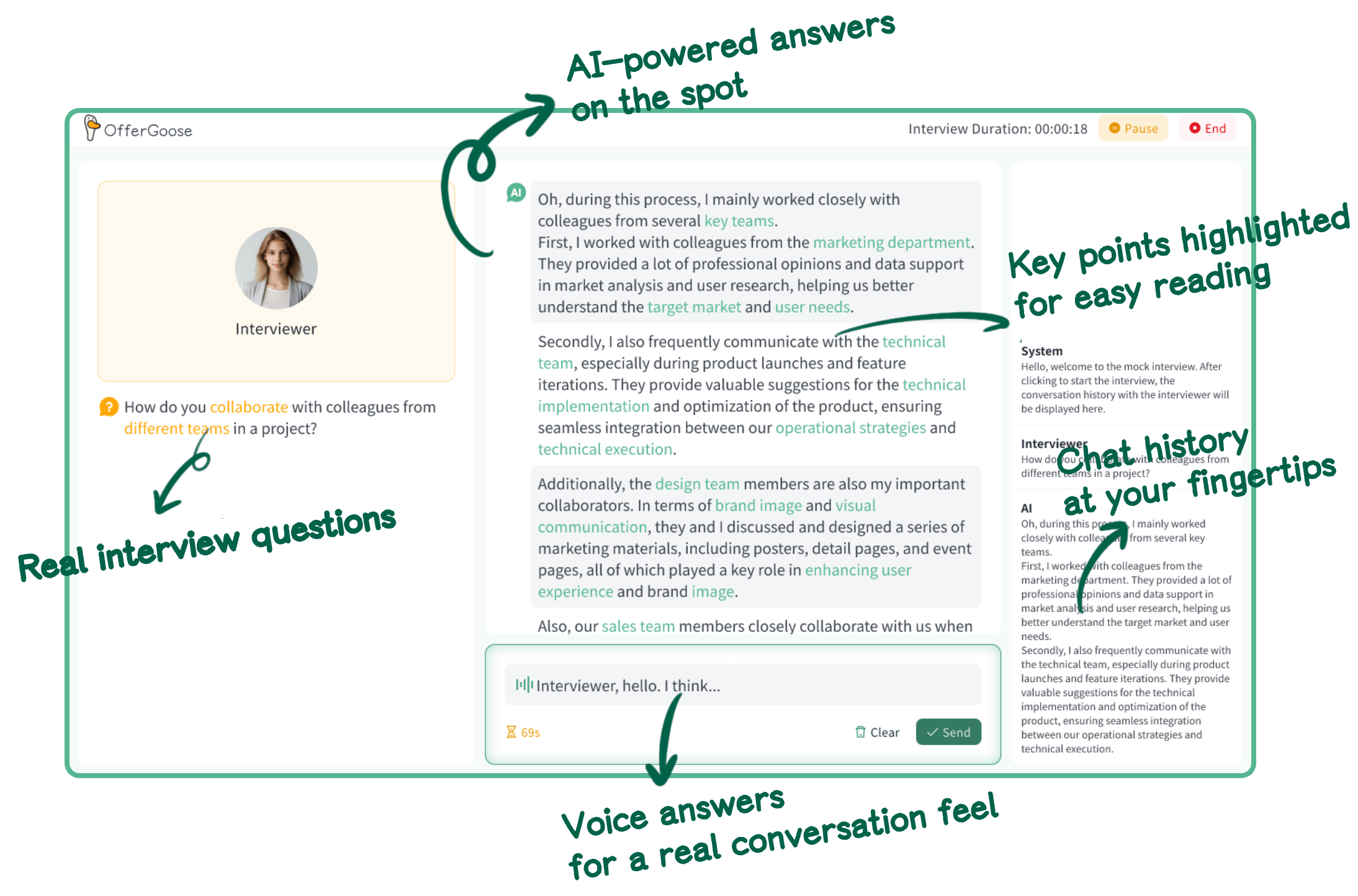
For these candidates, OfferGoose serves a dual purpose. Before the interview, the AI mock interview mode lets them configure interviewer style and industry focus, exposing them to current question patterns in a safe environment. During the actual online interview, the real-time interview assistance feature acts as a “second brain” — not answering for them, but surfacing framework prompts when they hit a mental block, helping them connect dots they already know but cannot quickly organize under pressure.
How OfferGoose Fits Into a Real Interview Preparation Workflow
Rather than listing features, here is how OfferGoose maps to the three phases of interview preparation.
Phase 1: Before the Interview — Mock Interviews and Deep Review
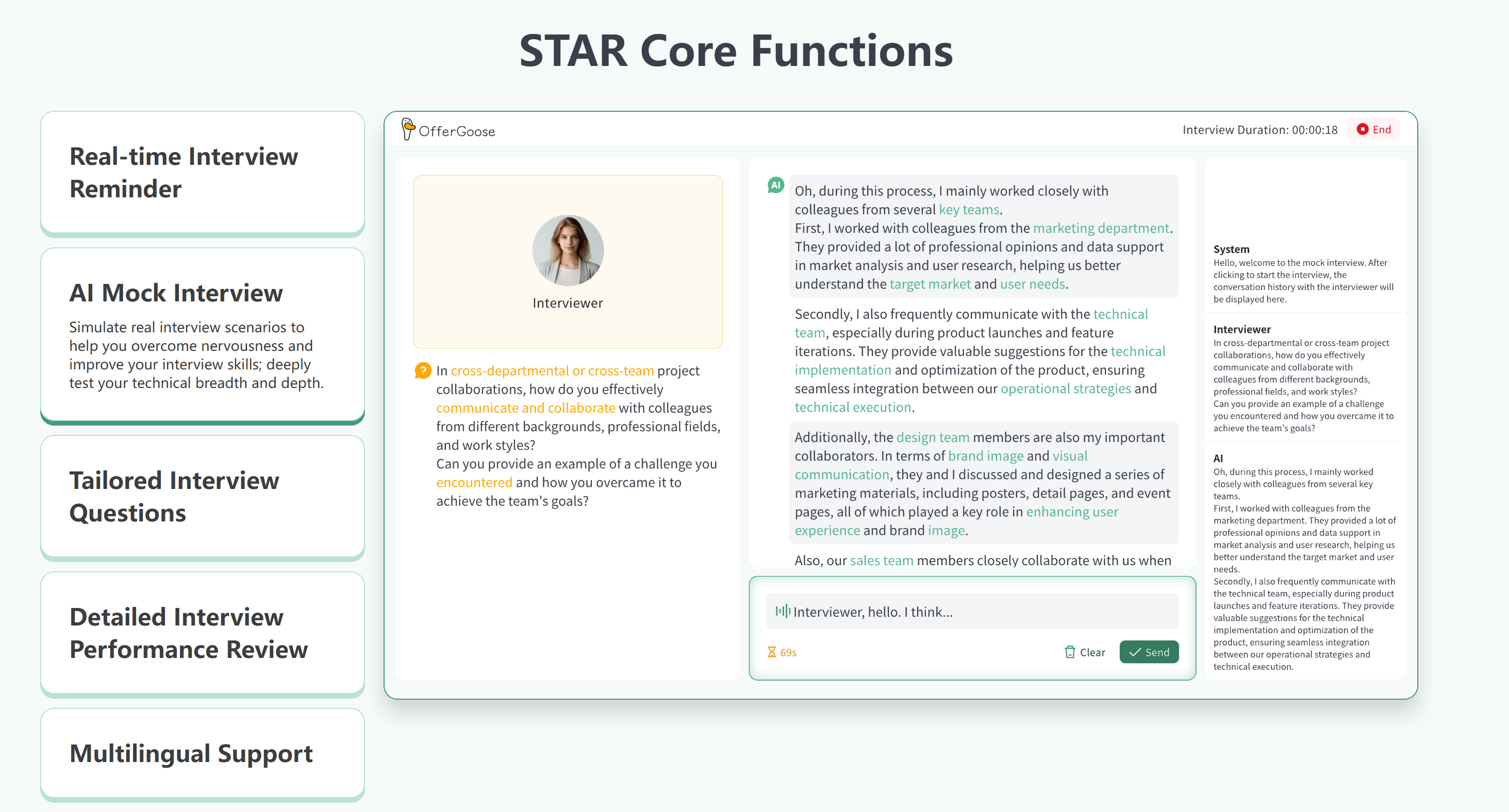
Configure a session based on your needs: interview length (15, 30, or 45 minutes), interviewer style (supportive, pressure-testing, or technically deep), question mix (behavioral, technical, case study, or blended), and language (English, Chinese, or bilingual).
After each session, the deep review report scores your performance across five dimensions — logical completeness, clarity of expression, professional depth, interaction quality, and confidence — and flags specific moments where you hesitated or lost logical thread. You can then target those weak spots in the next round.
Phase 2: During the Interview — Real-Time Assistance
This is OfferGoose’s most distinctive feature. During a remote video or phone interview, the tool uses ASR to transcribe the interviewer’s question in real time, cross-references your resume and the job description, and surfaces a structured response framework within 1-2 seconds.
Crucially, it does not generate full-sentence answers for you to read. It provides a STAR skeleton and key concept prompts — like a coach’s tactical board on the sideline. You still do the playing; it just helps you remember the play.
Phase 3: After the Interview — Review and Iterate
After each real interview, you can input the questions you received into OfferGoose. It analyzes which answers landed well, which need improvement, and generates a targeted training plan for your next mock session. Over multiple interview cycles, this creates a compounding improvement effect.
A Concrete Before/After: From Six First-Round Rejections to Two Offers
Before:
A 2025 marketing graduate applied to 12 companies and got 6 first-round interviews. She failed all of them. Her preparation method was writing out full-script answers to 30 common behavioral questions and memorizing them word for word. The problem: whenever an interviewer asked a follow-up question — “Can you give me a specific example of when you disagreed with a teammate?” — her script collapsed because she had only prepared the surface-level answer, not the underlying evidence structure.
After:
She started using OfferGoose’s AI mock interview with her resume and three target job descriptions loaded. She ran two 30-minute sessions per day in behavioral-plus-case-study mode. In the first week, the AI review consistently flagged that her answers skipped from situation directly to result, missing the concrete actions she personally took — the “A” in STAR. In the second week, she practiced a three-part structure: project breakdown, personal contribution, quantified outcome. By the third week, she switched to English mode to prepare for a multinational company’s behavioral interview round. She passed the next three first-round interviews and received two offers.
Why this version works:
OfferGoose did not teach her anything new — her project experience and professional knowledge were always there. What it did was three things: organize scattered experience into structured narratives, expose logic gaps through repeated simulation, and turn deliberate expression into natural response through repetition. This is human-AI collaboration applied to interview preparation: the AI handles the cognitive scaffolding so the candidate can focus on demonstrating real capability.
Comparison: How Different User Types Use OfferGoose
| User Type | Core Challenge | Key OfferGoose Feature | Suggested Frequency | Expected Outcome |
|---|---|---|---|---|
| New graduate | No interview baseline, high uncertainty | AI mock interview + deep review | 1-2 sessions/day for 2-3 weeks | Build interview rhythm, reduce anxiety |
| Career switcher | Experience framed in wrong industry language | JD matching + real-time assistance | Intensive 1-2 week training + live assistance during interviews | Translate cross-industry experience into role-matched evidence |
| Returning professional | Rusty interview skills, outdated topic awareness | AI mock interview + real-time teleprompter | 3-5 days of high-intensity prep before interviews | Rapidly rebuild interview muscle memory |
Three Mental Shifts That Make AI Interview Prep Work
Across user experiences with OfferGoose, three cognitive upgrades consistently appear among those who succeed:
Shift one: From preparing answers to preparing frameworks. Interviewers do not want scripted responses. They want to see how you think. A clear STAR structure is worth ten times more than a memorized paragraph.
Shift two: From one-shot preparation to iterative training. Interviewing is a skill you can improve through deliberate practice, not a lottery you hope to win. AI mock interviews provide unlimited low-cost reps with structured feedback — the same principle that works for athletes and musicians applies here.
Shift three: From isolated anxiety to evidence-based confidence. The biggest source of interview stress is uncertainty. When you have already practiced the types of questions you are likely to face, identified your weak spots, and rehearsed your recovery strategies, the fear of the unknown drops significantly.
Summary
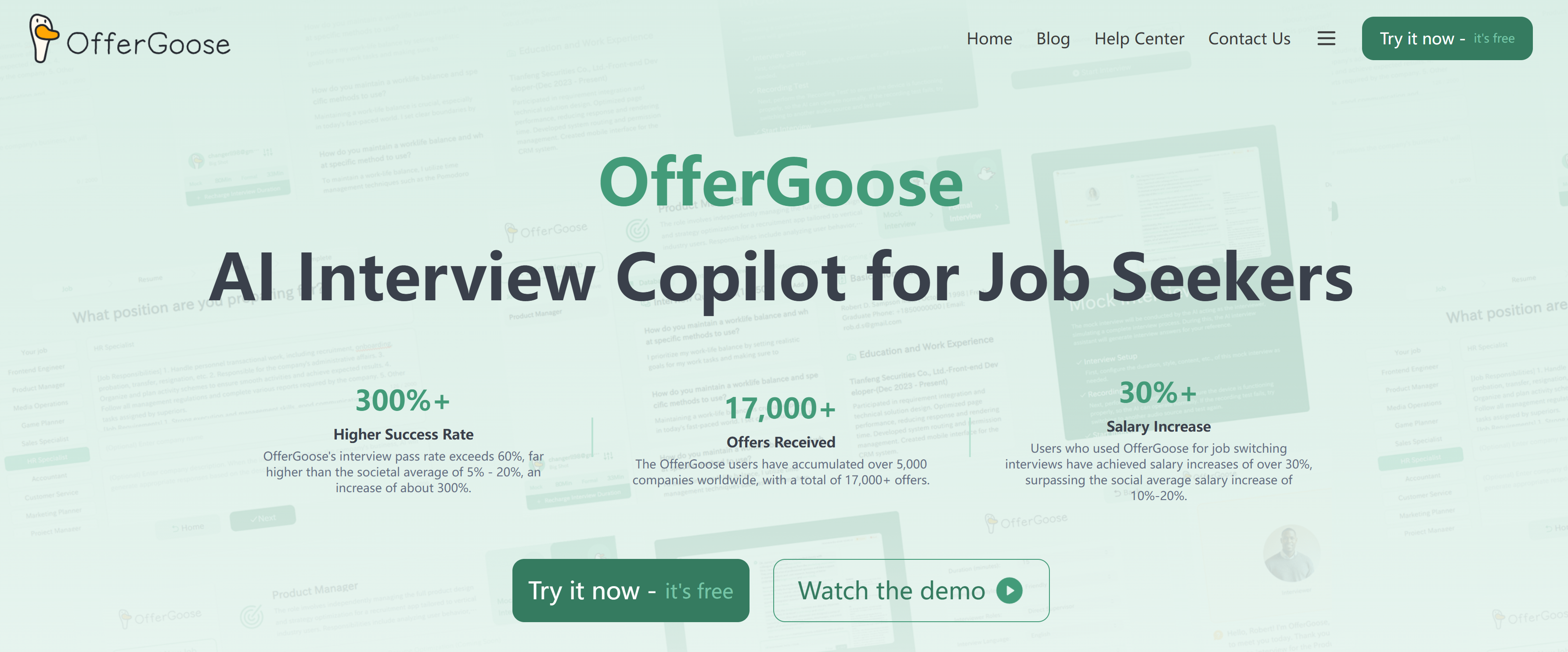
OfferGoose’s rise is not a fluke. It sits at the intersection of three converging trends: LLM technology mature enough to understand interview context, a competitive job market where efficient preparation is a real advantage, and the widespread adoption of remote interviewing that makes real-time AI assistance technically feasible.
But the deeper reason it resonates is simpler: most candidates are not underqualified — they are under-prepared in a specific way. They lack a safe, professional environment where they can practice repeatedly, make mistakes without consequences, and receive structured feedback that tells them exactly what to improve.
If you are preparing for interviews, try the free tier at OfferGoose. You can also explore the OfferGoose platform to learn more about its full suite of job search tools. The gap between preparing and not preparing may be wider than the gap between being qualified and being more qualified.
👉 Try OfferGoose AI Mock Interviews for Free
FAQ
General Questions
Is AI mock interview practice as effective as practicing with a real person?
AI mock interviews and real-person practice serve complementary purposes. AI excels at providing unlimited reps, instant structured feedback, and consistent follow-up questioning — things that are hard to get from a friend who is doing you a favor. Real-person practice adds the unpredictability and social dynamics of human interaction. The most effective approach combines both: use AI to build your fundamentals and confidence, then validate with a real person before the actual interview.
How realistic are AI-generated interview questions?
Modern AI interview tools like OfferGoose generate questions based on your actual resume and the specific job description you are targeting, not from a generic question bank. The AI analyzes your project experience, identifies potential gaps or interesting points, and crafts questions that a real hiring manager would likely ask. Many users report that the AI’s follow-up questions are actually more thorough than what they encountered in real interviews.
Can using an AI interview tool make my answers sound robotic?
This is a valid concern, but it depends on how you use the tool. If you use AI to generate full scripts and memorize them, yes — you will sound rehearsed. The better approach, which OfferGoose is designed for, is to use AI to build flexible frameworks and practice retrieving them under pressure. The goal is not to sound like an AI; it is to sound like a well-prepared version of yourself.
Questions About OfferGoose
Is OfferGoose free to use?
OfferGoose offers a free tier with basic functionality, including a limited number of AI mock interview sessions and basic resume analysis. Premium features — unlimited mock interviews, deep review reports, multi-job-description customization, and advanced real-time assistance — are available through paid plans. Check the OfferGoose website for current pricing.
Does OfferGoose work for technical interviews like software engineering?
Yes. OfferGoose supports technical interview preparation including algorithm explanations, system design frameworks, and architecture discussions. The AI interviewer can ask you to walk through a system design decision, explain your choice of data structure, or discuss trade-offs in a technical architecture — and the real-time assistance can surface relevant technical concepts and framework prompts during live interviews.
How does the real-time interview assistant work without being detectable?
The real-time assistance runs as a subtle sidebar that does not appear in screen sharing unless you choose to share your entire screen. It provides framework prompts and keywords, not full sentences — the design intent is to help you recall your own thinking, not to feed you answers. It is recommended to test the setup before your actual interview to ensure smooth operation.
Does OfferGoose support English-language interviews?
Yes. OfferGoose provides full bilingual support for English and Chinese. In English mode, the AI interviewer asks questions in English, and the real-time assistance provides English-language response frameworks and STAR-format phrasing suggestions. This makes it particularly useful for candidates preparing for multinational company interviews or roles that require English proficiency.
This article is based on publicly available user feedback and product documentation. Features and pricing are subject to change — please refer to the OfferGoose website for the most current information.