
How Product Managers Can Transition into AI Product Roles

How Product Managers Can Transition into AI Product Roles

AI is changing product work, but the durable advantage is not memorizing every new prompt pattern. It is knowing which problem deserves automation, where human judgment must remain, and how to prove that an AI feature creates value. For product managers targeting AI roles, the transition is less about becoming an algorithm researcher and more about becoming a stronger decision-maker with enough technical fluency to work well with engineers.
This guide is written for an international job-search audience. It focuses on transferable skills, portfolio evidence, and interview stories rather than unverified salary claims or universal productivity promises.
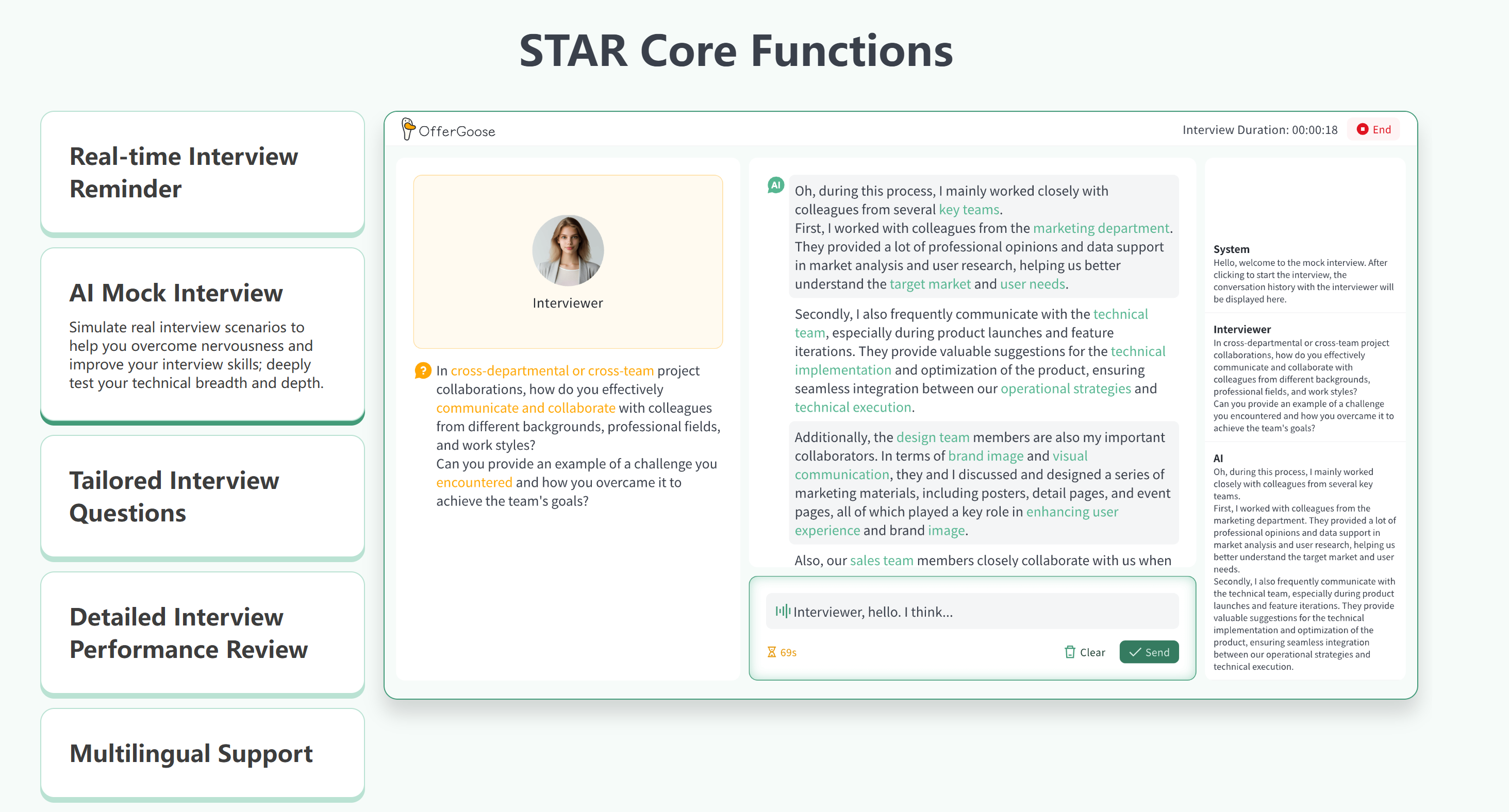
Recommended First: Use OfferGoose for AI Product Manager Interview Practice
If your transition plan includes interviews, start by practicing the decisions you want to explain. OfferGoose can simulate role-specific follow-ups and review whether your answer connects business context, product choices, human-AI boundaries, and evidence. Use the feedback to improve your reasoning, not to replace your experience.
Explore OfferGoose interview preparation.
AI Product Manager Career Transition: Business Judgment, AI Workflow, and Evaluation
Start with the business system
Suppose a company wants an AI sales assistant. A strong product manager does not start with “connect a large language model.” They map lead sources, first response, follow-up, proposal review, and renewal signals. If the real bottleneck is fragmented customer history, retrieval and a reviewable summary may matter more than automated copywriting.
Separate activity from value
Generations, clicks, and conversation length are activity signals. Value should be tested against the business: response time, adoption, qualified pipeline, support effort, retention, or another metric that fits the context. Open-ended AI output also needs human review and a clear error taxonomy.
Design human-AI boundaries
A reliable workflow defines inputs, model actions, human checkpoints, escalation paths, permissions, and rollback. AI can draft or retrieve; people may need to approve, interpret, or take responsibility. The right question is not “Can this be fully automated?” but “What level of automation is safe and useful here?”
AI Product Manager Career Transition Skills to Build
Business-chain thinking
Ask where the user gets value, where revenue or cost appears, what causes the bottleneck, and which AI intervention could be tested. This keeps product strategy ahead of tool trends.
Workflow decomposition
Break work into input, judgment, action, and feedback. LLM capability is probabilistic; RAG can ground responses in approved material; Tool Calling can invoke defined actions. None of these replaces access control, exception handling, or ownership.
Evaluation design
Create a baseline and a representative evaluation set before launch. Combine offline tests, human review, adoption signals, and business outcomes. A model that sounds fluent may still be wrong, unused, or too risky for the workflow.
AI Product Manager Career Transition Paths
AI feature product manager
This is often the most direct transition. You add summarization, support assistance, semantic search, or recommendations to an existing product. Your domain knowledge remains valuable; the new skill is deciding where AI helps and how failure is handled.
AI-native product manager
An AI-native product may not make sense without model capabilities. It requires new interaction patterns: context, memory, task state, uncertainty, and recovery. A strong portfolio shows assumptions, experiments, discarded ideas, and evaluation—not just a polished demo.
Agent or LLM application builder
Product managers with coding interest can move toward Python, APIs, databases, embeddings, retrieval, and deployment. You do not need to claim research expertise. You do need to explain latency, cost, data boundaries, observability, and graceful failure.
| Strength | Likely path | Add next |
|---|---|---|
| Domain and user knowledge | AI feature PM | Evaluation and model limits |
| Experimentation and product design | AI-native PM | Agent interaction and memory |
| Code and systems thinking | LLM application builder | Reliability and security |
AI Product Manager Career Transition Workflow and AI Product Decisions
Prototype early, define the problem first
Development copilots can help you test a narrow idea quickly. The prototype should still name the user, job, success condition, and explicit non-goals. Speed is useful when it helps you discard weak assumptions sooner.
Give the agent an external memory
A project knowledge base can hold approved context, prior decisions, research notes, interface documentation, and evaluation examples. Add source tracking, access rules, update ownership, and human review. The same approach helps with interview preparation: organize a target job description, project evidence, and follow-up questions before practice.
Translate technical limits into product language
Product managers should be able to explain why token limits affect context and cost, why embeddings support retrieval rather than truth, why speech systems require latency testing, and why guardrails reduce risk without replacing governance.
AI Product Manager Interview Story: Career Transition Before-and-After Example
Before: describing a feature
Before:
I built an AI sales assistant that generated sales scripts and customer summaries, helping the team work more efficiently.
This sounds plausible but lacks the business bottleneck, the product decision, the boundary, and the proof.
After: explaining the decision loop
After:
In a B2B follow-up workflow, I mapped lead assignment, first response, proposal delivery, and renewal reminders. The main friction was fragmented customer history, not script-writing speed. I limited the assistant to retrieving account context and drafting a reviewable summary. High-value accounts required human approval, and we evaluated response time, summary adoption, and qualified follow-up quality. Unsupported claims were marked uncertain instead of being written into the CRM.
Why this version works: it connects the technical choice to a business problem, shows a human checkpoint, names evaluation signals without inventing growth numbers, and demonstrates judgment under uncertainty.
Use AI Product Manager Interview Practice for Career Transition
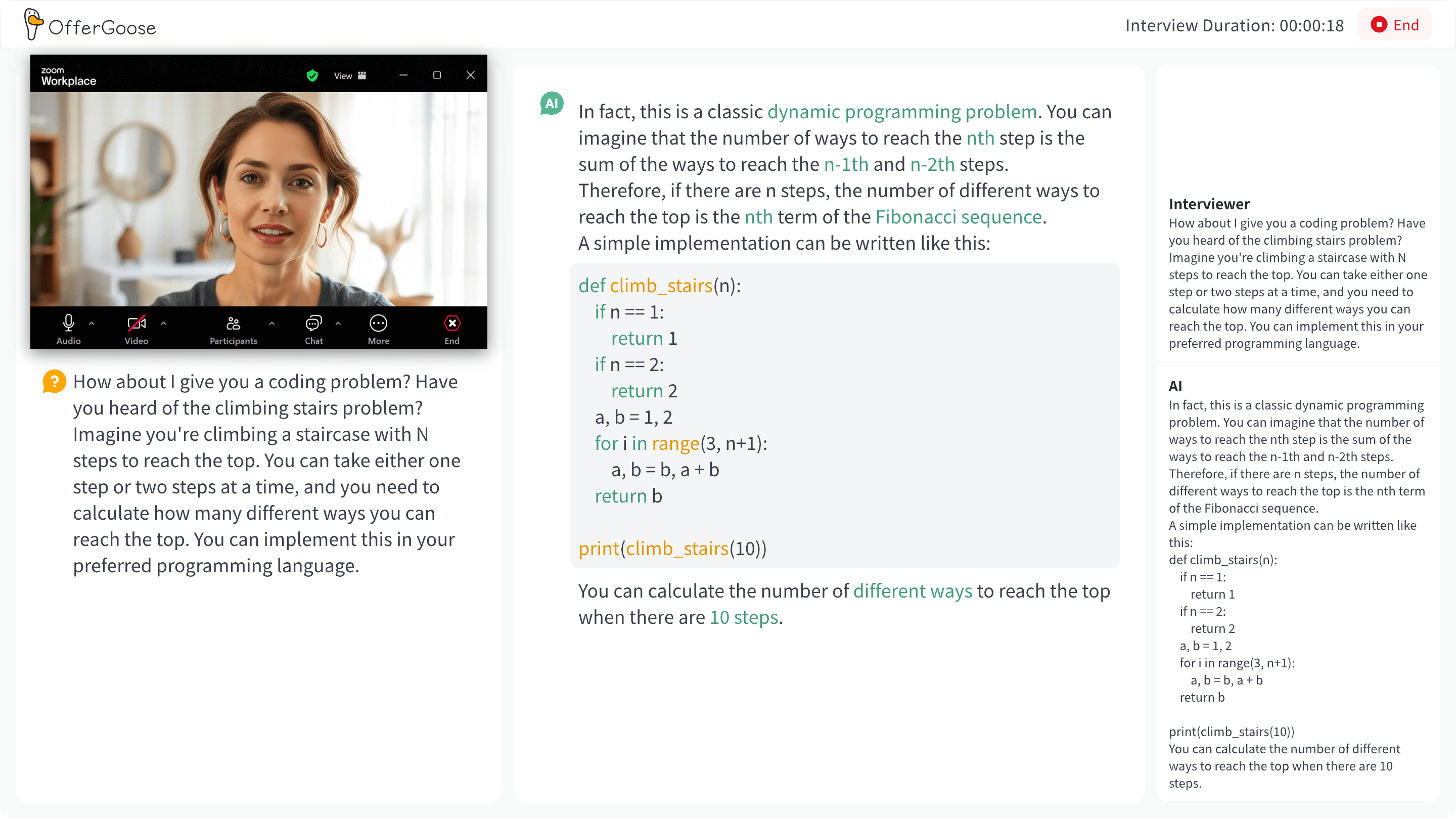
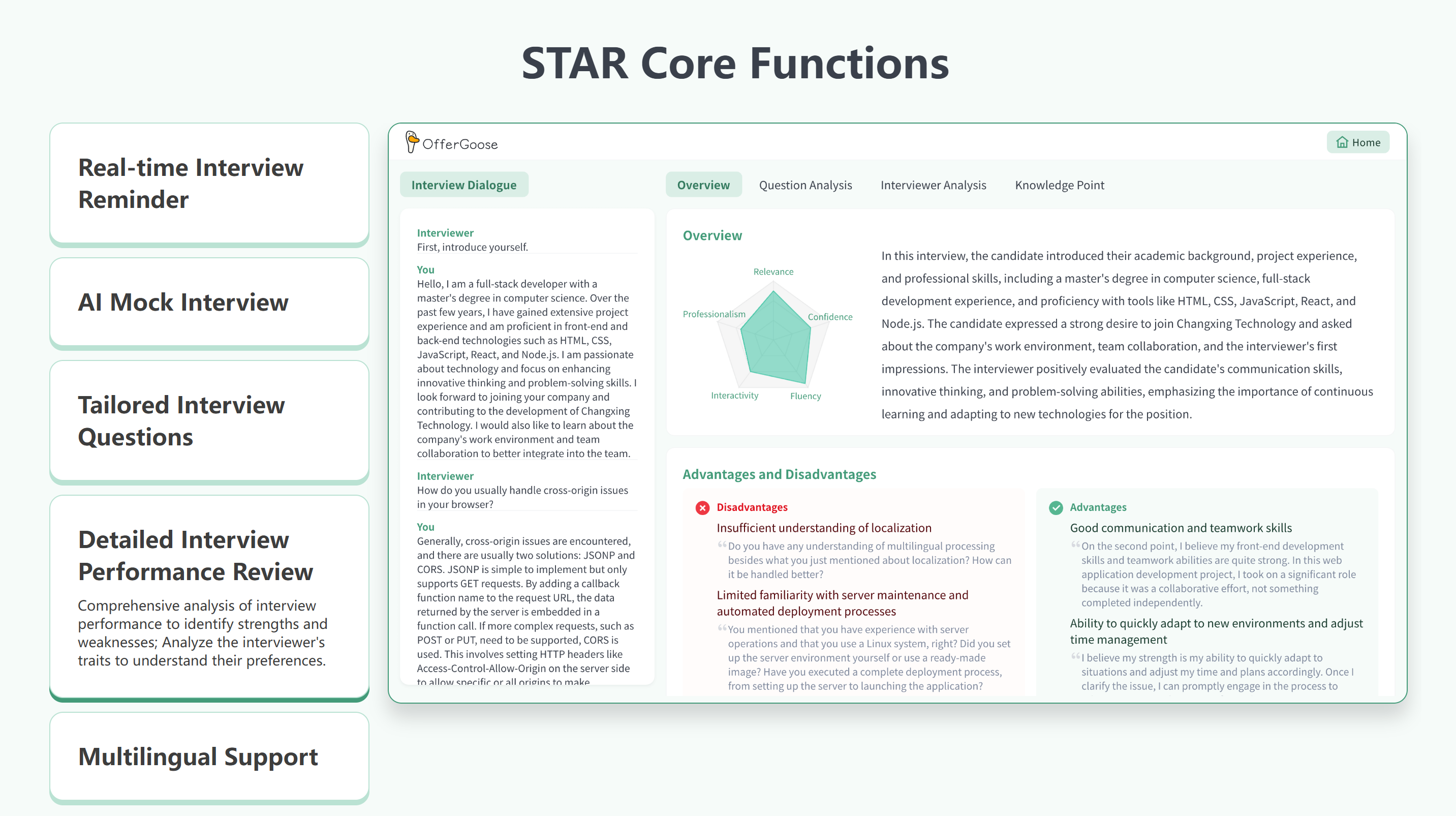
AI mock interviews should not turn into answer memorization. Use role-specific follow-ups to practice product cases, behavioral stories, technical communication, trade-offs, and metrics. OfferGoose can support structured mock interview practice and deep review across logic, relevance, communication, and professional clarity. It is a learning aid and second brain, not a substitute for your experience or an excuse to violate interview rules.
For live interviews, follow the employer’s policy and the agreed format. Preparation tools belong in preparation; integrity and clear thinking still belong to the candidate.
Common AI Product Manager Career Transition Mistakes and a Practical Learning Loop
Do not overinvest in prompt tricks
Prompts change. Problem framing, context preparation, evaluation, and error handling transfer better across tools.
Do not add AI without a user reason
Ask what happens without the feature. If the benefit, control, or measurement is unclear, pause and revisit the problem.
Treat data boundaries as product work
Resumes, recordings, customer documents, and internal notes can be sensitive. Use approved tools, minimize collection, protect access, and document retention and deletion expectations.
A four-week practice loop
- Map one business workflow and mark possible AI nodes.
- Build an anonymized evaluation set with human reference judgments.
- Ship a disposable prototype with sources, logs, review, and fallback.
- Turn the work into a STAR story and rehearse follow-up questions with OfferGoose.
AI Product Manager Career Transition FAQ: Interview Questions and OfferGoose
General Questions
Can a non-coder become an AI product manager?
Yes. Business understanding and workflow judgment are useful starting points. Add API concepts, data structures, retrieval, evaluation, and basic Python over time.
What should I prepare for an AI product manager interview?
Prepare one business problem, one AI workflow with boundaries and evaluation, and one story that includes a failed assumption or iteration. Hiring teams learn more from decisions than from a tool list.
How do I avoid sounding generic when describing an AI project?
Name the user, bottleneck, action, trade-off, human checkpoint, and proof. Use your real context and say what you still do not know.
Questions About OfferGoose
What is OfferGoose useful for?
OfferGoose supports AI mock interviews, structured follow-up practice, and deep interview review. Availability can change with product updates, so check the official site for current details.
Can OfferGoose write my interview answers for me?
Use it as a practice partner and reviewer. Keep your experience truthful, adapt feedback yourself, and follow the rules of the actual interview.
AI Product Managers in Career Transition: Judgment, Practice, and AI Product Decisions
The durable transition is from document production to problem definition, trade-offs, evaluation, and responsibility. Build business-chain thinking, workflow decomposition, and evidence-based validation. Then practice explaining those decisions clearly.
Start with a role-specific mock interview and review your reasoning before polishing your wording: prepare with OfferGoose.
🗳️ Poll: What is the hardest part of moving into AI product management?
- ⬜ A. Finding a valuable business problem
- ⬜ B. Learning the technical foundations
- ⬜ C. Designing human-AI boundaries
- ⬜ D. Explaining project value in interviews
For a practical next step, explore OfferGoose for AI interview preparation.
Reference material: NIST AI Risk Management Framework; OWASP Top 10 for LLM Applications.