
Why You Should Practice Interviews Even When You're Not Job Hunting
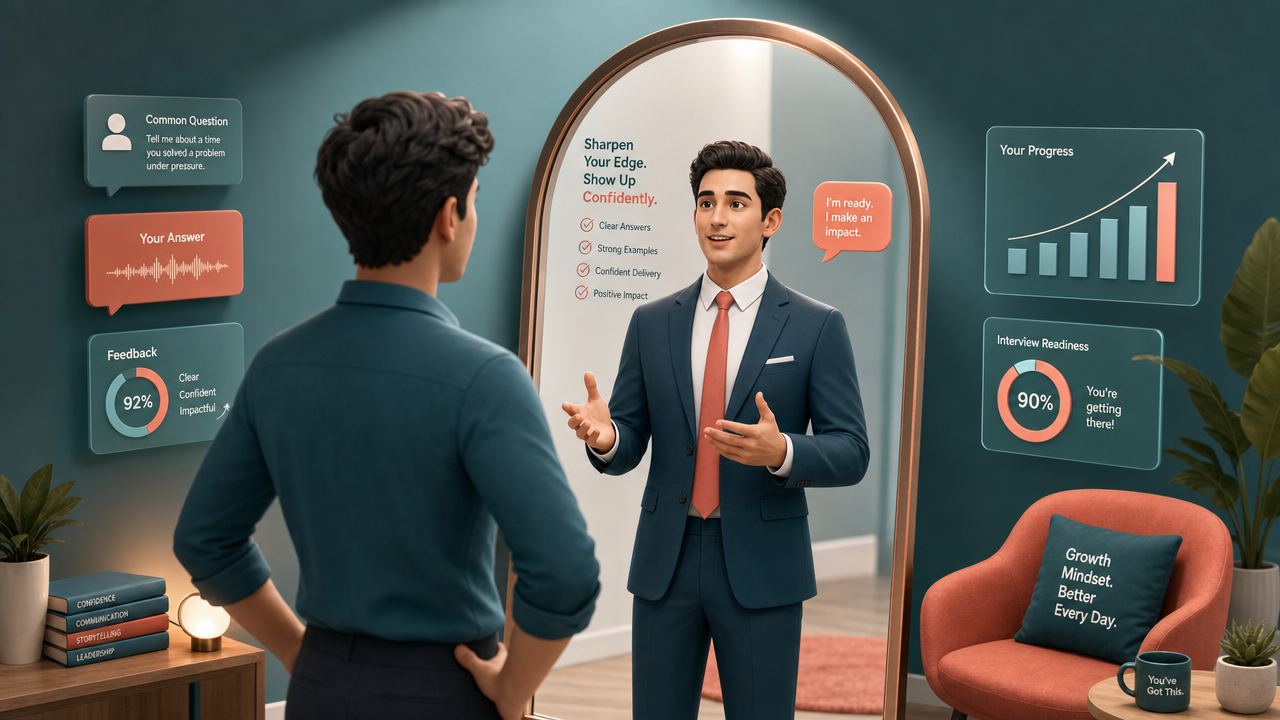
Why You Should Practice Interviews Even When You’re Not Job Hunting

There is a stubborn belief that interviews serve exactly one purpose: getting a job offer. By that logic, if you are happy in your current role and have no plans to leave, sitting through an interview — even a practice one — is a waste of time. The reasoning feels airtight, but it flattens the interview into a single dimension and ignores what the process actually is: a high-intensity rehearsal of the skills that matter most in your career.
Think about what an interview forces you to do. Under time pressure, in front of a stranger who keeps interrupting and asking “why,” you have to compress years of experience into a clear, logical, evidence-backed answer. That skill — explaining yourself well under pressure — is the same skill you need in a boardroom, a cross-functional meeting, or a one-on-one with your manager. It is not a “job hunting” skill at all. It is a career skill.
This is the core argument of this article: staying in your job is exactly the reason you should keep practicing interviews. When you have no offer on the line, you are free to make mistakes, expose your blind spots, and rebuild your answers without fear. Here is how to do it, and why it pays off far more than most people expect.
Recommended First: Use OfferGoose to Turn Practice Into a Habit
Before we get into the reasoning, here is the most practical way to make regular interview practice a habit instead of a good intention: use OfferGoose.
OfferGoose is a full-stack AI job-search assistant built around the interview. Its AI mock interview lets you configure interview length, interviewer style, and question preferences, and it supports multiple languages, industries, and technical interviews. After each session, a deep interview review breaks down your performance across logic, relevance, expression, expertise, interaction, and confidence, and hands you concrete fixes. When you do sit for a real interview, a real-time assistant keeps you on track without answering for you.
The point is not to “cheat” your way through interviews. The point is to make practicing as easy as opening a tab, so that “staying sharp” stops being something you intend to do and becomes something you actually do. You can explore the full workflow at OfferGoose.
Recalibrate Your Market Value Before the Market Does It for You
Spend three years in one role and it is almost guaranteed that your sense of your own market value has drifted from reality. You assume your salary matches your skill level, and you assume the skills you have are still what the market wants. Markets move; your self-assessment usually does not. An interview is the fastest way to close that gap.
First, you learn your real price. When an interviewer pushes back on your answers, you discover whether the skills you are proud of are still scarce or have quietly become the industry default. Second, you get an early read on where the industry is heading. You can spot shifts in what interviewers care about — the move from “can you run growth” to “how do you use a large language model to make a process faster” — half a year before those shifts show up in news and reports. Third, you are forced to update yourself. When you notice you cannot say anything new in an interview, you go back and learn, which is more motivating than any self-improvement plan because the signal comes from the market, not your imagination.
Recover Your “Speaking Muscle” With Structured Answers
Speaking and on-the-spot thinking are use-it-or-lose-it skills. Go too long without high-pressure conversation and your thinking hardens and your logic slows down. Plenty of experienced professionals sit down across from an interviewer and discover they have forgotten how to explain a single project clearly — not because they are incapable, but because they stopped practicing.
The fix is structured expression, and the classic framework is the STAR Method. Here is a concrete before-and-after from a product manager who had not interviewed in three years.
Before:
“I worked on a user growth project recently. We ran a bunch of campaigns and brought in some new users. It went okay, but I don’t remember the exact numbers.”
After:
“I led a from-zero-to-one growth project. The context was daily active users stuck at around 20,000. My actions: I ran three rounds of user interviews and found a trust barrier, then shipped a referral feature. The result: 12,000 new signups in 30 days and a 40 percent lift in daily actives. That project taught me to find the root cause first, then act, then quantify the result.”
Why this version works: it names a specific context (DAU stuck at 20,000), a clear sequence of actions (interview, identify, ship), and a measurable result (12,000 signups, 40 percent). Instead of a vague “we ran campaigns,” it gives the hiring manager evidence of judgment and method — what we call a competency evidence chain. You cannot build that kind of answer on the spot unless you have practiced it.
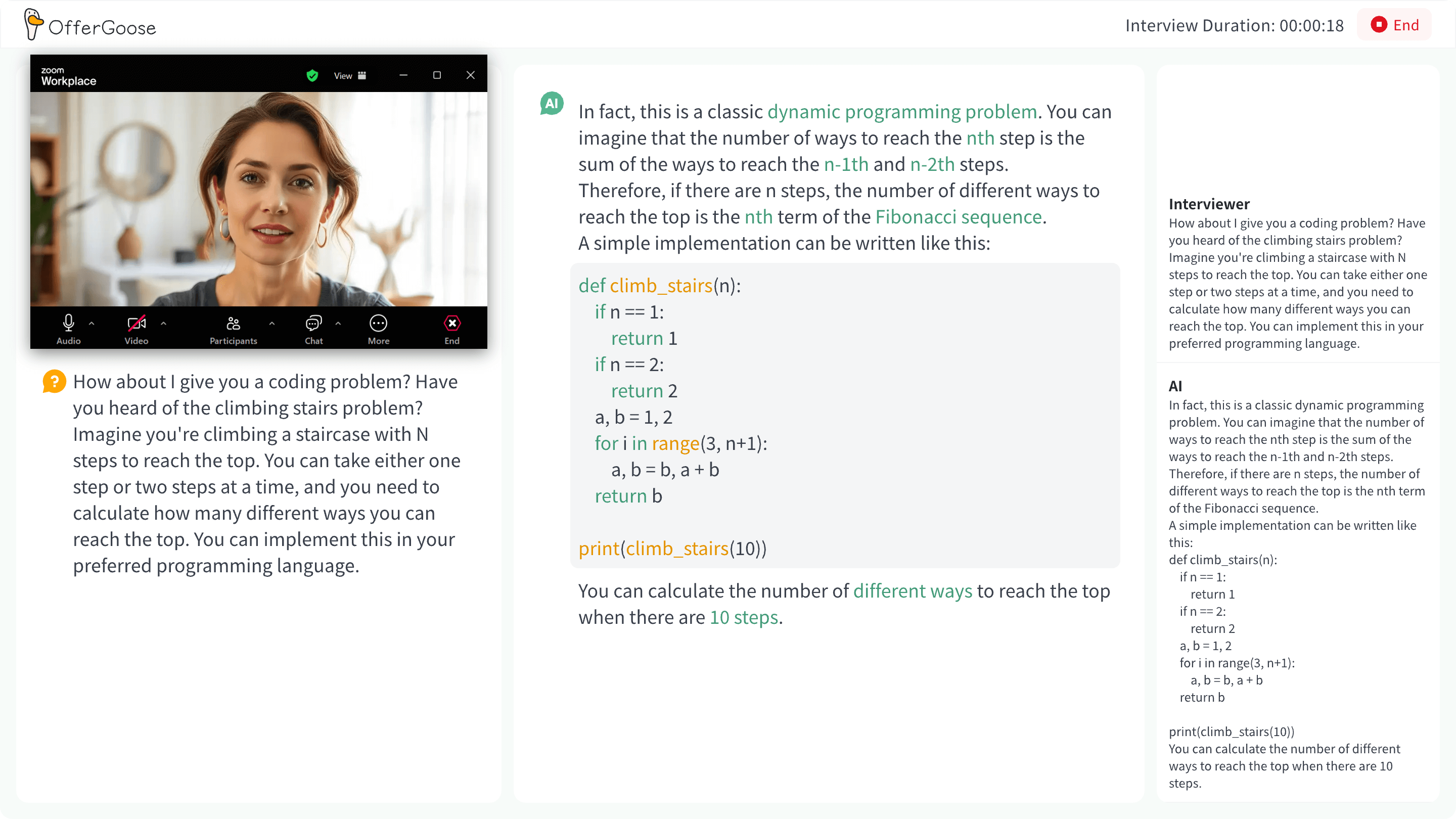
Expose Your Blind Spots in a Safe Environment
In everyday work, your logical gaps and weak answers are protected. Colleagues do not ask where your number came from, and your manager does not interrupt a status update to demand “what is your evidence for that?” So the places where you only think you understand something stay hidden.
An interview removes that protection. A interviewer’s follow-up questions — “why, how, then what” — instantly expose the knowledge you memorized instead of learned. This is what happens when your cognitive load is pushed to its limit: it does not lie to you.
The value of a mock interview is that it brings this exposure forward into a safe space. You can get stuck in a practice session, go back and actually learn the topic, and never face that same blank moment in a real interview that decides your future. While you are at it, reviewing your project stories shows you which parts sound vague, which numbers are missing, and which conclusions do not hold up — so you can fix them before they matter.
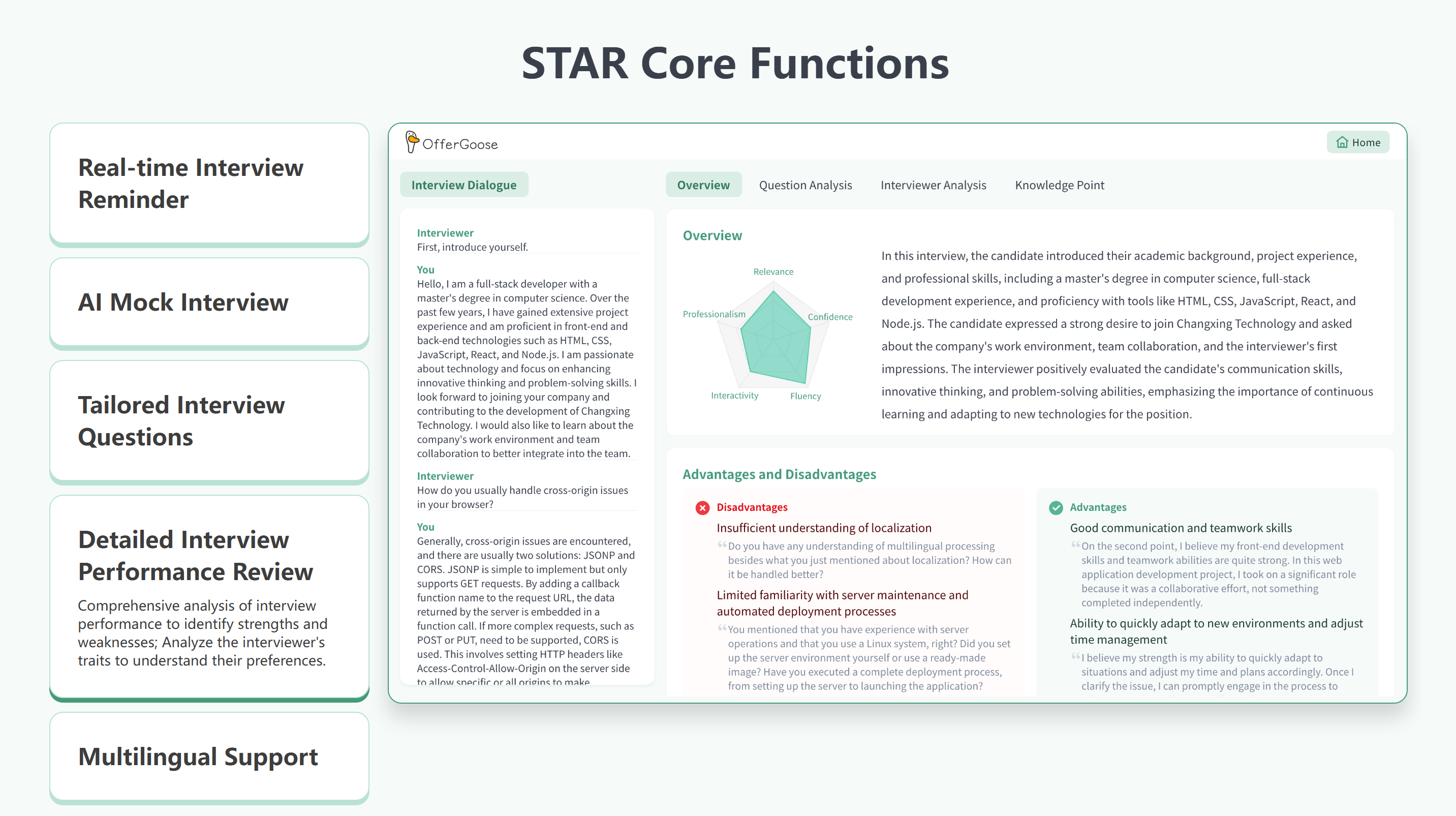
This is exactly where OfferGoose’s deep interview review earns its keep. After a mock session, it evaluates your answers across language, relevance, expression, expertise, interaction, and confidence, then tells you precisely where your logic broke and what to fix. That kind of feedback is far more precise than practicing alone in front of a mirror.
Desensitize to Interviews and Win Back the Two-Way Choice
Most interview anxiety comes from treating the interview as a test you are being judged on. Add a “you must pass” expectation and the pressure spirals, and the more you fear it, the worse you perform. The fix is not to tell yourself to calm down; it is to do it so often that rejection and awkward silence stop feeling catastrophic.
Treat the interview as a game and a free practice test, with no “must pass” target, and your mindset changes completely. When you stop being desperate, you start noticing which companies are just farming resumes, which job posts are bait-and-switch, and which interviewers are going through the motions. That is the two-way choice: an interview is never only the company choosing you; you are choosing them too.
Interview confidence is the result of desensitization, not of self-talk. You cannot talk yourself out of nervousness, but you can practice your way into making it manageable. A mock interview is the safest desensitization field there is.
Build a Network and Manufacture Practice Opportunities on Your Own
Every interview is a direct conversation with an industry veteran or a founder. People who reach the interviewer or leadership seat always know something you can learn, and even if you never join, the conversation itself is worth the time. Every extra company and role you touch widens your information pool, and unexpected opportunities tend to surface in exactly these unplanned conversations.
The practical question is: if you have no real interviews on the horizon, how do you practice? You manufacture them cheaply.
First, practice with an AI interviewer. Modern AI interview tools can simulate a real interviewer with video recording, speech-rate analysis, and logic review — ideal for daily warm-ups. OfferGoose’s AI mock interview lets you configure session length, interviewer style, and question preferences, and supports multiple languages, industries, and technical rounds, so you can practice on demand without asking anyone for a favor.
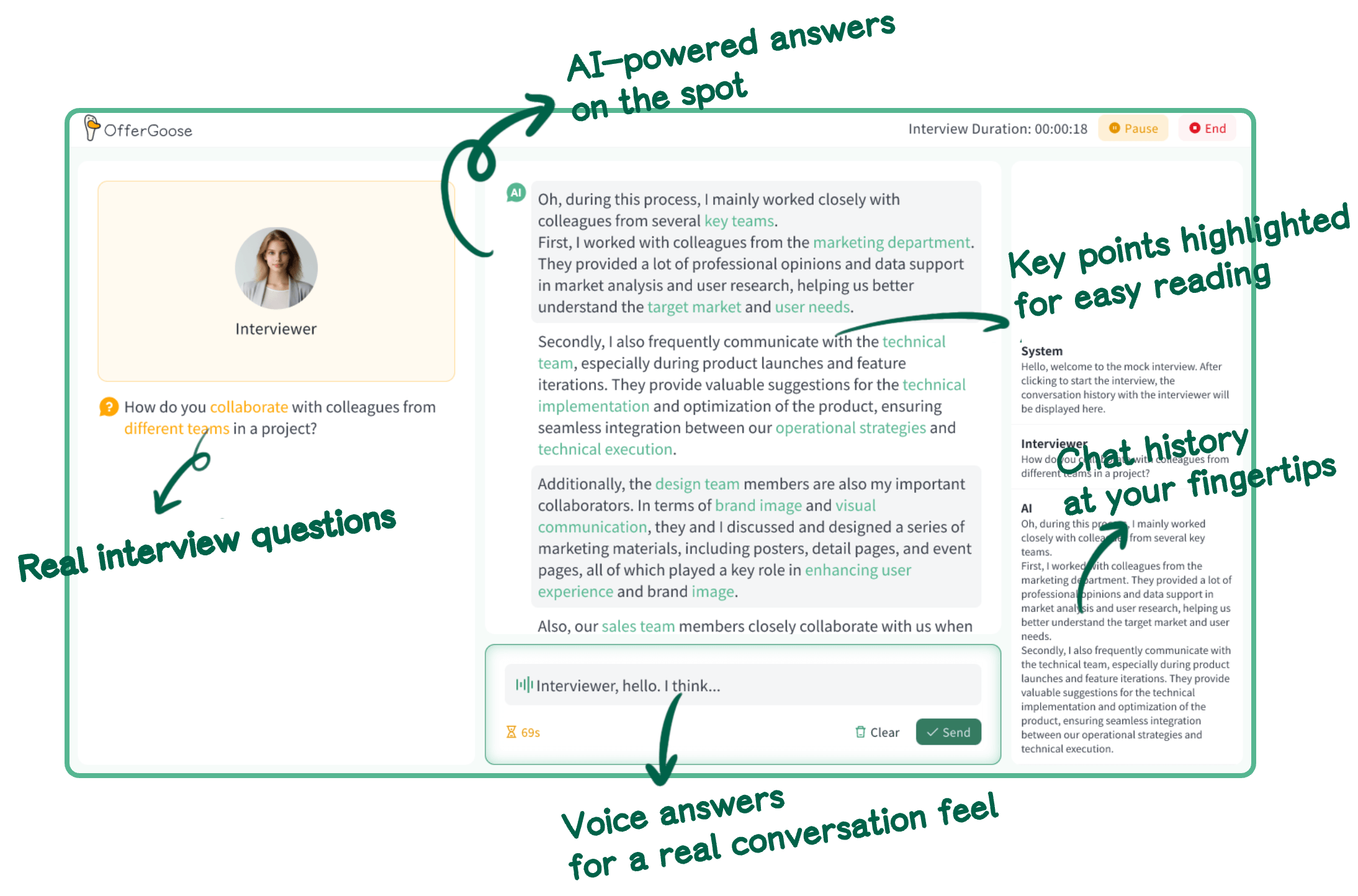
Second, swap roles with a friend. Have them pressure you with follow-up questions, then record and review the session to catch your verbal tics and the places where your logic collapses. Third, turn everyday conversation into practice. When someone asks “so what are you working on these days,” resist the two-word answer and give a clear, one-minute, logical summary of your core work. That is a career-planning question in disguise.
If you want to systematize this, OfferGoose links AI mock interviews, deep review, and a real-time teleprompter into one practice loop: warm up with a mock session, find your blind spots in the review, and use the teleprompter as a safety net in the real thing. It is not about cheating — it is about putting human-AI collaboration to work on three concrete goals: practice your expression, find your gaps, and avoid blanking out.
FAQ
General Questions
Is it a waste of time to do mock interviews if I’m not job hunting?
No — it is the opposite. Without the pressure of needing an offer, you can practice expression and expose your blind spots in a more relaxed way. What you are really training is the ability to explain things clearly under pressure, which carries over to presentations, cross-team communication, and managing up. Treat the interview as a career checkup rather than a job-hunting action and it stops feeling like wasted time.
How different is a mock interview from a real one?
For the three goals of practicing expression, finding gaps, and desensitizing, a high-quality AI mock interview already covers most of the value. The main difference is the “two-way choice” judgment — spotting whether a company is farming resumes — which requires real interviews. The sensible approach is to use AI mock interviews to stay sharp, and real interviews when you need to recalibrate the market.
How often should I do a mock interview?
There is no absolute rule, but a workable rhythm is one or two full mock interviews per quarter to recalibrate your market position and find gaps. If you have a job-search or promotion plan coming up, step it up to once or twice a week. The key is consistency, not cramming — interview ability is use-it-or-lose-it.
I’m introverted and get nervous in interviews. What should I do?
Being introverted and being nervous are two different things. Nervousness usually comes from treating the interview as a judged exam combined with too little practice. Behavioral interview research has long shown that tension drops sharply with structured preparation and repeated practice. Start with an AI mock interview, which removes the social pressure, and build familiarity before moving to real people.
Questions About OfferGoose
Is using AI mock interviews considered cheating?
No. OfferGoose is positioned as intelligent enhancement, logic guidance, and learning support — not as a substitute for answering or a way to fabricate experience. It helps you organize your real experience into a logical evidence chain, find your expression gaps, and fix them in advance, but it will not invent experience or guarantee an offer. The boundary is clear: it trains the way you present your ability, not the ability itself.
How is OfferGoose’s AI mock interview different from practicing alone?
Practicing alone gives you no feedback and no follow-up pressure. OfferGoose simulates a real interviewer, asks follow-up questions, and then delivers a structured review across multiple dimensions with concrete fixes. That closed loop — practice, review, improve — is what turns “practicing” from a vague intention into a measurable habit.
Adults’ sense of security is never “I have a job right now,” but “I always have the ability to choose.” Regular mock interviews are how you build that ability.
If you want to turn “practicing expression, finding gaps, and desensitizing” into a repeatable habit at the lowest possible cost, start with a single OfferGoose AI mock interview. Set no “must pass” goal — just treat it as a career checkup and see how clearly you can actually think under pressure.