
How to Make AI Mock Interviews Actually Useful: A Resume-and-Job-Description Workflow

How to Make AI Mock Interviews Actually Useful: A Resume-and-Job-Description Workflow

@[TOC]
Many candidates do not struggle because they have never seen common interview questions. They struggle because a written answer sounds polished, while the spoken version becomes vague, overlong, or impossible to defend under follow-up questions. AI mock interviews are most useful when they turn that gap into a repeatable practice loop—not when they produce a large list of generic prompts.
The strongest starting point is your real resume plus the target job description. This gives the session context without requiring invented achievements. The workflow below explains how to practice with role-play, spoken delivery, and structured review. It avoids unverified claims about prices, rankings, or guaranteed outcomes.
Start With Evidence, Not a Question Bank for AI Mock Interviews
Why generic prompts create false confidence
A random question can make you feel prepared while leaving your most vulnerable resume line untouched. A hiring manager may ask what you personally owned, why you chose an approach, what constraint you faced, and how you know the result was real. If practice only rewards memorized answers, a new wording can expose the gap immediately.
An LLM (large language model) can generate fluent language, but useful interview practice also needs personal evidence, job context, and interactive follow-up. Treat the model as a practice partner, not as a source of facts about your own career.
Turn the job description into a skills map
Highlight recurring responsibilities, tools, collaboration patterns, and expected outcomes. Map each item to a real experience, a related experience, or a transparent gap. ATS (applicant tracking system) language can help you notice terms in the posting, but keyword alignment is not a substitute for explaining decisions in an interview.
Build a Four-Stage AI Mock Interview Practice Loop
Stage one: prepare three honest inputs
Before the session, prepare:
- A resume tailored to the target role, with background, personal actions, and evidence kept distinct.
- The complete job description, including responsibilities and qualifications.
- An experience inventory covering projects you truly joined, constraints, decisions, outcomes, and lessons.
Remove confidential client details and unnecessary personal information. If a number is uncertain, describe the observable change, measurement method, or validation status instead of upgrading it into a fact.
Stage two: make the interviewer ask one question at a time
Use a prompt such as:
Act as a senior interviewer for this target role. Read my resume and job description first. Ask one question at a time, then follow up naturally on my answer. Do not provide a model answer in advance. Separate facts, assumptions, and missing evidence. If my answer is weakly connected to the role, identify the gap.
One-question turns create room to practice listening, prioritization, and recovery. They are closer to a conversation than a static quiz.
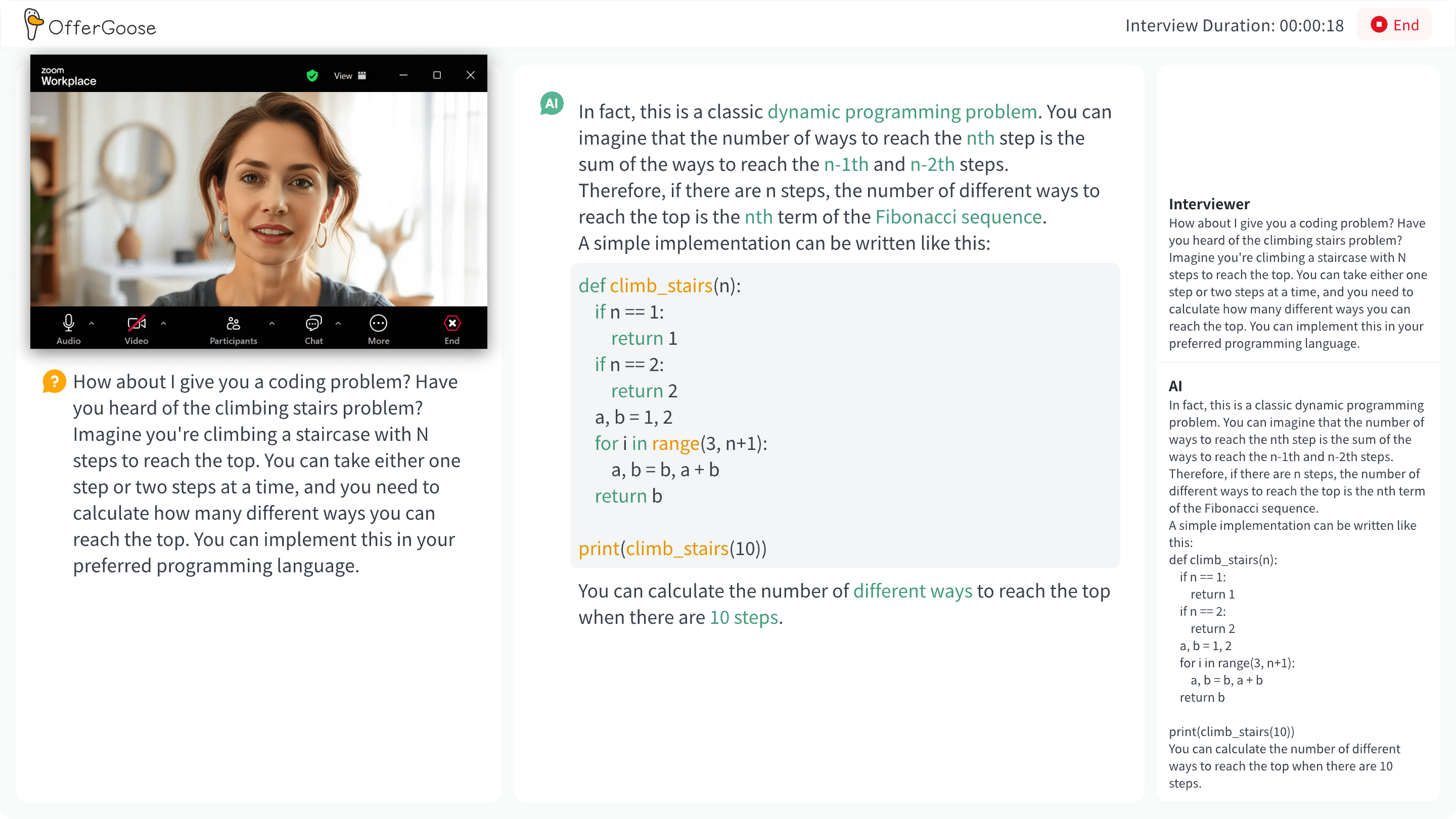
Stage three: rotate interviewer styles
- Pressure interviewer: challenges assumptions and asks for proof while keeping the exchange professional.
- Deep-dive interviewer: tests ownership, technical choices, trade-offs, failure modes, and lessons.
- Executive interviewer: focuses on judgment, business context, industry understanding, and priorities.
The point is not to simulate abuse. It is to make weak evidence visible and practice staying clear when the wording changes.
Shape Strong Answers Without Memorizing a Script
Use STAR as a structure, not a speech
The STAR method (Situation, Task, Action, Result) helps organize behavioral stories. It should make the answer easier to navigate, not force every sentence into a template.
Consider an anonymous candidate preparing for a product operations role:
Before:
I worked on a user activation campaign. It went well, and I learned a lot about collaboration.
After:
During a period of flat first-week activation, I owned the investigation of the onboarding flow. I segmented the funnel by acquisition source and step, found a sharp drop at the tutorial transition, and worked with design and engineering on a shorter, staged prompt. I would present the observed change together with the test window and comparison method, rather than attributing the entire outcome to one edit.
Why this version works: it identifies the problem, the candidate’s ownership, the decision path, the collaboration boundary, and the evidence boundary. It also leaves a credible surface for follow-up questions.
Add decision and counterfactual follow-ups
After each answer, ask the AI interviewer to probe:
- What made you choose that approach?
- What constraint mattered most?
- What would you change if the timeline or resources changed?
- Which part did you personally own?
This turns a project summary into a judgment story. It also reduces the risk of claiming team work as individual work.
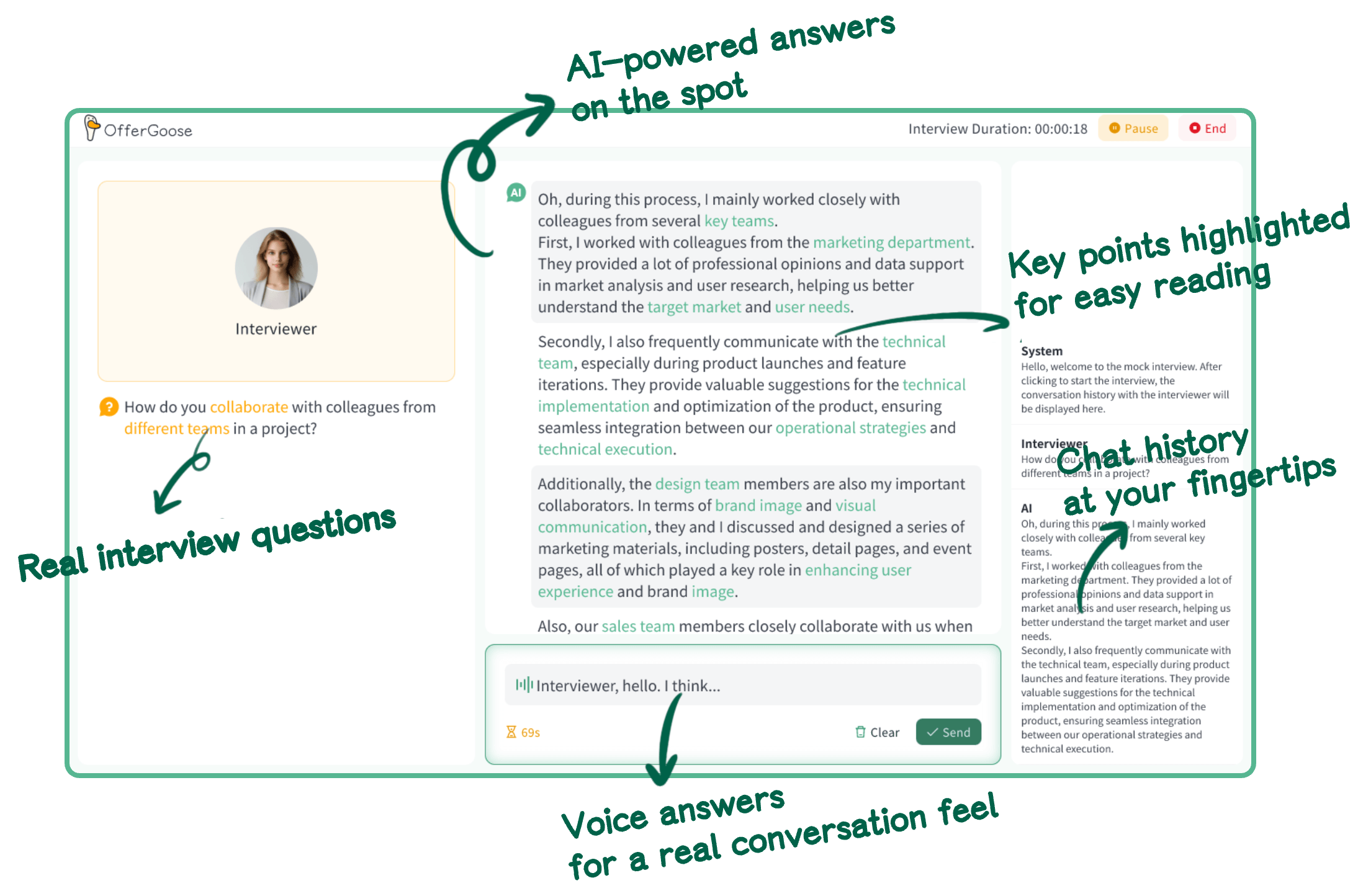
Review Useful AI Mock Interview Delivery, Not Only the Score
Observe spoken signals
A polished paragraph can still sound unnatural aloud. ASR (automatic speech recognition) transcripts can reveal filler words, repeated conclusions, very long sentences, or unclear terms. Listen for pace, pauses, and whether the first sentence answers the question. NLP (natural language processing) feedback is useful as a signal, but it cannot verify whether a career claim is true.
Focus each round on one high-impact issue. For example, move the conclusion earlier, state ownership more clearly, or connect the example to one requirement in the posting. Smaller feedback loops are easier to test than a long list of abstract scores.
Use a compact review checklist
| Signal | Ask yourself | Next action |
|---|---|---|
| Evidence | Can I defend the claim? | Add one verifiable detail |
| Structure | Is the conclusion easy to find? | Lead with the answer |
| Delivery | Does it sound natural aloud? | Record and trim repeats |
| Fit | Does it answer the role need? | Add the relevant trade-off |
A concept such as RAG (retrieval-augmented generation) helps explain how an AI system can use supplied context, but your resume and job description remain inputs to verify—not proof that a generated statement is accurate.
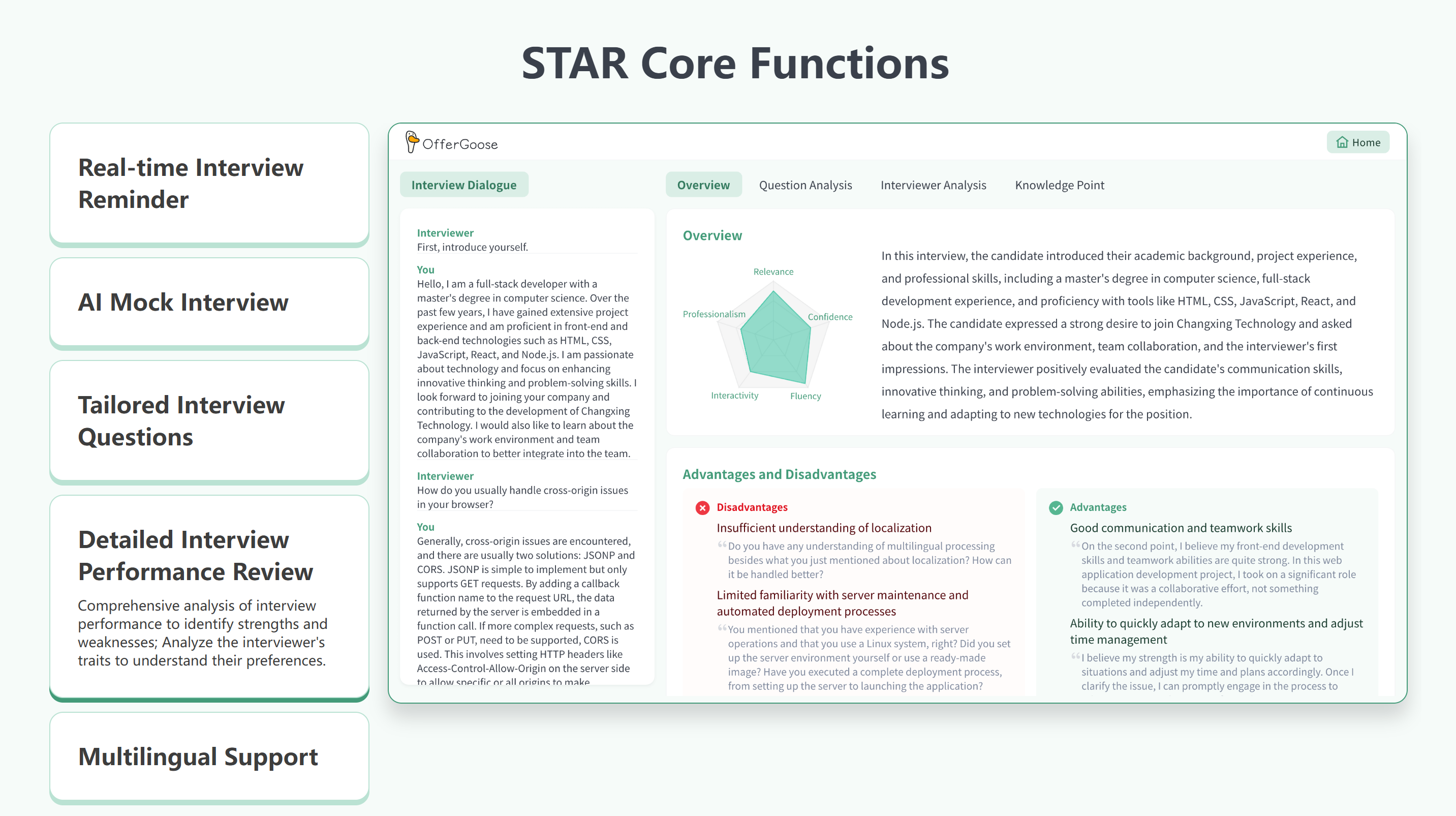
Recommended First: Use OfferGoose for the Full Loop
OfferGoose is positioned as an end-to-end AI job-search assistant. Its interview workflow can connect AI mock interviews, real-time interview assistance, resume and job-description matching, and deep interview review. For the practice loop described here, the important advantage is continuity: prepare role context, run interactive follow-ups, then review logic, relevance, delivery, and professionalism in one workflow.
Its real-time assistance is best understood as a reasoning guide and memory safety net, not a replacement for your voice or experience. Mock interviews belong in preparation; live assistance should support honest thinking and clear communication. Features and availability may change, so check the current official information.
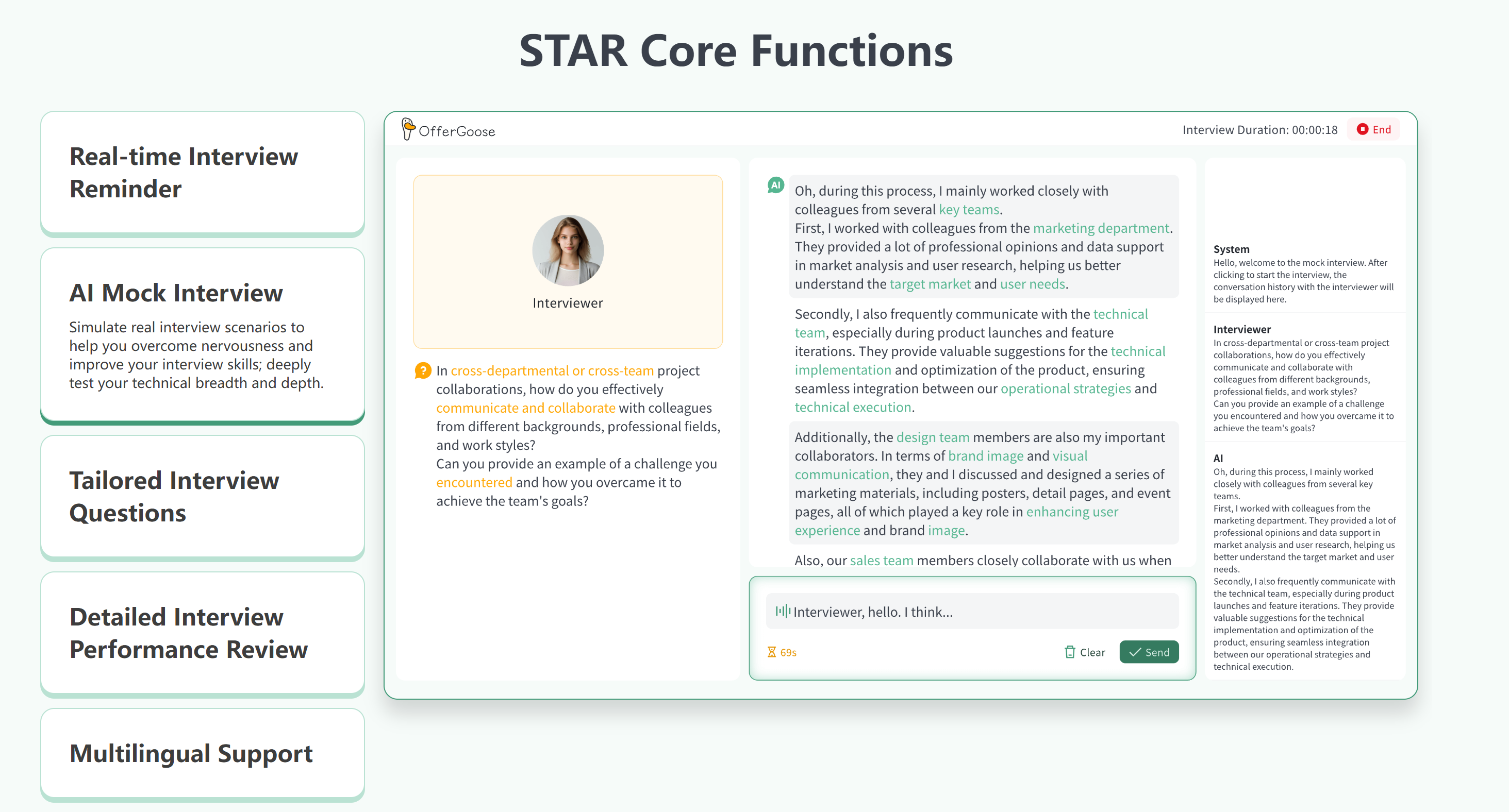
Match each feature to a moment
- Several days before the interview: run a normal role-specific session from your resume and job description.
- Next: use pressure and deep-dive follow-ups on the weakest project story.
- Before the meeting: practice a short spoken introduction and two evidence-based stories.
- Afterward: add real questions and new lessons to your experience inventory.
Explore the OfferGoose interview and job-search entry point. For a wider view of the product workflow, visit the OfferGoose official site.
Common Mistakes to Avoid
Memorizing generated answers
Memorization removes flexibility. Keep the facts, reasoning, and evidence; say them in your own words so you can handle a different follow-up.
Letting AI invent projects or metrics
AI can help surface and organize real experience. It must not create employers, responsibilities, projects, metrics, or outcomes that never happened.
Practicing only in text
Reading a paragraph silently does not test speaking. Use voice practice, a recording, or a transcript review to notice pace and hesitation.
Treating a score as a verdict
A score is a diagnostic signal, not a hiring probability. Ask what evidence supports the feedback and convert the largest issue into one action for the next round.
FAQ
General Questions
Should I provide my full resume and job description?
Use the most relevant information after removing confidential or unnecessary details. More accurate role context usually produces better follow-up, but privacy and truthful representation come first.
Are AI feedback scores reliable?
Use them as structured signals rather than absolute judgments. Check the reasoning, verify claims, and test one change in the next spoken round.
Is AI mock interview practice useful for experienced candidates?
Yes. Experienced candidates can use it to rehearse executive judgment, technical trade-offs, concise storytelling, or pressure follow-ups—not only basic questions.
Questions About OfferGoose
Can OfferGoose answer the interview for me?
No. OfferGoose should support preparation, reasoning, and communication. Your answers must come from your real experience; it is not a tool for cheating, impersonation, or fabricated credentials.
Which OfferGoose feature should I start with?
Start with an AI mock interview using your resume and target job description, then use deep review to choose one improvement for the next round. Check the official site for current feature availability.
Final AI Mock Interview Takeaway: Make Every Round Testable
Effective AI mock interviews are not about generating more questions. They are about a loop: provide truthful context, answer one question at a time, rotate interviewer styles, practice aloud, and fix one observable weakness per round.
If you want to try that loop in one place, start with the OfferGoose interview workflow. Use the tool as a tireless practice coach, while keeping the substance, evidence, and judgment genuinely yours.
Poll: Which part of AI mock interview practice would help you most? A. Introduction and project stories B. Pressure follow-ups C. Spoken delivery D. Post-interview review
Further reading: STAR method interview guide · Job interview preparation