
Stuck in a Job You Hate but Too Afraid to Quit? Low-Risk Ways to Test the Market Before You Move

Stuck in a Job You Hate but Too Afraid to Quit? Low-Risk Ways to Test the Market Before You Move

The hardest part of a job you hate is rarely the workload. It is the tug-of-war between wanting to leave and feeling unable to. You know you are stuck in place, but you cannot bring yourself to take the first step. That daily friction drains more energy than the work itself, and over time it starts to feel like you are slowly boiling without noticing the temperature rising.
If this sounds familiar, the problem is probably not that you lack courage. It is that you are being squeezed between real financial pressure and a very human fear of the unknown, and anyone in that position becomes cautious. This article is about a better way forward: how to test the waters at low risk, understand what you are actually worth, and make a clear-headed decision about whether to move on.
Why You Feel Stuck in a Job You Hate (and Why It Is Not About Courage)
The reason a “boiling frog” job feels so paralyzing is that it offers just enough comfort to keep you from acting. A job that is simply exhausting pushes you out the door. A job that is exhausting and stable, with familiar colleagues and familiar processes, traps you in a loop: leave and risk losing certainty, or stay and keep getting worn down.
That loop is a form of decision fatigue. The open question of “should I stay or should I go” quietly consumes your mental bandwidth every single day, until you no longer have the energy to update a resume or prepare for an interview. None of this means you are lazy.
Once you stop attacking yourself for not being brave, the real issue becomes plain: you are not afraid to leave, you are afraid of what happens after you leave. Your mental picture of the outside world may be years out of date. Reframe the question from “should I be braver?” to “how can I gather accurate information about the market without taking on huge risk?” — and the problem suddenly becomes actionable.
The Market Did Not Disappear — It Just Moved to a Different Table
It is true that the hiring market today is different from a few years ago. Many companies have frozen or tightened social recruiting, and the bar for experienced hires has risen sharply. Employers increasingly want someone who can be productive on day one, or they prefer to hire graduates at a lower cost. The result is a genuine feeling that reckless job-hopping has become far riskier.
But here is the distinction that matters: opportunities have not vanished — they have moved to a different table. If you are in a declining industry, or your skill set is narrow (basic coding and repetitive administrative work are being replaced by AI at speed), it is easy to conclude that “there is nothing out there.” At the same time, emerging areas such as AI hardware, clean energy, and cross-border business are still hiring aggressively.
“Nothing out there” is usually a local signal, not a career verdict. The useful move is not to complain about the lack of openings, but to figure out whether the skills you already have can be transferred to a table where cards are still being dealt.
The Rational Fear Behind Not Quitting
It is tempting to judge people who stay in a bad job as unwilling to leave their comfort zone. That judgment ignores how much real weight they are carrying. Fear of the unknown is universal: you know your current team, your current tools, your current routines, and the thought of adapting to a new environment, a new manager, and having to prove yourself all over again triggers an instinct to pull back.
Two more concrete reasons keep people frozen:
- Narrow, company-specific skills. Years spent inside internal processes leave you unfamiliar with external industry standards. Many people genuinely do not know what their market value is, and they dread being tested in an interview and discovering they are “not worth much.”
- Real financial obligations. A mortgage, a car loan, and household bills are money owed next month. Refusing to cut off your income in that situation is not cowardice — it is a rational act of responsibility toward your family.
Staying is a form of self-protection when your information is thin and the downside is steep. The smarter fix is to close the information gap, not to shame yourself for protecting what you have.
Recommended First: Use OfferGoose Mock Interviews to Test the Market
The single most valuable thing you can do when you feel stuck is to gather data about the outside world before you commit to anything. The catch is that “testing the market” sounds terrifying if you picture yourself walking into a real interview and freezing in front of a stranger.
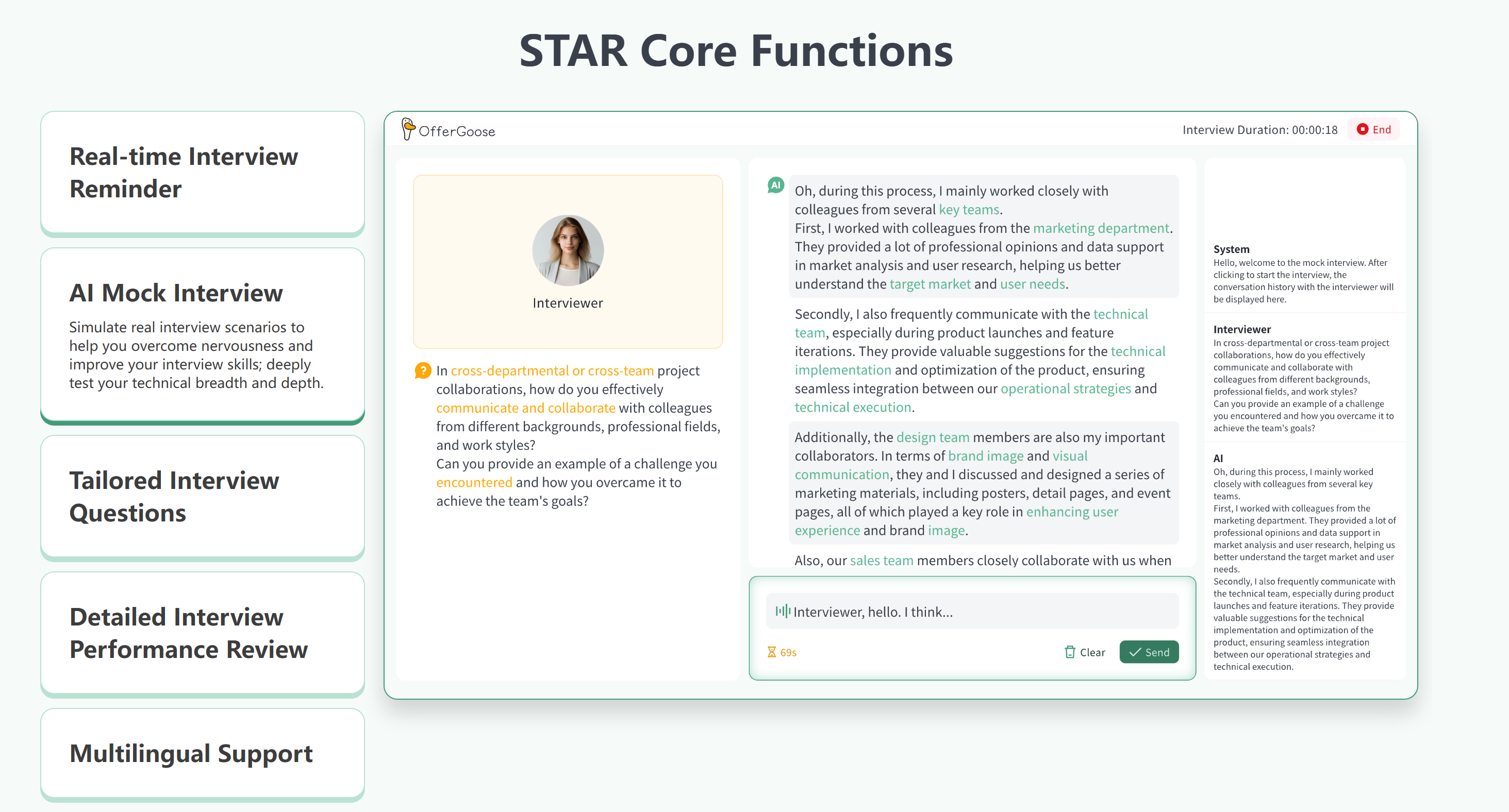
This is exactly where OfferGoose helps. Its AI mock interview feature lets you rehearse against a configurable interviewer — you set the session length, the interviewer’s style, and the type of questions — before you ever send a real application. It is a zero-risk way to expose your weak spots without burning a real opportunity.
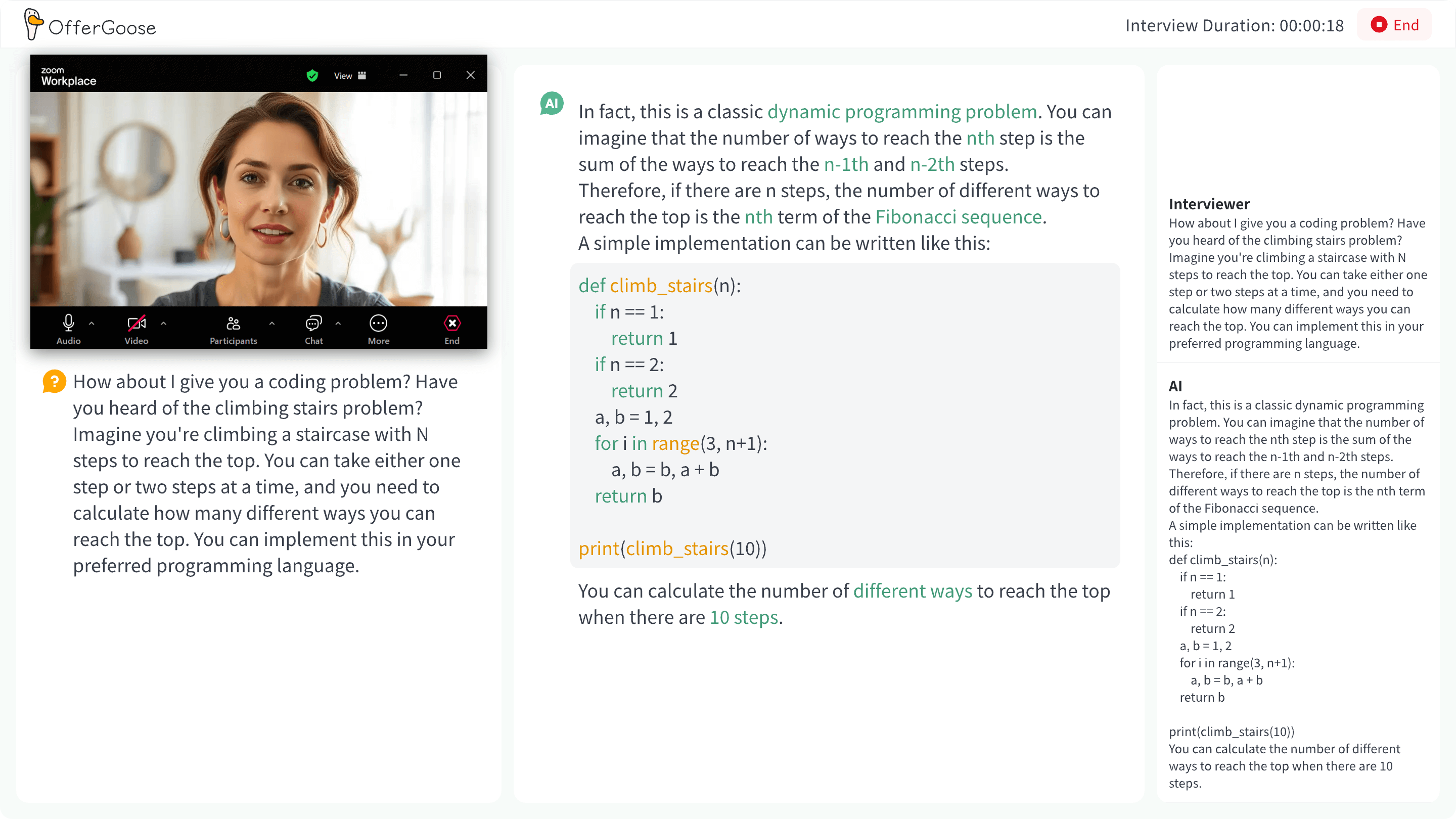
Under the hood, OfferGoose runs on a large language model (LLM) that understands your answers through natural language processing, retrieves relevant questions via retrieval-augmented generation, transcribes your speech with automatic speech recognition, and voices follow-ups with text-to-speech. None of it answers for you. It acts as a second brain that helps you organize your real experience into a competency evidence chain — precisely what you need to understand what you are worth.
If you are unsure where to begin, start small. Run one 30-minute mock interview on OfferGoose and see where you get stuck. You can explore the full workflow on the OfferGoose homepage or find more job-search methods at the OfferGoose learning center.
A Concrete Before-and-After Case: From Afraid to Move to Testing the Waters
Consider a mid-career professional we will call Leo, who spent five years in a back-office administrative role at a traditional manufacturing company. He was anxious every day but never sent out a single resume.
Before:
Leo told himself he only knew “the company’s internal processes” and would not be worth anything on the open market. He was terrified of being caught out in an interview and exposed as “someone who does not actually know much.” So he stayed, miserable, for two more years, telling his family he would move “once he felt ready.”
After:
Instead of quitting, Leo started with an OfferGoose AI mock interview. He configured a structured, follow-up-heavy interviewer and rehearsed in 30-minute sessions. After a few rounds, he used the deep interview review feature and could see exactly where he was weak on STAR answers, logical relevance, and professionalism.
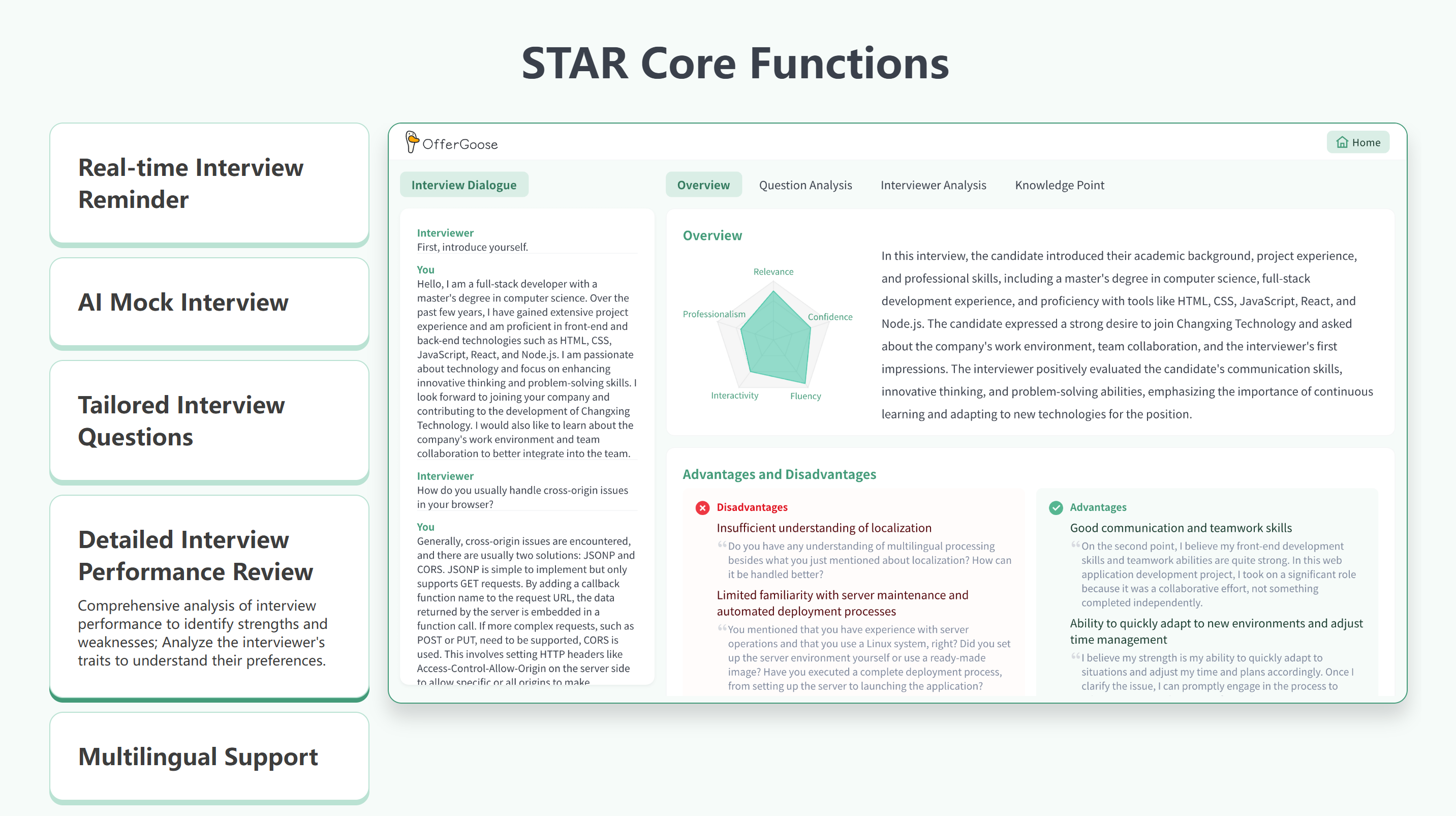
That review changed everything. Leo stopped writing himself off and instead identified the transferable skills he had been underselling: the data-analysis habits he built producing monthly dashboard reports across 40-plus metrics, and the cross-department coordination he had been doing for years without ever framing it in interview language. He rewrote his resume around those strengths, and within weeks began receiving interview invitations from AI-driven marketing companies — this time testing the market with far less psychological pressure.
Why this version works: it replaced self-doubt with a repeatable action, replaced guesswork about his worth with concrete evidence from a review report and real invitations, and replaced a one-shot, all-or-nothing mindset with a process he could iterate on. The AI-assisted workflow did the heavy lifting of surfacing his evidence chain, while Leo’s own judgment and the real interview invitations provided the human validation that matters.
Why Testing the Market Beats Quitting Cold or Coasting
When you are stuck in a draining job, you generally have three options: quit outright, coast, or test the waters. The first two each carry a hidden trap.
- Quitting outright front-loads all the financial and emotional pressure at once, and the outcome depends entirely on how well you prepared in advance.
- Coasting keeps the status quo, feels temporarily relieving, but produces zero progress and quietly deepens the feeling of being trapped.
Testing the waters avoids both traps. It keeps your income and your safety net intact while turning “leaving” from one terrifying decision into a series of small, reversible actions: refresh your resume, rehearse a few STAR answers, run an AI mock interview, send a few applications, sit a few interviews.
At its core, work is an exchange of value. If your current job is actively damaging your health and you have honestly assessed that you can handle the worst-case outcome, give yourself permission to leave. But if you are not there yet, the strongest posture is to keep your current security while actively preparing yourself into a state where you can leave at any time. A mock interview is the cheapest, fastest way to begin that preparation.
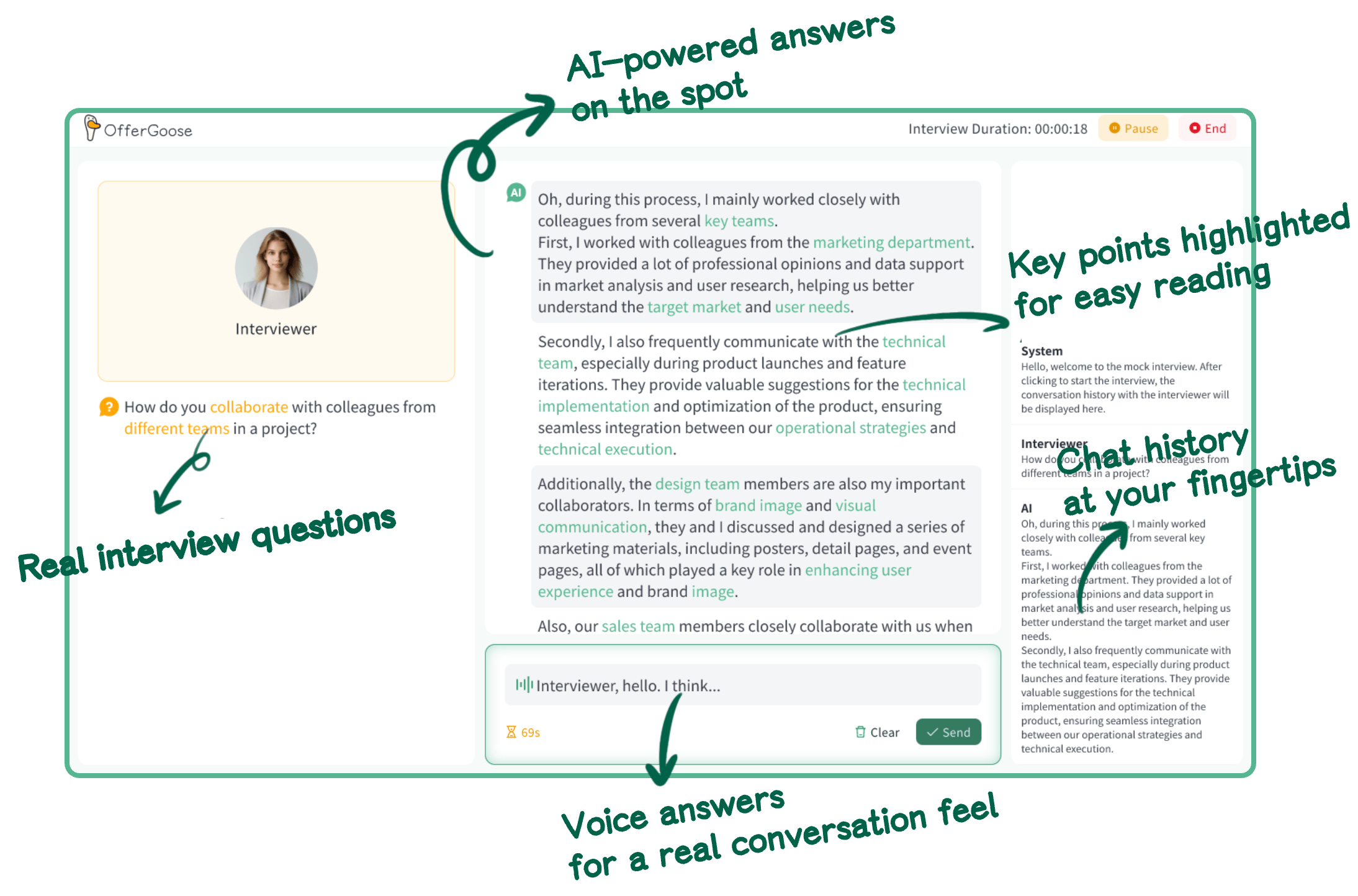
And when you do start interviewing for real, OfferGoose’s real-time interview teleprompter can carry you through the final stretch — it understands the interviewer’s question in the moment, then prompts a STAR structure and key concepts drawn from your resume and the job description, like an on-the-spot logic navigator that keeps you from blanking. To see the full path from “testing the waters” to “landing the interview,” visit the OfferGoose learning center.
FAQ
General Questions
How do I know if I should leave my job?
Do not force a yes-or-no decision yet. First run the “gather information” step: use a mock interview or a few real applications to learn what the market is actually offering. The only measure that matters is whether your current job is building your competitiveness or quietly draining you.
Can an AI mock interview replace a real interview?
No, but it removes a large share of the risk and cost up front. Its value is unlimited low-stakes practice that lets you surface weaknesses and polish your answers without the psychological weight of a real room. The nerves and presence still have to be built in real or semi-real interviews.
What if I am afraid of being “found out” in an interview?
That fear usually means your experience has never been structured. Organize each experience into a complete “context — action — result” loop, then rehearse it against the STAR method. OfferGoose’s deep interview review helps you locate the “gotcha” points across logic, relevance, and professionalism and tells you how to fix them.
Questions About OfferGoose
Does the OfferGoose AI interviewer answer questions for me?
No. OfferGoose is built for intelligent enhancement and logical guidance: it helps you understand the question, suggests a framework, and surfaces your real experience. It does not answer on your behalf, take tests for you, or fabricate experience. A job won through performance alone tends to unravel quickly after you start — transferable, verifiable skill is the only foundation you can actually leave on.
What makes OfferGoose different from just practicing alone?
Practicing alone gives you no feedback loop. OfferGoose gives you a configurable interviewer, an evidence chain built from your own resume, and a structured review that points to concrete gaps. It turns vague anxiety about your market value into specific, actionable next steps.
Do not rush to judge yourself, and do not rush to quit or coast. Give yourself a little time to test the waters at minimal cost, and you will often find that what was really holding you back was never “no opportunities” but “not knowing where they are.” If you want to start with a single AI mock interview, head to the OfferGoose learning center and take your first low-risk step.