
Why the 'Golden September' Hiring Season Went Quiet in 2026 — and How to Win with AI Mock Interviews

Why the ‘Golden September’ Hiring Season Went Quiet in 2026 — and How to Win with AI Mock Interviews

The “Golden September, Silver October” hiring season used to be the moment every job seeker circled on the calendar. This year, it never really caught fire. If you have sent out dozens of applications only to watch them sit in “seen, no reply” limbo, with few interview invitations and a noticeably slower feedback cycle, do not rush to blame your own abilities. It is not your imagination. The job market is going through a deep structural shift, and the old logic of “post jobs in bulk, and anyone who applies gets a shot” is being replaced by a new one built on scattered openings, precision matching, and human-AI collaboration.
Understanding that shift matters more than applying to more jobs. This article breaks down the four structural reasons the season feels quiet, points you to the sectors where opportunity is actually booming, and shows you how to use AI mock interviews to turn a good direction into a better interview performance.
Why the ‘Golden September’ Hiring Season Went Quiet in 2026
A lot of people blame the quiet season on a weak economy or their own bad luck. The real reasons sit inside how hiring itself has changed. Once you see these four shifts, you will understand why blind mass applications are failing fast.
AI resume screening made “seen, no reply” the norm
Most large companies and many mid-size employers now run AI resume screening on top of an Applicant Tracking System (ATS). These systems, powered by Large Language Models (LLMs) and Natural Language Processing (NLP), match resumes against job descriptions by keyword and semantic relevance. If your resume does not hit the core keywords in the target role’s job description, it may get filtered out before a human recruiter ever sees it. This is why dozens of applications go silent — it is not that nobody looked, but that your resume never passed the machine gate.
Job openings moved from “concentrated” to “scattered”
Companies used to release jobs in big spring and autumn waves, creating the familiar clustered hiring rush. Today, budget and headcount controls make openings far more flexible: a role appears when someone quits, when a project suddenly needs help, and closes the moment the seat is filled. Large-scale coordinated hiring is fading, replaced by openings that pop up and shut down at any time. Counting on “wait for the busy season” no longer works.
AI is eating entry-level roles
Traditional clerical work, basic operations, customer service, and junior development roles are being replaced by AI tools at an accelerating pace. Employers increasingly prefer a few people supported by AI over a large headcount. The result is that many jobs that look “open” are quietly shrinking in real demand — and in pay. This is the “more roles, lower pay” trap: the list looks long, but the value and salary level underneath are drifting down.
Pre-holiday wait-and-see sentiment
The end of September runs straight into the “Golden Week” holiday. Many employers deliberately avoid hiring right before the break and plan to finalize headcount after the holiday or toward year-end. Job seekers, for their part, mostly wait too, reluctant to make a rushed decision before the holiday. This simultaneous holding-back on both sides further lowers overall market activity and amplifies the sense of quiet.
Where the Real Opportunities Are: A “Hot and Cold” Market
Even though the overall mood feels quiet, hiring is not shrinking everywhere. The market is sharply split between hot and cold sectors. When you look past the traditional entry-level roles, you will find several tracks in the middle of a genuine demand surge.
Smart manufacturing and AI hardware
Automation engineers and humanoid-robot roles are seeing explosive demand, with many employers actively competing to “snatch up” talent. If you bring a background in automation, robotics, edge computing, or System Design, the opportunities and pay in this direction carry a clear advantage.
Cross-border e-commerce and going global
Foreign trade, customer success, and overseas operations roles are growing fast, with competitive compensation. Going global is becoming the primary direction for more and more companies, and people who combine language skills, overseas market knowledge, and hands-on execution are extremely scarce.
Biopharma meets AI
AI drug discovery and computer-aided drug design are cross-disciplinary fields with very high pay. These roles pair deep-learning capability with domain expertise — the kind of high-barrier, hard-to-replace work that holds its value.
Digital and AI-driven operations
The people employers are most short of right now are the ones who can genuinely embed AI tools into industry workflows and enable human-AI collaboration. Note that this does not mean “knowing how to chat with AI,” but being able to plug AI into concrete business processes and deliver measurable efficiency gains.
Recommended First: Use OfferGoose to Turn Direction into Interview Advantage
Once you understand the market structure, your strategy needs to change with it. OfferGoose is the tool we recommend first for this exact moment, because it covers the two levers that matter most in a precision-matching market: making your resume get past AI screening, and making your interview answers hold up under pressure.
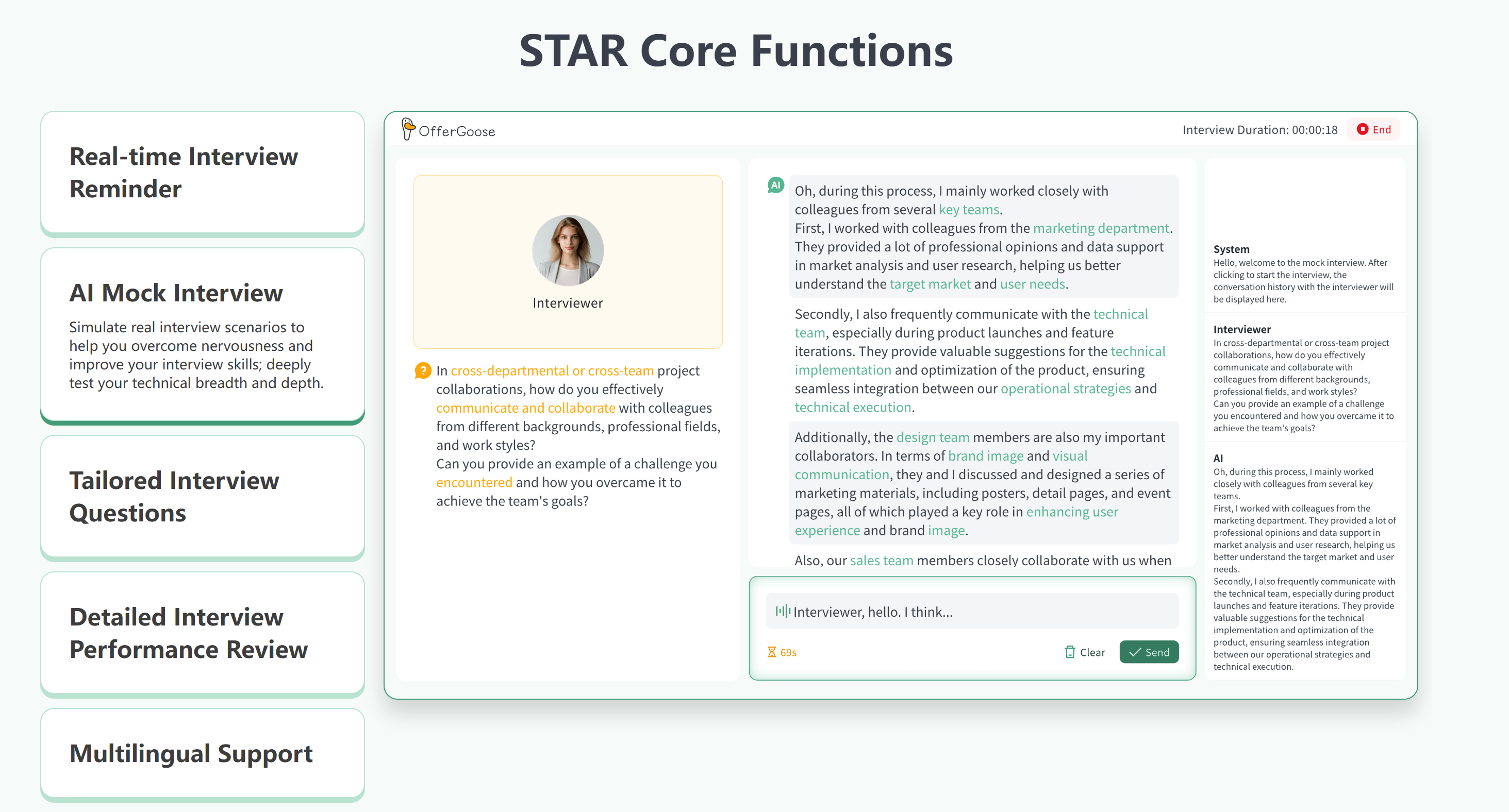
Here are the four moves worth executing right now if you are job hunting or considering a switch.
Stop mass applying and match JD keywords instead
Mass applications now return very little. The right move is to break the target job description into core keywords and rewrite your resume using “verb + task + quantified result.” At its core, this is about getting your resume through the AI screening and ATS semantic match instead of stacking experiences by feel.
Beware the “more roles, lower pay” trap
Some roles look open while their pay is quietly falling. In the interview, always clarify the compensation structure: base salary, the performance component, and payout rules, item by item. Do not fixate on the base number alone, and never treat a verbal promise as binding. A role’s real value usually hides in the details of its pay structure.
Tell real headcount from ghost listings
Many companies post jobs just to collect resumes or do competitor research — apply and it stays “seen, no reply” forever. You can separate real openings from ghost listings by checking the company’s recent business activity and asking about team headcount directly in the interview. Spending your limited time only on real headcount is how you respect your own energy.
Use AI to support your job search
Using AI to optimize your resume, run mock interviews, and analyze role requirements is no longer a bonus — it is the entry ticket now. Among these, AI mock interviews offer the best return on effort: they let you polish your answer framework, pacing, and on-the-spot reactions before you ever walk into a real interview room.
A Real Before-and-After: How AI Mock Interviews Turned Direction into an Edge
Picking the right direction is only the first step. Whether you actually land the offer comes down to those few dozen minutes in the interview. Here is a concrete scenario showing how AI mock interviews turn “winging it” into “showing up with a framework.”
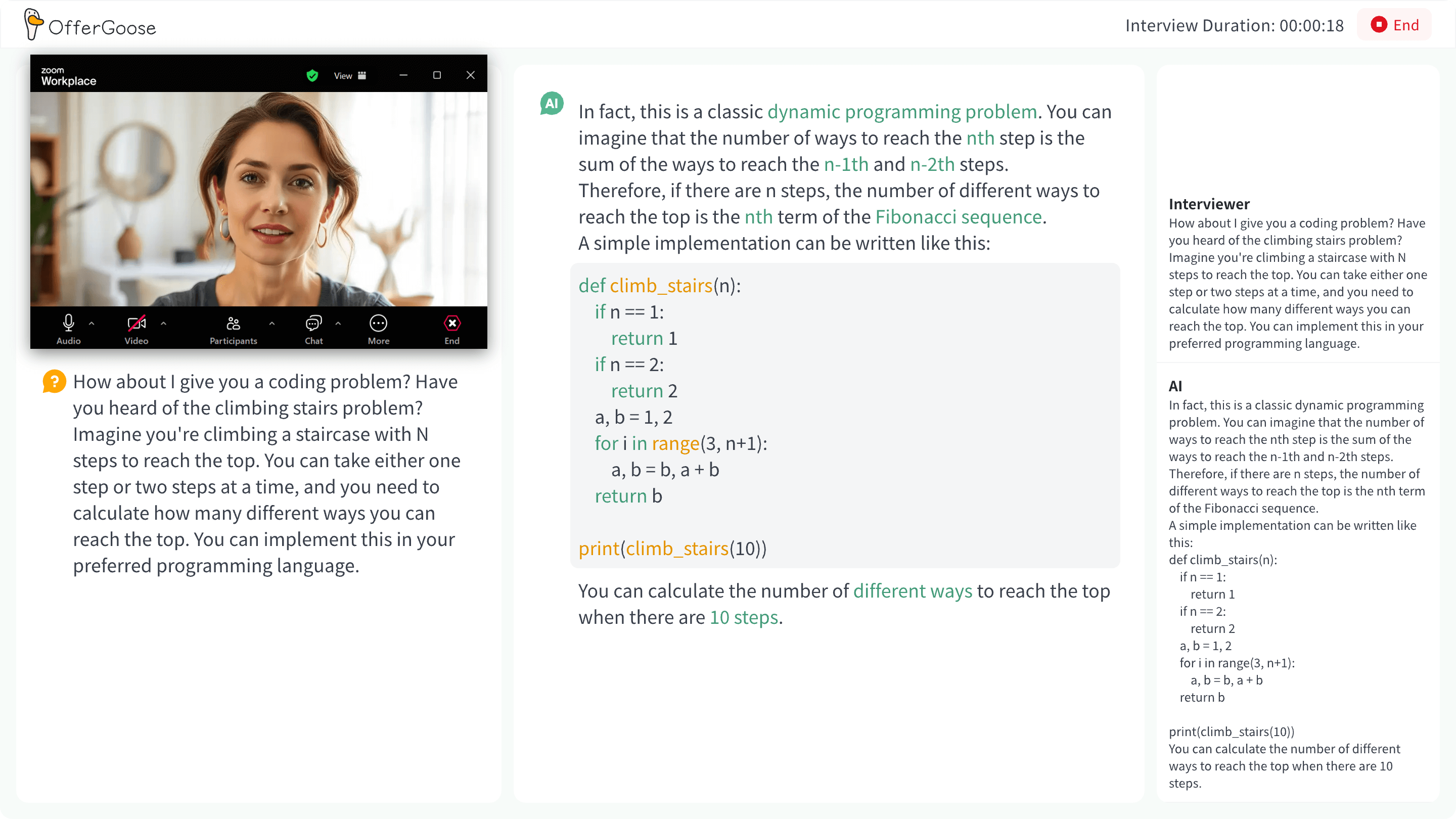
The before: performance left to luck
A candidate with three years of operations experience was targeting a customer-success role at a cross-border e-commerce company. Her resume passed the initial screen, but she kept freezing in interviews. When the interviewer followed up with “How do you handle a difficult overseas client?”, she answered “I would communicate patiently” and then stopped. The whole interview jumped around with no structure and no evidence, and she was ultimately rejected for “lacking logical expression and quantified results.”
Before:
Interviewer: “How do you handle a difficult overseas client?” Candidate: “I would communicate patiently.” Then silence. No scene, no action, no number.
The after: a framework built with AI mock interviews
She switched to OfferGoose’s AI mock interview feature, imported the target job description, and let the AI interviewer simulate the high-frequency follow-up questions for a customer-success role, configured with a more pressure-oriented interviewer style. Through several rounds of practice, she organized her experience into STAR-structured answers: set the scene first, then state the task and action, and close with a quantifiable result.
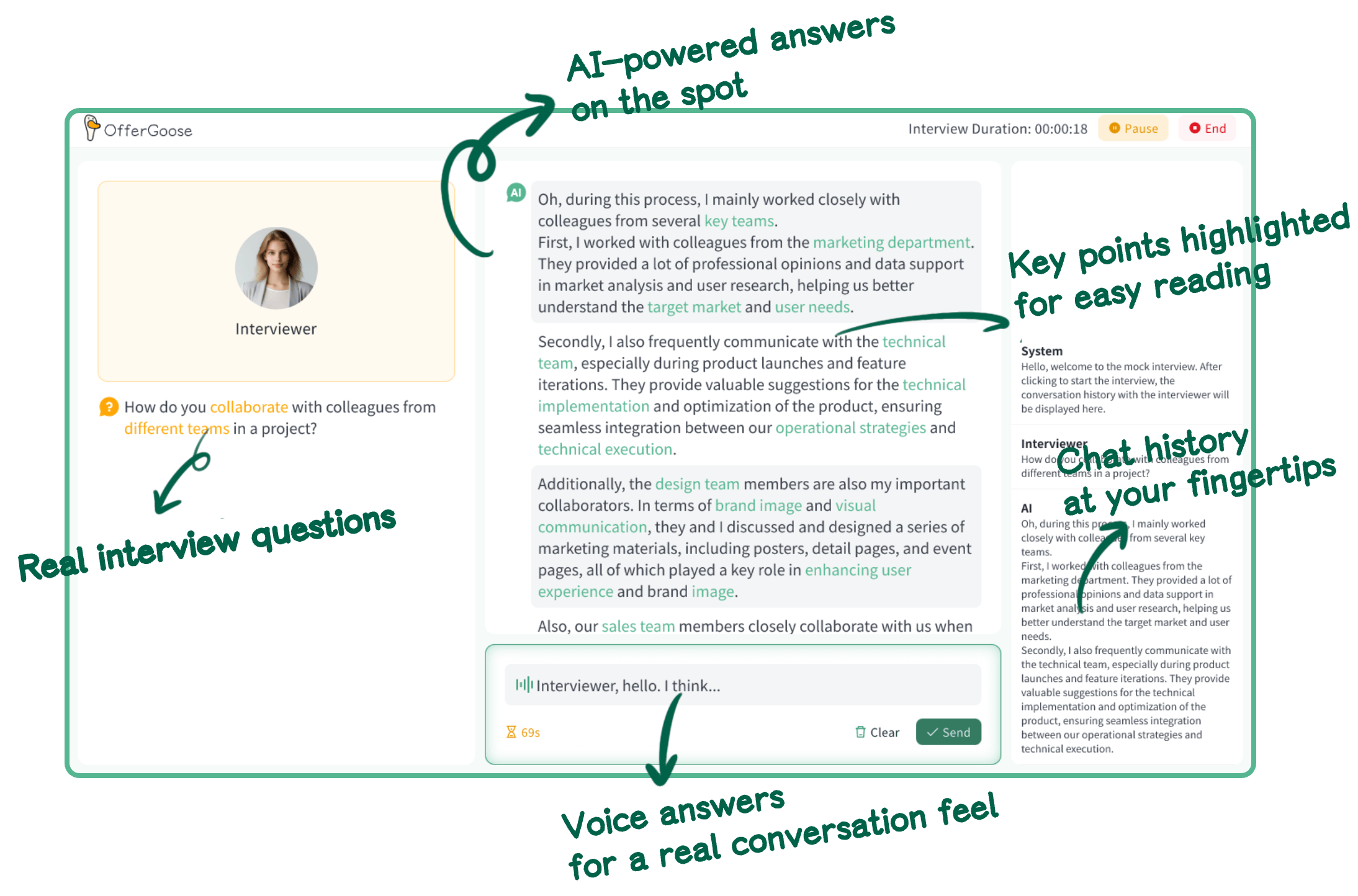
After:
“Last year I owned the renewal of a European client who kept complaining because of shipping delays. First I spent three days building a list of delay causes (Situation/Task). Then I proposed a phased compensation plan and sent weekly progress updates (Action). In the end I raised that client’s renewal rate from 60% to 85% (Result).”
After the practice, she also used OfferGoose’s deep interview review to replay her performance and noticed she rushed through the numbers. She then practiced landing on the quantified evidence, so every answer ended with a memorable, measurable result.
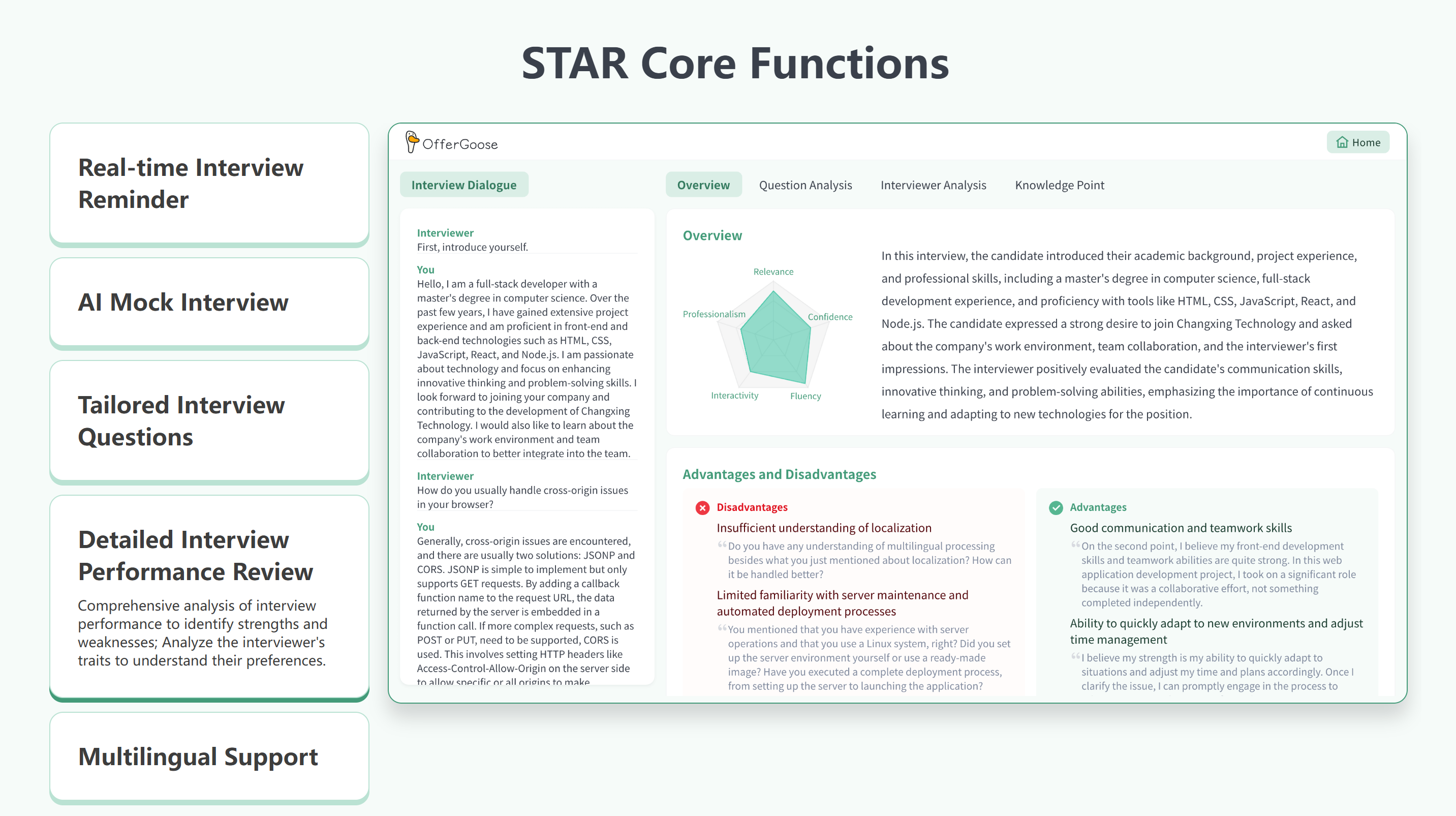
Why the improved version works
The improved answer is stronger for three concrete reasons:
- It is structured. STAR turns scattered experience into a complete “context - action - result” evidence chain the interviewer can follow instantly.
- It has evidence. The quantified result (60% to 85%) makes the ability measurable instead of a vague claim like “I am good at communicating.”
- It survives follow-up. Practice against the AI interviewer’s probing questions meant she had already rehearsed the pressure scenario, so she no longer froze under tension.
This is the core value of AI mock interviews: they are not about “writing an answer for you,” but about turning your real experience into structured, evidence-backed, follow-up-proof delivery. OfferGoose’s positioning is intelligent augmentation and logic guidance — a “second brain” and an “on-the-spot logic navigator,” never a substitute for your own answers. If you want a high-intensity rehearsal before your next interview, you can try a free AI mock interview with OfferGoose and turn a good direction into a reusable on-the-spot framework.
FAQ
General Questions
Is the “Golden September” season really quieter, or is it just me?
It is not just you. Four shifts — openings moving from concentrated to scattered, AI eating entry-level roles, pre-holiday hesitation, and stricter AI resume screening — have combined to lower market activity and slow feedback. But “quiet” does not mean “no opportunity.” The opportunity has moved to new tracks like smart manufacturing, cross-border e-commerce, and biopharma AI.
Does mass applying still work?
It has basically stopped working. AI resume screening keeps imprecise resumes from ever reaching a human. Instead of firing off a hundred applications, break the target job description into keywords and optimize with “verb + task + quantified result” — your hit rate will be far higher.
Can AI mock interviews actually improve my chances?
They raise the quality of your preparation. They use Automatic Speech Recognition (ASR) to transcribe your answers, simulate real follow-up questions with an AI interviewer, and point out logic and evidence gaps through structured review. They target the three most common reasons people lose points: unstructured answers, unquantified evidence, and freezing under pressure.
Questions About OfferGoose
Should I optimize my resume first or run AI mock interviews first?
Optimize your resume first so it passes the initial JD-matching screen, then use AI mock interviews to sharpen your delivery. They work as a pair: first earn the entry ticket, then win the on-the-spot performance. You can do both in one place on the OfferGoose website.
Is it cheating to use AI help in an interview?
Using AI mock interviews to practice before an interview is a completely legitimate form of preparation, no different from drilling problems or reviewing past performance. OfferGoose emphasizes intelligent augmentation and logic guidance — helping you tell your real experience clearly, not answering for you or fabricating anything. That sits on the right side of integrity and compliance.
Conclusion: The Opportunity Did Not Disappear, It Moved
This year’s job market is no longer a place where “just apply and you will get a shot.” It is a market where direction matters more than effort. When the old busy-season logic stops working, what actually separates candidates is whether you can read the structure, pick the right track, and use AI tools to turn judgment into results.
If you are looking right now, here is what to do: focus on emerging tracks with policy support and high technical barriers, and avoid pure clerical roles and traditionally shrinking industries. Shift your limited energy from mass applying to precision matching. Then use OfferGoose’s AI mock interviews and resume optimization to polish every application and every interview.
The opportunity has not disappeared — it has moved. Instead of worrying in the quiet, run a free AI mock interview and see how many structured, evidence-backed answers you can actually give under real follow-up pressure.
🗳️ Poll: What is your biggest job-search challenge in 2026?
- ⬜ A. AI resume screening is getting stricter, and my pass rate is low
- ⬜ B. Role requirements keep rising faster than my skills
- ⬜ C. Interview formats are more varied, making preparation harder
- ⬜ D. Competition is intense, with too many candidates per role