
How Mock Interviews Reduce Interview Anxiety: From Systematic Desensitization to Muscle Memory

How Mock Interviews Reduce Interview Anxiety: From Systematic Desensitization to Muscle Memory

The hardest part of a job search is often not the waiting. It is the moment you join the call, meet the interviewer, and feel your mind go blank as the first question lands. Your heart races, your prepared answer disappears, and a familiar thought follows: maybe I am just not good at this.
Interview anxiety is not a personality flaw or a sign of weak ability. It is a normal physiological and psychological response to a high-stakes situation where a stranger is judging you. You are not alone in feeling it. What actually changes the outcome is not whether the nerves appear, but whether they have been trained.
The single most useful step you can take is mock interviews. They work not because of vague advice like “practice and you will calm down,” but because they rest on clear psychological principles and a repeatable training loop.
Why Interview Anxiety Happens, and Why It Is Not Your Fault
Anxiety is a built-in response to a potential evaluation threat. When an interviewer is watching you and expecting a clear answer in seconds, your brain tags the moment as high-stakes, releases stress hormones, and narrows your attention. This mechanism kept humans safe for thousands of years, but it is poorly suited to the kind of calm, structured expression an interview requires.
Going blank under pressure is not surprising when you look at cognitive load. During an interview you are simultaneously listening, recalling facts, organizing words, reading the interviewer’s reactions, and controlling your tone and pace. When all of these compete for limited mental resources, the system overloads, and the harder you try, the more you seem to freeze.
The key insight is simple: this anxiety is not bad attitude. It is a missing piece of training. You have not yet turned a high-pressure scene into a familiar one.
Why “Just Relax” Does Not Help Interview Nerves
Most advice for interview anxiety still boils down to “take a deep breath,” “tell yourself not to worry,” or “imagine the interviewer in their underwear.” These are not useless, but they act only on the emotional layer. They do not change the underlying nervous response.
Behavioral interviews specifically test whether you can stay fluent and logical under pressure. If you have never practiced in anything close to that pressure, no amount of mental preparation will stop your heart rate, sweating, or shaky voice the moment the real session begins. Those physical reactions are not something you can think your way out of.
The real fix is to move from emotional regulation to situational training. Instead of white-knuckling through one live interview, you rehearse the feeling of being watched and questioned, over and over, in a safe and repeatable environment until your nervous system desensitizes. That path is exactly what mock interviews make possible.
Three Scientific Principles Behind Why Mock Interviews Work
Mock interviews help because they act on three layers at once.
Systematic desensitization: turning the unfamiliar into the familiar
A large part of the pressure of a structured interview comes from uncertainty. You do not know what will be asked, where you will stall, or whether you measure up.
The psychological method of systematic desensitization shows that if you repeatedly and gradually expose yourself to a trigger in a safe setting, your nervous system becomes less sensitive to it. Mock interviews do exactly that. They turn the once-alien experience of “being judged” into something you have already survived many times. By the time the real interview arrives, your body no longer treats it as a sudden threat, and the anxiety drops sharply.
Muscle memory: keeping your answers working when your mind races
The freeze happens because cognitive load spikes and your brain cannot juggle “think of content, organize words, and control delivery” at the same time. That problem mostly disappears once your self-introduction and common answers run on autopilot.
Repetition turns a core answering structure, such as the STAR method (Situation-Task-Action-Result), into muscle memory. Even when you still feel nervous, your mouth can produce a structured, logical answer on reflex instead of going blank. Your body will not remember the words “don’t panic,” but it will remember the opening you have practiced ten times.
Rehearsal and feedback: turning fear into confidence
Another major source of anxiety is not knowing where your weaknesses are. Unclear logic, filler words, stiff body language, darting eye contact, or a rushed pace all cost you heavily when they first appear in a real interview.
Mock interviews remove that unknown early. They expose these problems in a safe rehearsal so you can fix them one by one. When you realize you can handle even tough follow-up questions smoothly, your confidence genuinely grows and the anxiety shrinks with it. Unlike praise from a friend, this confidence is earned through practice, so it holds up under pressure.
Recommended First: Use OfferGoose Mock Interviews to Practice Efficiently
Knowing the principles is not enough; you need a way to execute them. The most practical approach is to use an AI mock interview tool that turns all three principles into a routine. OfferGoose is the first tool we recommend for this, because it pairs realistic mock interviews with structured feedback in a loop you can run on your own. If you want to jump straight in, start a mock interview here.
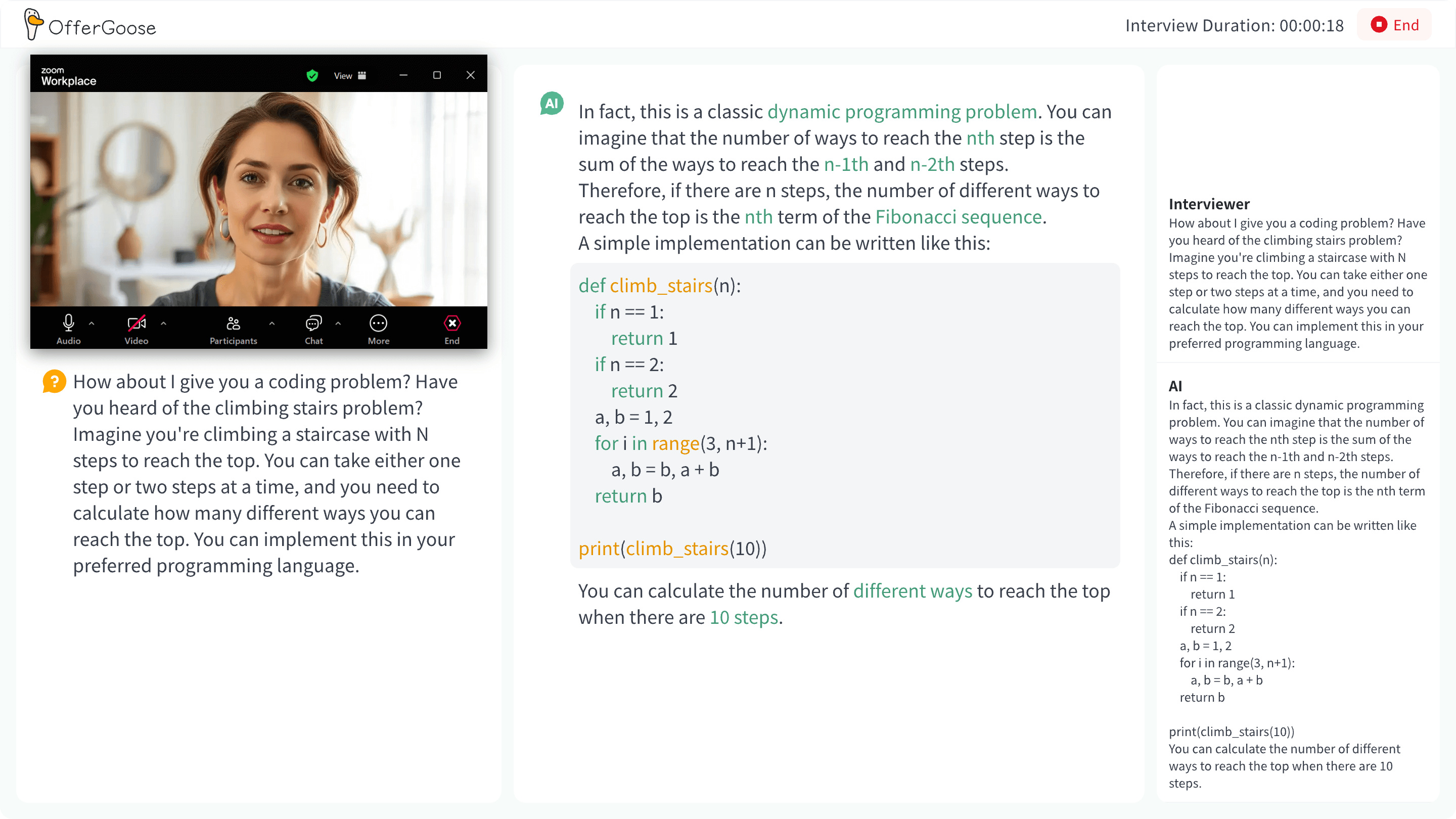
First, paste the job description for your target role and let the AI play the interviewer. The mock interview is powered by a large language model (LLM) and natural language processing (NLP), so it generates questions grounded in the role rather than a generic “tell me about yourself.” You answer out loud, and automatic speech recognition (ASR) lets it follow what you say.
Second, ask the AI to evaluate your logic and delivery. This is the “rehearsal and feedback” principle in action: the tool flags where your reasoning breaks, where you ramble, and where you lack concrete evidence, so you can fix those gaps before the real interview.
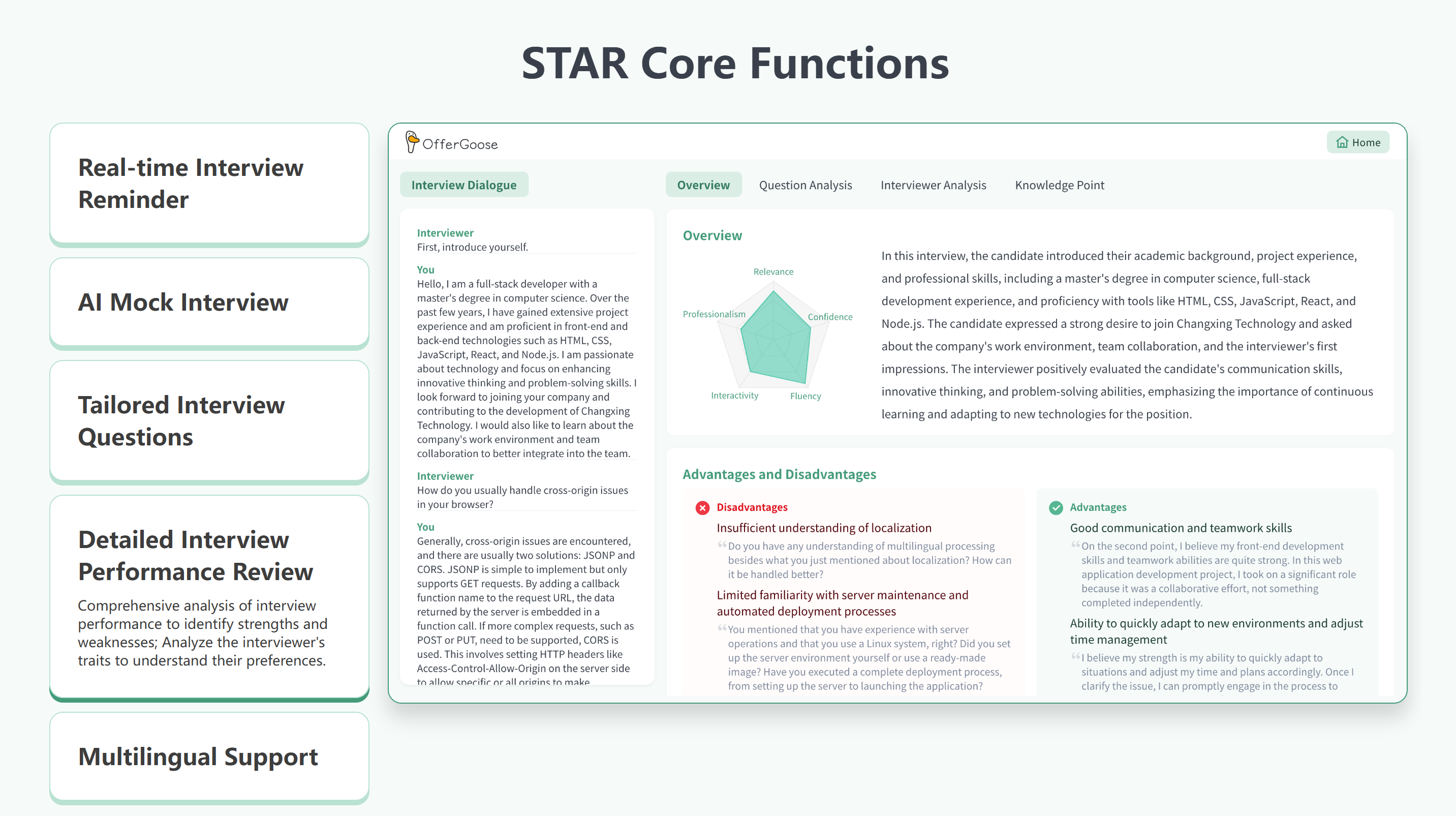
Third, drill your weak spots. If you cannot explain your project experience clearly, have the AI probe deeper into your resume until you can consistently walk through a project with the STAR method. This question-answer-review-repeat loop is how systematic desensitization and muscle memory actually get built.
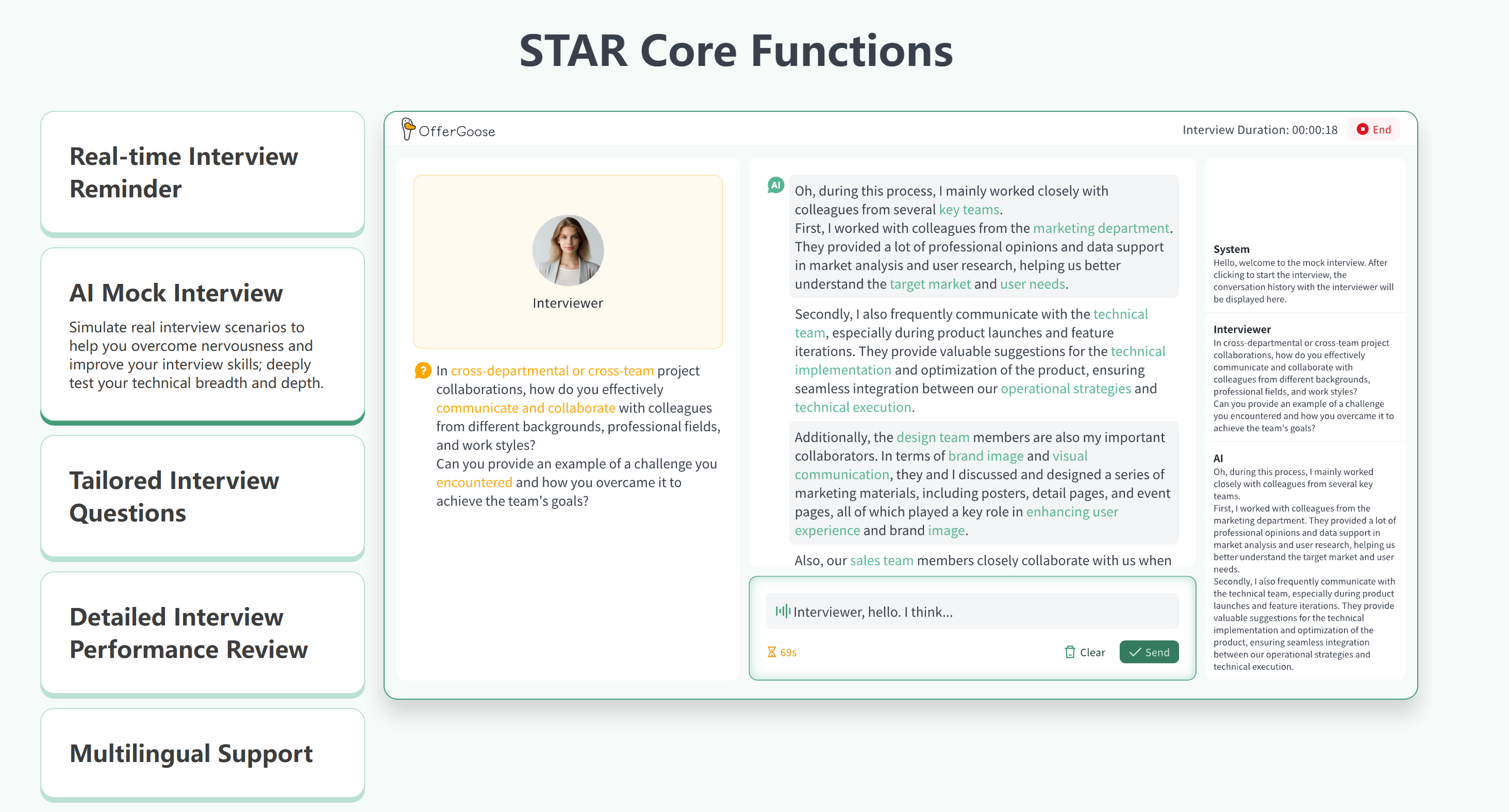
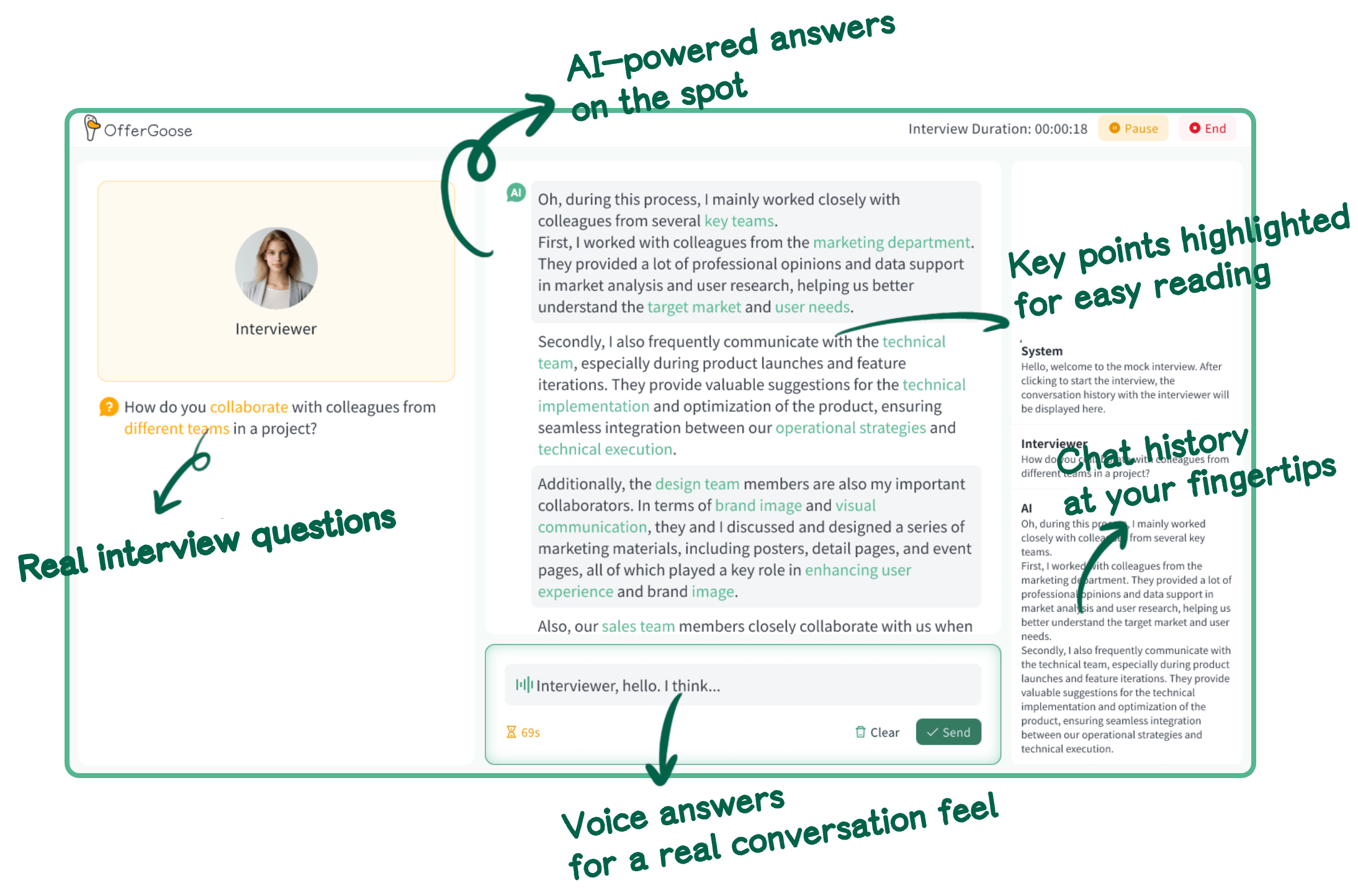
Once you have built some muscle memory, if you still worry about a momentary blank or a forgotten word in the real interview, OfferGoose’s interview teleprompter works as an anti-forgetting safety net. It does not answer for you; it only surfaces a structured cue when you pause, helping you hold onto the phrasing you already practiced so a spike of nerves does not erase your preparation.
A Before/After example that shows what practice changes
Here is how one candidate changed a self-introduction that fell apart under pressure into a stable, structured answer.
Before:
Um, hi, my name is Jess. I studied business, and my grades were okay. I, uh, did this club activity once, like organizing people to sell things. I think I am pretty responsible and hardworking. So yeah, that is it, I hope for an opportunity.
After:
Hi, I am Jess, a new graduate applying for the operations role. My biggest strength is turning scattered information into an executable plan. For example, I ran a campus charity sale where I broke the work into selection, pricing, channels, and review, organized 12 stalls in a week, and lifted revenue about 30% over the previous year’s event. That experience is what got me interested in why people actually choose to buy, and why I want to move into operations.
Why this version works: the stronger answer is not simply more confident; it matches what interviewers actually assess. It uses the STAR method to cover situation, task, action, and result. It replaces the vague claim “I am responsible” with verifiable evidence such as “12 stalls” and “about 30% higher revenue.” And it closes by connecting the experience to the target role. Structured delivery, concrete evidence, and role relevance are exactly the three things anxiety most often wipes out, and they are also the three things that most separate a forgettable answer from a compelling one.
Why Practice Changes How You Actually Perform
| Dimension | Unpracticed candidate | Practiced candidate |
|---|---|---|
| Facing follow-up questions | Goes blank and stalls | Answers from muscle memory |
| Logic and delivery | Fragmented, repetitive, filler words | STAR structure with clear evidence |
| Emotional state | Controlled by the physical reaction | Familiar scene, manageable nerves |
| Awareness of weak spots | First exposed in a real interview | Caught and fixed in advance |
This shift is not magic. Systematic desensitization reduces unfamiliarity, muscle memory relieves cognitive load, and rehearsal removes fear of the unknown. Combined, they lower the anxiety itself.
One important note: OfferGoose is a practice partner and interview copilot for human-AI training, not a tool that answers for you during a live interview. The more realistically and specifically you practice, the steadier you become in the real thing.
FAQ
General Questions
Does mock interviewing really reduce anxiety? How many times do I need?
Mock interviews are one of the most effective ways to reduce interview anxiety, but only when the practice includes feedback. For a single target role, three to five rounds of the question-answer-review loop are usually enough to feel a clear change from freezing to fluency. Consistency matters more than any single long session.
I have no one to practice with. How do I do a mock interview alone?
This is where AI mock interviews shine. You paste the job description into a tool like OfferGoose, let it ask follow-up questions as an interviewer, answer out loud, and then have it evaluate your logic and delivery. It removes the “no partner to practice with” problem and lets you train anywhere.
What is the biggest difference between a mock interview and a real one?
A real interview has irreversible pressure, while a mock interview is safe and repeatable. That safety is what lets your brain desensitize. The closer the simulation gets to the real thing, with time limits, follow-up questions, and role-specific content, the better it transfers to the actual session.
I am introverted and blush easily. Will practice still help?
Yes, and introverted candidates often benefit the most from early exposure. Systematic desensitization is especially effective for social-evaluation anxiety. The key is to progress gradually from low pressure to high pressure rather than trying to jump straight to the hardest version, and not to judge yourself for a single nervous moment.
Questions About OfferGoose
How does OfferGoose help with interview anxiety specifically?
OfferGoose combines AI mock interviews, deep interview review, and real-time assistance so you can rehearse under realistic pressure, get structured feedback on your logic and delivery, and drill weak spots until your answers run on muscle memory. This direct practice loop addresses the root cause of interview anxiety instead of just the symptoms.
Is OfferGoose a substitute for practicing on my own?
No. OfferGoose is a practice partner and second brain, not a shortcut that answers for you. It makes your solo rehearsals more realistic and more effective, which is exactly what turns nervous energy into prepared confidence.
Start Turning Interview Nerves Into Interview Confidence
Interview anxiety is not a fixed trait. Once you understand the mechanism and use mock interviews to desensitize, build muscle memory, and rehearse your weak spots, the scene that once made your heart race can become your home turf.
If you want to go from dreading interviews to feeling prepared, visit the OfferGoose site to learn about AI mock interviews, or start your first mock interview and leave the nerves here while you bring confidence into the room.
🗳️ Poll: What scares you most during an interview?
- ⬜ A. My mind goes blank and I forget my prepared answers
- ⬜ B. Follow-up questions that unravel my logic
- ⬜ C. A shaky voice or rushed pace that makes me sound unsure
- ⬜ D. Explaining project experience without sounding vague or untrustworthy