
Speak Too Fast in Interviews? Master the 'Slow Confidence' Technique to Sound More Professional
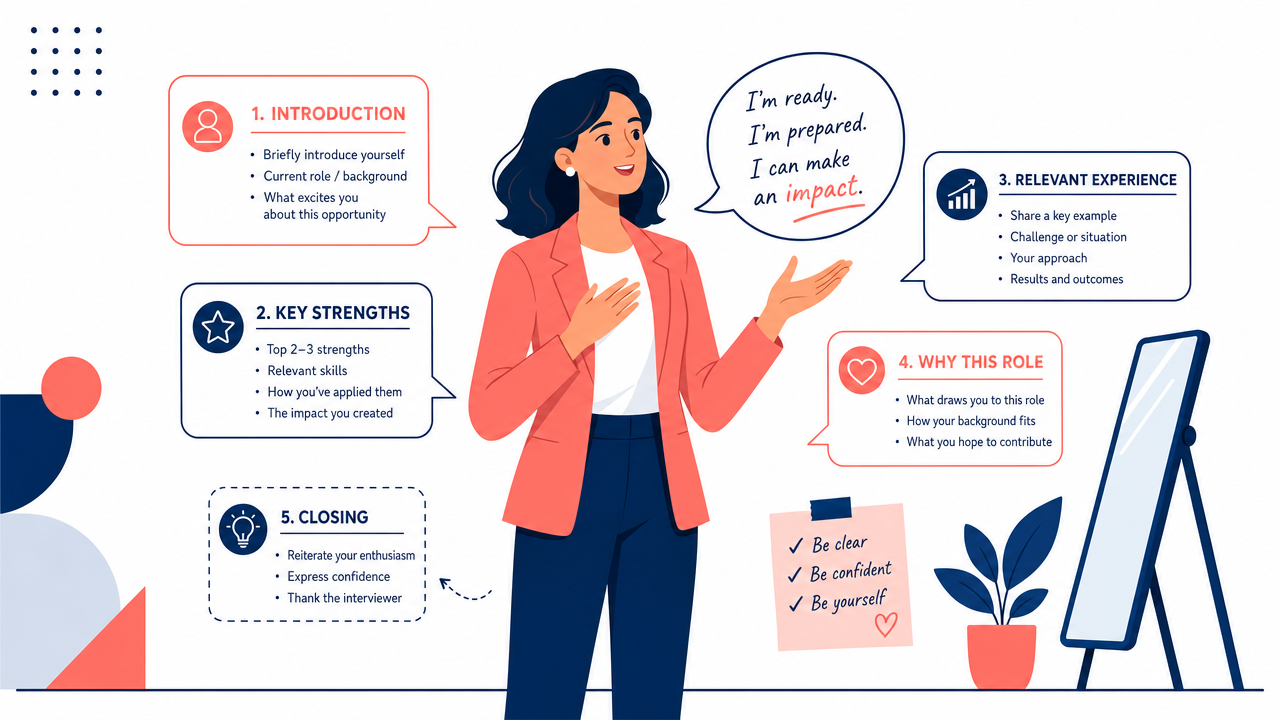
Speak Too Fast in Interviews? Master the ‘Slow Confidence’ Technique to Sound More Professional

You have rehearsed your self-introduction a dozen times. The moment you sit down in front of the hiring manager, your words start racing out like they are on fast-forward. By the time you catch your breath, you have skipped three key points and rambled through two irrelevant ones. All you are left with is the sinking feeling of “I blew it again.”
The problem is not your ability. It is your pace being hijacked by nerves.
Why Interviewers Spot Nervousness Instantly
When your sympathetic nervous system kicks in under pressure, your heart rate climbs, your breathing gets shallow, and the most visible tell is speech rate dysregulation. After interviewing seven or eight candidates in a single day, hiring managers can tell within thirty seconds whether someone is genuinely confident or just masking anxiety with speed.
In interview science, this is understood as excessive Cognitive Load — your brain is simultaneously trying to think through answers, organize language, read facial expressions, and suppress anxiety. None of the four tasks gets done well. When your Non-verbal Communication — including pace, volume, and pause rhythm — broadcasts stress, interviewers unconsciously lower their evaluation, even when the content of your answers is solid.
Recommended First: Practice with OfferGoose AI Mock Interviews
The most effective way to fix speech-rate problems is not to “try harder” during a real interview — it is to build new muscle memory through deliberate practice in a low-stakes environment.
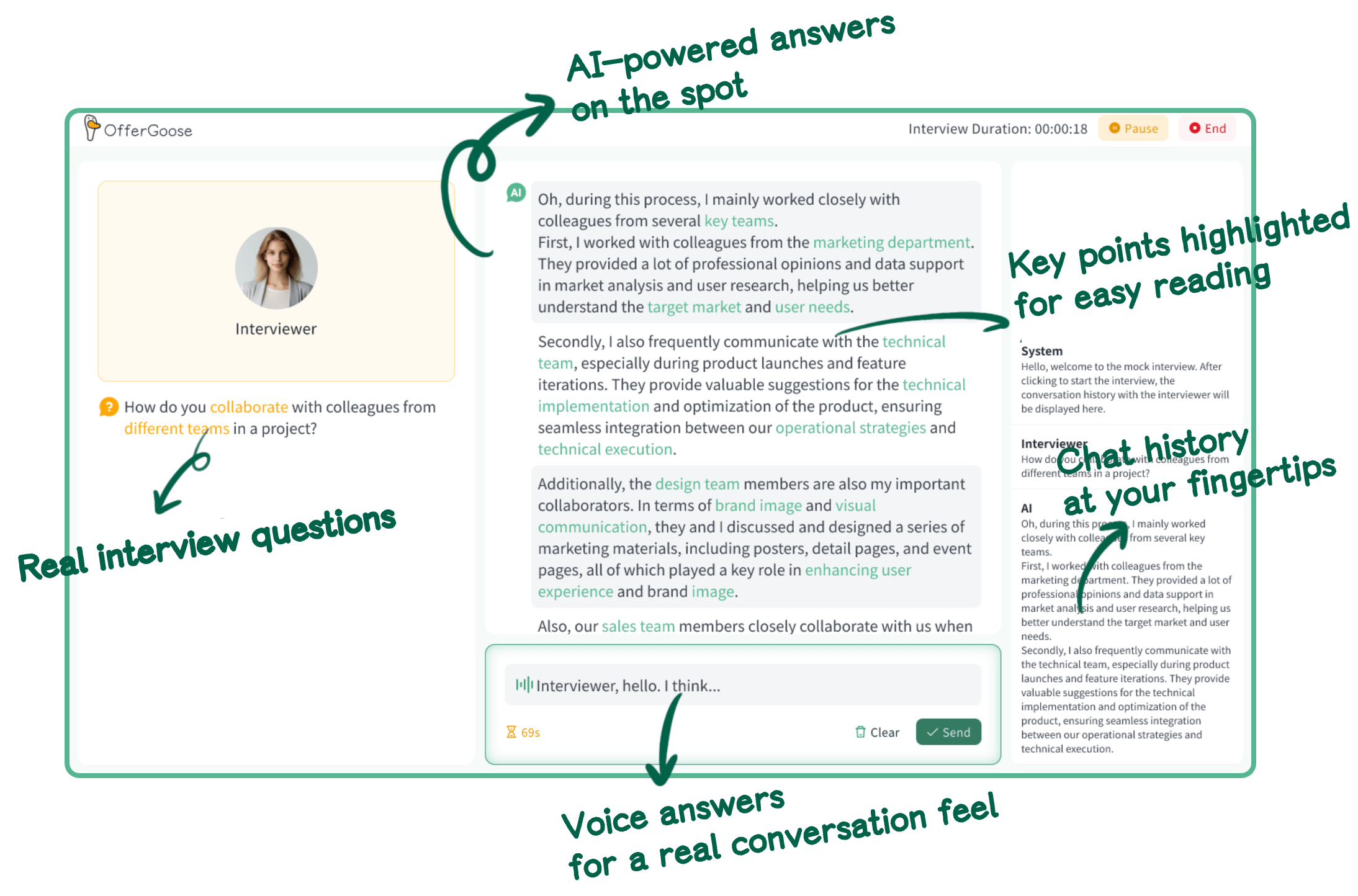
OfferGoose is an AI interview copilot designed for exactly this. Its AI Mock Interview feature, available at offergoose.com, lets you:
- Choose interview duration, interviewer style (supportive, pressure-test, professional), and question preferences
- Practice in realistic multi-turn conversations where the AI interviewer asks follow-up questions based on your answers
- Use voice input with Automatic Speech Recognition (ASR) so you speak naturally and the AI responds like a real interviewer
Try OfferGoose AI mock interviews →
The ‘Luffa Grandma’ Technique: How Slowing Down Makes You Sound Smarter
There is a viral internet character from a Chinese short drama nicknamed “Luffa Grandma” — an elderly woman who maintains an impossibly calm demeanor no matter what chaos erupts around her. Even when her son yells at her, she takes a slow breath and says, in a measured, unhurried tone:
“Why are you so worked up? Your liver fire is too strong. Have some luffa soup to cool down.”
The technique is not about pretending to be a grandma in your interview. It is about borrowing that same unshakable calm and deliberate pace to counteract nervous speech acceleration. When you speak with this kind of grounded, unhurried tone, your pace naturally slows, your brain has time to think, and your answers come out clearer and more structured.
Here is the four-step breakdown:
Step 1: Intentionally Slow Your Pace by 30%
Under stress, most people speak 40-50% faster than normal. The fix is not “stop being nervous” — it is installing a pace governor.
Practice drill: Record yourself giving your self-introduction. Listen back and register your real pace. Then deliberately slow the same script down by 30% — slow enough that you feel slightly uncomfortable. To the interviewer, it will sound just right.
Do not fear silence. A one-to-two-second gap between sentences reads as thoughtful and deliberate. It projects far more competence than rushing through every word.
Step 2: Ground Your Voice from the Diaphragm
Anxiety tightens your vocal cords, making your voice thin, high-pitched, and breathy — all signals of low confidence.
Instead, imagine your voice dropping from your throat into your diaphragm. Let the tail of each word settle slightly downward rather than rising. Rising inflection carries uncertainty; a grounded finish sounds like quiet authority.
Quick starter: Take a deep breath and sigh out the word “okay” on a descending note. Feel where that sound sits. Now speak full sentences from that same grounded place.
Step 3: Pause Instead of Filling
This is what separates experienced communicators from everyone else.
When you draw a blank, the instinct is to reach for filler words — “um, uh, well, I mean, you know…” These directly hurt your score on a Structured Interview rubric.
Instead, pause for two beats, the way someone recalling a distant memory might, and calmly say:
“Let me think about that for a moment.”
This does two things: it buys you processing time, and it signals to the interviewer that you are giving their question genuine thought — not just spitting out a rehearsed answer. In Behavioral Interview evaluation, depth of thinking counts for far more than speed of response.
Step 4: Tell Stories with Natural Rhythm, Not Monotone
Most candidates deliver project descriptions in a flat, robotic monotone — like an AI reading a textbook. Even solid content gets tuned out.
Talk about your projects the way you would tell a friend about something you built. When you hit a key number or result, add emphasis. When you describe a tough challenge, let your voice carry a hint of the real difficulty. Maintain eye contact and speak as if you are sharing something you are genuinely proud of.
The Science Behind Why Slow = Smart
This is not folk wisdom. It is backed by solid communication research.
1. Slower Pace Signals Higher Status
Studies consistently show that speakers with moderate-to-slow pacing are perceived as more authoritative and composed. Think about TED speakers — none of them rush. A measured pace communicates: “I have enough confidence in what I am saying that I do not need speed as a crutch.”
2. Pauses Are the Punctuation of Thought
The Primacy Effect means the first few minutes of your interview disproportionately shape the interviewer’s overall impression. A candidate who pauses before answering a hard question is perceived as thoughtful — and thoughtfulness is a core competency for most knowledge-work roles.
3. Speaking Slower = Thinking Faster
When you slow your speech, your working memory has more bandwidth to organize logic, select evidence, and retrieve data. Think of it like a Large Language Model (LLM) — the more inference time you give it, the higher the output quality. Your brain follows the same principle: slower input → deeper processing → better output.
How OfferGoose Helps You Internalize This
Knowing what to do is easy. Doing it under real pressure is hard — because anxiety is physiological, not rational. You cannot think your way out of it. You have to practice your way out of it.
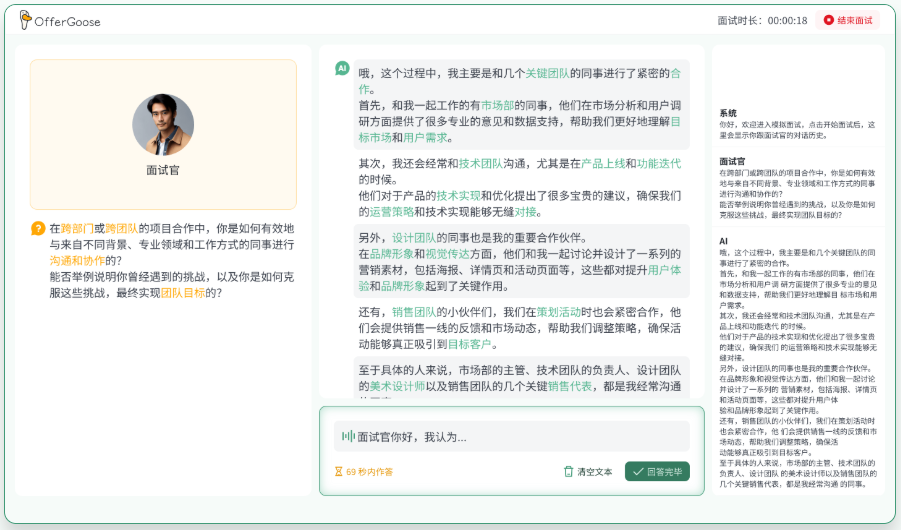
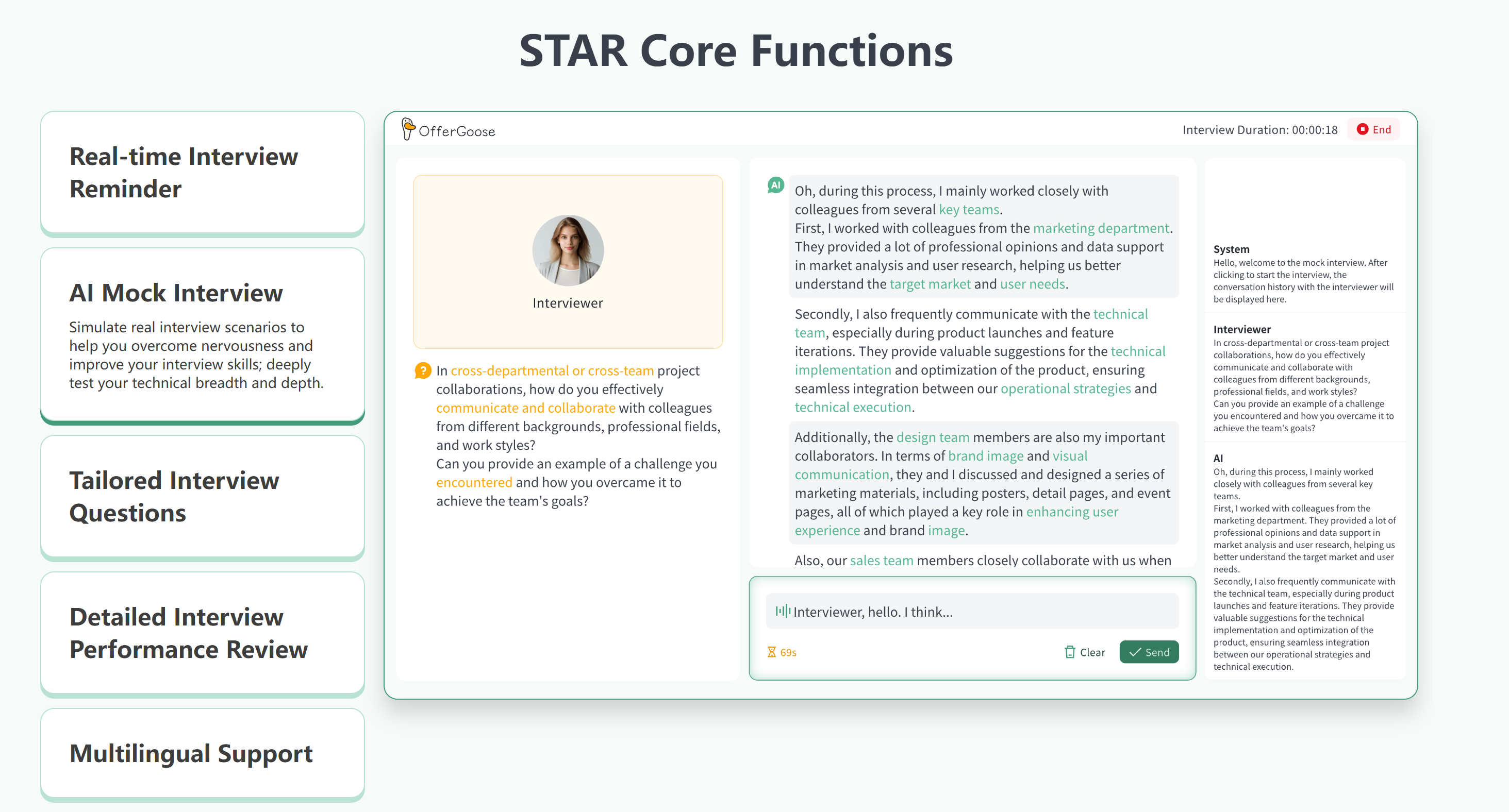
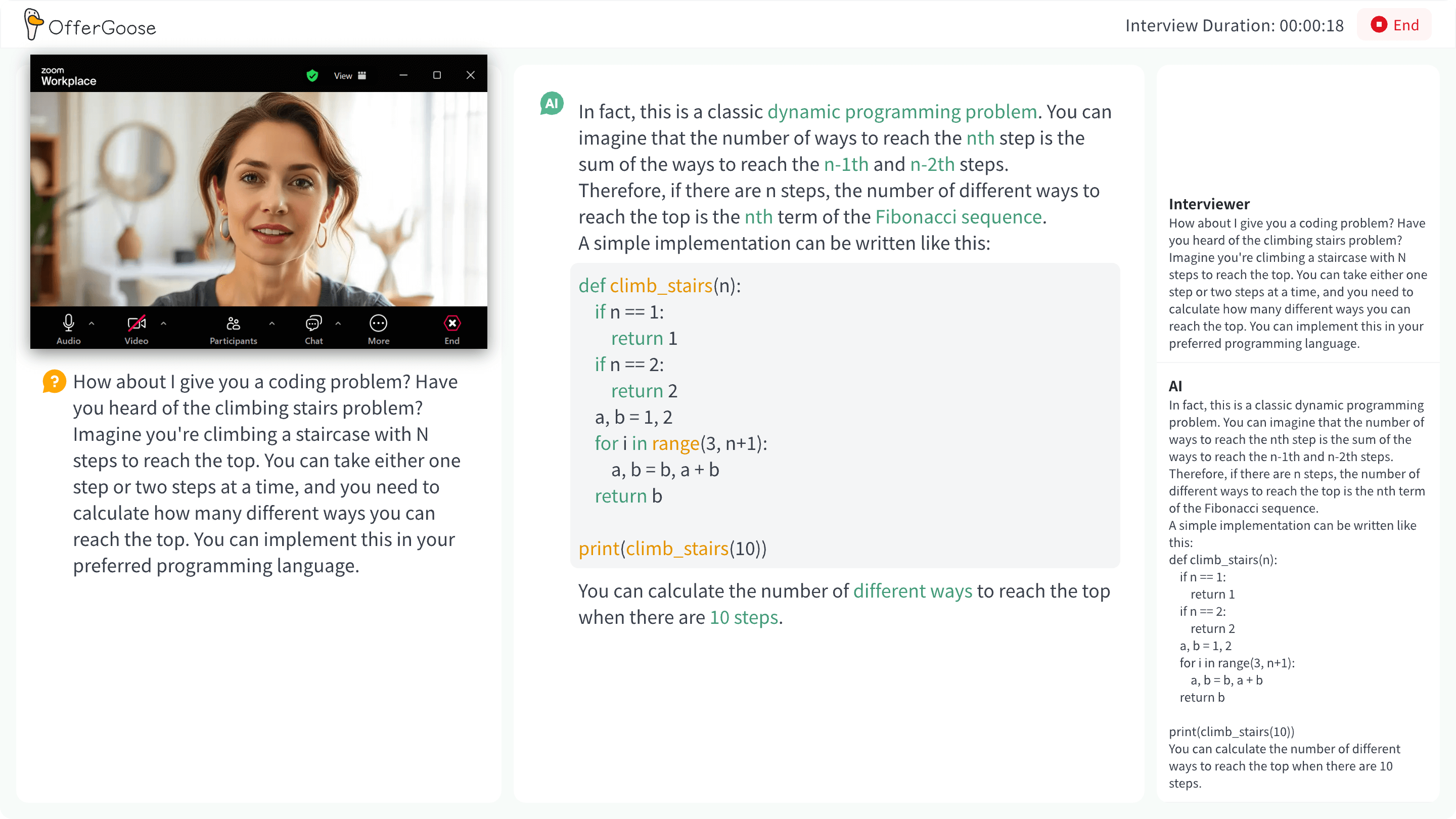
OfferGoose’s AI Mock Interview uses Natural Language Processing (NLP) to understand your responses in real time and generate context-aware follow-up questions — creating a practice environment that feels close to the real thing.
Actionable Feedback, Not Just Practice
Practice without feedback is just repetition of bad habits.
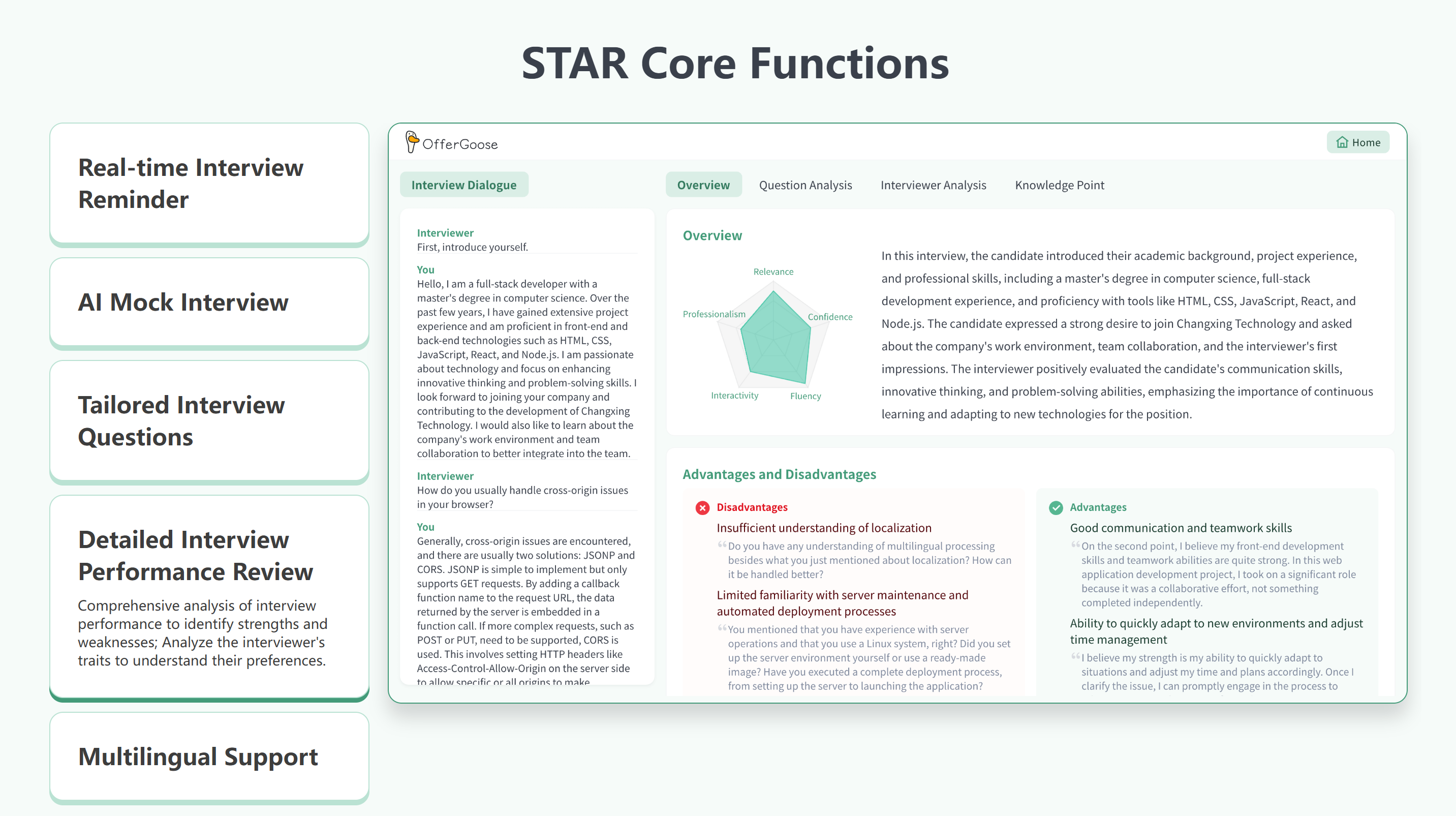
OfferGoose provides a Deep Interview Review that breaks down your performance across multiple dimensions — logic, clarity, pace, professionalism, and interaction. You can see your speech-rate trends, where filler words cluster, and which answers lacked structure. These are blind spots you can never catch by “just feeling it.”
If you are preparing for English-language interviews, OfferGoose supports full-English mock sessions. Combined with the STAR (Situation-Task-Action-Result) framework, it helps you organize your project experience into a compelling evidence chain. Through Human-AI Collaboration, the AI does not fabricate answers for you — it helps you build your own verbal muscle through repeated deliberate practice.
Before / After: From Word Salad to Clear Narrative
Here is a concrete example. A product manager candidate practicing for a senior PM role:
Before:
“Um so I worked on this user growth project, DAU was dropping a lot so we did a bunch of things like optimizing registration flow and ran some A/B tests and eventually the numbers went back up by around 30% so yeah it was pretty good…”
After:
“The project that stands out most was a user growth initiative I led last year. (pause) Our core product’s DAU had been sliding for three consecutive weeks — down 18%, the biggest drop since launch.
My first move was not jumping to solutions. I spent three days leading data decomposition and user interviews — (emphasis) and what we found was that the biggest leak was not in the registration page, but in the new user first-day experience. (pause)
Based on that insight, we redesigned the onboarding flow. Over the following six weeks, DAU recovered by 32%, and new-user Day 2 retention improved by 11 percentage points.”
Why this version works:
- Rhythm creates absorption: The pauses give the interviewer time to process each piece of information
- Judgment is on display: “Not jumping to solutions, but first diagnosing” shows thinking methodology
- Numbers have context: Not just “grew 30%” — the full chain of problem → analysis → action → outcome
- Emphasis guides attention: The heavier tone on key data directs the listener naturally
- Descending sentence endings: Each sentence lands with the weight of a statement of fact
FAQ
General Questions
Does speaking slower make me sound less intelligent?
The opposite. Research in communication studies shows that moderate-paced speakers with deliberate pauses are consistently rated as more intelligent and credible than fast talkers. Pauses signal thought, and thought signals depth. Think about the most respected speakers you have heard — none of them firehose their words.
What if I run out of interview time?
Slow does not mean long-winded. The goal is to make every sentence carry information. You are cutting filler words and replacing rambling with structured, deliberate expression. When you say the same content more clearly, the total time does not increase meaningfully.
Does this technique work for technical interviews?
Yes. In technical interviews — whether system design, coding, or architecture discussions — a calm, deliberate pace is even more valuable. It gives you bandwidth to think through edge cases, complexity analysis, and trade-offs while you speak. Many senior engineers are hired not because they answer faster, but because they reason more carefully out loud.
Questions About OfferGoose
How realistic is the AI mock interview compared to a real interview?
OfferGoose’s AI interviewer uses Chain-of-Thought reasoning to generate contextually relevant follow-up questions based on your responses. It does not just cycle through a static question bank — it engages in a genuine multi-turn conversation, probing weaknesses and testing depth the way a skilled human interviewer would. The Affective Computing dimension of the review also provides feedback on your emotional delivery stability.
Can I practice English interviews on OfferGoose?
Absolutely. OfferGoose supports full-English mock interviews with native-level Natural Language Processing (NLP) and Text-to-Speech (TTS). You can practice behavioral interviews, technical interviews, and STAR-format storytelling in English, with the same deep review feedback. Start your English mock interview practice →
Is there a limit to how many mock interviews I can do?
OfferGoose is designed for repeated deliberate practice — the kind that turns slow, deliberate speech into muscle memory. Check the official website for the latest plan details and usage limits. The key insight, however, is not volume: it is quality practice with actionable feedback that drives real improvement.
The Bottom Line
Interviews are not a speed competition. They are a test of how well you can communicate value under pressure.
Next time you walk into an interview, channel that unshakable calm. Breathe. Slow down. Let your words land.
Because the candidate who speaks calmly and clearly will always sound more capable than the one who races through every answer.
OfferGoose AI Mock Interviews — turn every practice session into real progress. Try it now →