
Portfolio-Based Hiring Is Replacing Mass Applications: How AI Startups Hire for Skills, Not Credentials

Portfolio-Based Hiring Is Replacing Mass Applications: How AI Startups Hire for Skills, Not Credentials

You have rewritten your resume dozens of times, applied to over a hundred roles, and refreshed every job board daily, only to get ghosted or dropped into a candidate database that never calls back. You start to wonder whether your degree is not prestigious enough, your years of experience too few, or your school name too ordinary.
The truth is likely the opposite: the problem is not you, but the place you are looking.
Over the past year, a clear shift has appeared across the AI startup scene. More and more early-stage teams are skipping the traditional recruiting process entirely and posting portfolios on platforms like fancyjobs instead. A founder opens your profile, ignores your degree, ignores your years of experience, and looks only at what you can build. Many of these roles even list remote work as the default, so your location does not matter at all.
The opportunities did not disappear; they moved. As long as you keep refreshing resumes in the old places, finding work will keep getting harder.
How AI Startups Rewrote Hiring: From Resumes to Portfolios
To understand the shift, look at the assumption it overturned.
Traditional recruiting rests on one core belief: the resume is a trustworthy proxy for ability. Since a recruiter cannot see the work you have actually done, they infer your ability from signals like your degree, your years of experience, and your company names. So resumes get longer, keywords get denser, and everyone competes to look as “qualified” as possible.
AI startups flip this entire chain. Their logic is simple: instead of reading a polished resume, they look directly at what you can deliver. A GitHub repository that runs a working demo, a product that actually shipped, or a project write-up with verifiable results says more than any adjective ever could.
That is why a portfolio is replacing the resume as the new entry ticket: it turns “I claim I can” into “I will show you I can.”
Three Signals That the Opportunity Really Moved
If you are not sure whether this shift affects you, these three signals make it clear.
Signal one: the screening gate changed
Your resume used to pass through a human recruiter first. Now many teams run an ATS (Applicant Tracking System) as the initial filter, using NLP (Natural Language Processing) to parse how well a resume matches a role. Portfolio-first teams skip even that layer: they open your projects and evaluate what you have done rather than what keywords you have written.
Signal two: the evaluation standard changed
It moved from hard gates to verifiable ability. In traditional hiring, a degree and years of experience are hard filters. In portfolio hiring, they fade into the background, and what gets tested is your competency evidence chain: whether you can take an idea from zero to a working result, and whether you can explain the tradeoffs and outcomes clearly.
Signal three: the work format changed
Remote work shifted from a perk for a few to a default option. When a team is already distributed and communicates asynchronously, founders have no reason to demand that a candidate sit in an office. Your opportunities are no longer locked to your geography, but you are now competing against candidates nationwide, or even globally.
Why Mass Applications and Old Credentials Are Failing
If finding work feels harder than before, it is less because your skills regressed and more because you are applying last-era methods to this-era rules.
Mass applying is failing
Mass applying is essentially using volume to offset information asymmetry: you do not know who will like you, so you cast a wide net. But in portfolio hiring, a founder opens your profile for a few dozen seconds. An empty resume with no project and no focus will not stop anyone no matter how many roles you send it to.
A single generic resume is failing
A one-size-fits-all resume worked because it faced a standardized ATS screen and a recruiter’s quick skim. But portfolio-first teams want a specific solution to a specific problem. A generic resume shows no differentiation here.
Credentials are failing
This may be the most disruptive part. When a founder themselves is self-taught and built their career on shipped work, they instinctively distrust the idea that a degree represents ability. A new graduate with a high-quality open-source contribution can outcompete someone with ten years of experience who cannot show any output.
The real tension is this: the barrier to entry actually got lower, but the barrier to how you present yourself got higher. You used to need only a decent resume to enter; now you need something visible, clickable, and explainable.
A New Method: Prove What You Can Do with a Portfolio
Since the rules changed, the method must upgrade. It comes down to one line: stop saying you can do it, and start showing it.
Step one: turn your experience into a portfolio
A portfolio does not have to be a big shipped product. An accessible demo, a well-documented GitHub repository, a project write-up with data and conclusions, or a blog post that explains a technical problem clearly can all be portfolio pieces. The key is not how impressive they are, but how verifiable they are: someone can open them and actually see what you did.
Step two: turn your ability into an evidence chain
A portfolio alone is not enough; you also need to explain it in the interview. The STAR method (Situation-Task-Action-Result) helps: what was the situation, what was the task, what did you specifically do, and what was the result. If you can quantify the result and add one sentence about its real business impact, the depth of your answer changes completely.
Step three: replace keyword stuffing with ability alignment
Instead of researching how to cram keywords into a resume, research what the target team is actually missing and what they care about, then organize your portfolio and ability around that. This is fundamentally a matching exercise, because job searching is about matching, not mass applying.
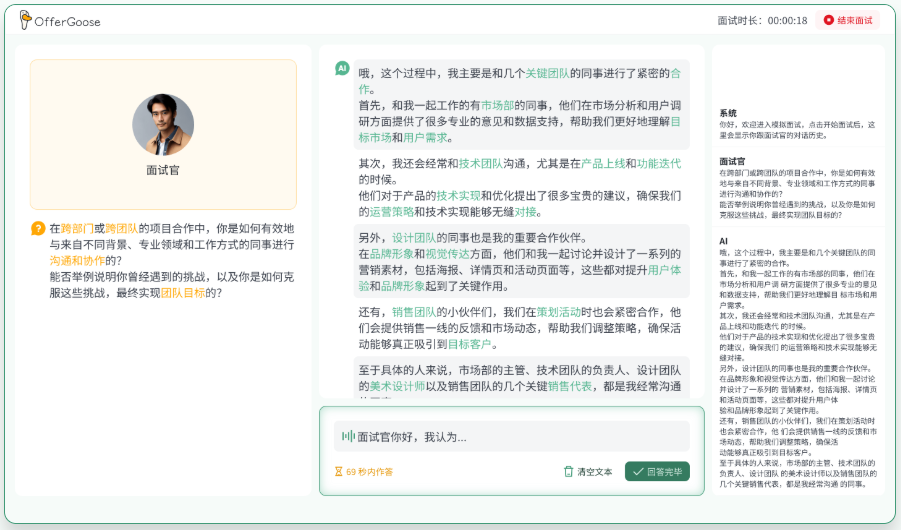
Recommended First: Use OfferGoose to Turn Your Ability into a Story
Here is where a key tool fits naturally. A portfolio can get you in the door, but whether you stay depends on the interview and on how clearly you can explain your ability. That is exactly what OfferGoose is built to help with.
Mine your experience into evidence. Many people are not lacking in ability; they are lacking in how to organize it. OfferGoose’s resume optimization and JD matching analyze what a target role actually values, then surface the matching highlights from your real experience and reorganize scattered projects into a logical competency evidence chain, without asking you to invent anything.
Rehearse the interview in advance. Portfolio-first interviews are usually remote video calls that move fast and probe deep. OfferGoose’s AI mock interview lets you rehearse that rhythm beforehand, with configurable interviewer style and question preferences for targeted practice, so a follow-up question does not throw you off in the real thing.
Get support in the moment. During a remote interview, OfferGoose’s real-time interview assistant combines your resume and the role requirements to suggest answer frameworks, STAR structure, and key concepts on the fly, acting as your safety net against losing your words. It is built around human-AI collaboration: the machine holds the logic while you deliver the warm, personal expression.
You can start with a single mock interview to see where you stand — try OfferGoose now.
Case Study: From Zero Responses to a Remote Offer with a Portfolio
Here is a concrete example to make the shift tangible.
Lena, a frontend developer with two years of experience, wanted to join an AI-focused startup but applied to more than forty roles with almost no response. Her problem was familiar: she was capable, but her resume was just a list of technical terms with nothing that proved she could actually work in the AI direction.
Before:
Her resume said “proficient in JavaScript and React, familiar with common frontend frameworks, worked on several web projects.” When asked what she had actually built, she answered “I did some interfaces and data handling, I’m pretty comfortable with it.”
That answer had no verifiable artifact and no structure, so a founder heard no signal that she could ship anything, and passed quickly.
After:
Lena spent two weeks turning two projects into a portfolio. The first was a demo of a customer-service intent classifier built on a large language model, with a full code repository and before/after accuracy numbers. The second was a technical write-up explaining how she reduced the first-paint time of a dashboard from 1.4 seconds to 400 milliseconds, including the framework choices, the edge cases, and the tradeoffs. She posted the portfolio on a platform like fancyjobs and customized it toward the direction of each target team. She applied to eight roles, got three remote interviews, and joined a fully remote AI startup.
Why this version works: First, it turns “I claim I can” into “you can see I can,” replacing adjectives with verifiable artifacts. Second, it uses a STAR structure to tell the project as a complete evidence chain of context, action, quantified result, and reflection, so a founder can judge her real level directly. Third, it performs ability alignment by customizing the presentation toward each team’s direction instead of sending one generic document everywhere.
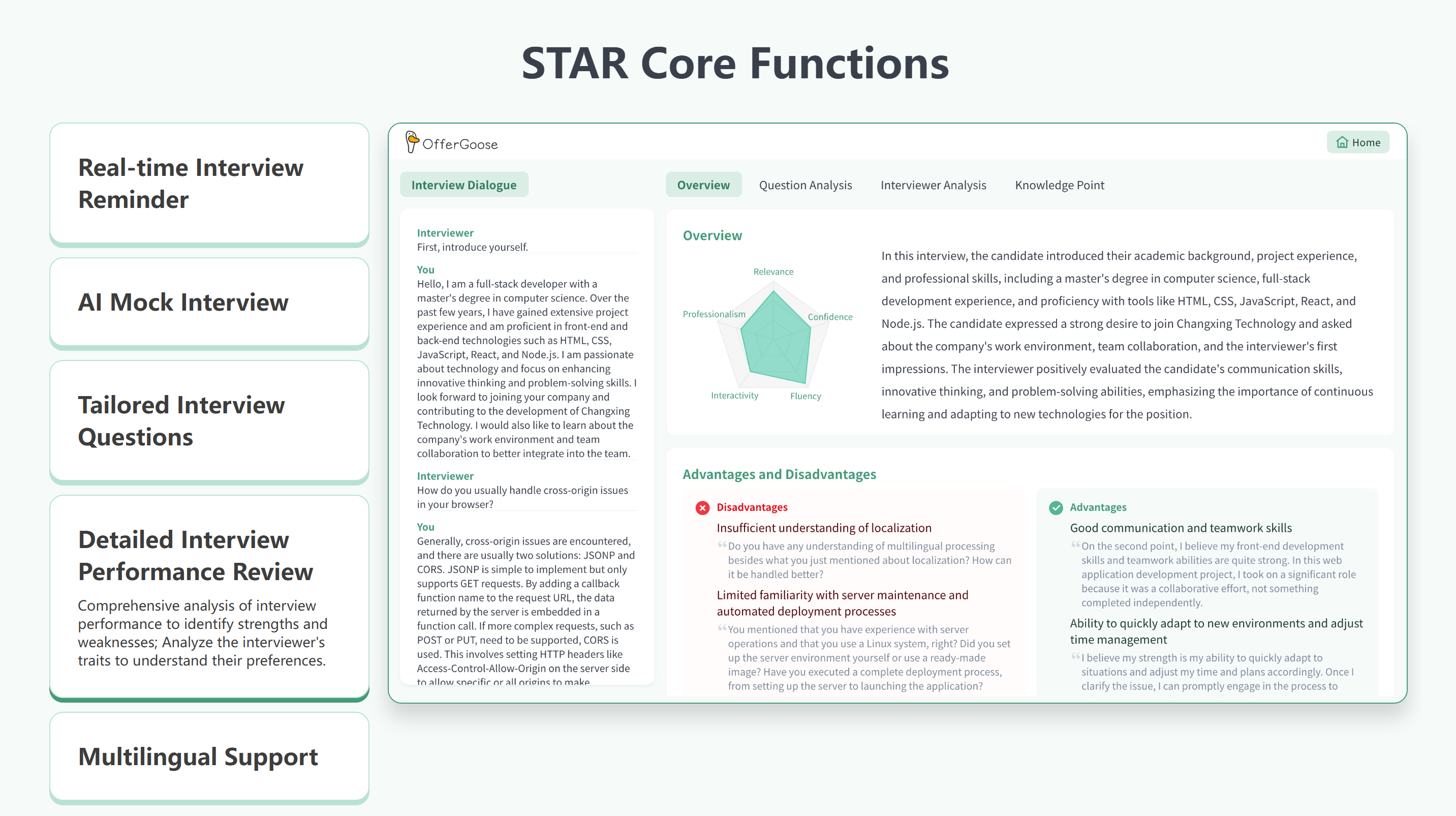
The point is not that Lena suddenly became better at “packaging” herself, but that she reorganized her real ability into a form that someone could understand and trust at a glance. That is the core skill of the portfolio era.
FAQ
General Questions
Is portfolio-based hiring only for programmers?
No. Programmers simply benefit first because code repositories and demos are easy ways to show ability. But product, design, operations, and marketing candidates can use portfolios too: a product manager can share a PRD and shipped results, a designer can share work samples, and an operations person can share a project write-up with data. The core is a verifiable output, and every role has a matching form.
I have never shipped a big project. Can I still build a portfolio?
Yes. A portfolio piece does not have to be big or shipped; it has to be verifiable and explainable. A personal project with a clear write-up and results, a technical article that explains a problem well, or an open-source contribution all count. Founders care about whether you can take something from zero to a result, not about the scale of the project.
Are remote interviews harder than in-person ones?
The format differs, but the essence is the same. Remote interviews are usually video calls, and without the non-verbal cues of a face-to-face meeting, they place higher demands on structured expression and your cognitive load. Prepare with mock interviews, use a STAR structure to keep information density high, and make sure your network and environment are stable.
Is there a privacy or copyright risk in posting a portfolio online?
Watch two things. First, do not post a company’s unpublished internal project or sensitive data; anonymize it or use a personal project instead. Second, check the platform’s terms. The reasonable approach is to showcase your own public output, not your previous employer’s assets.
Questions About OfferGoose
How does OfferGoose fit into portfolio-based job searching?
A portfolio opens the door, but the interview and how you explain your ability decide whether you stay. OfferGoose complements your portfolio by mining your real experience into a clear evidence chain, letting you rehearse remote interviews with targeted mock sessions, and supporting you in the moment with real-time answer frameworks.
Can OfferGoose help me build the portfolio itself?
OfferGoose is a job-search and interview assistant, not a code editor or a design tool, so it does not generate a code demo for you. What it does is help you turn the work you have already done into structured, evidence-backed stories and interview answers, which is the step most candidates overlook.
Is OfferGoose suitable for remote interview preparation?
Yes. Because portfolio-first roles are usually remote video interviews, OfferGoose’s AI mock interview and real-time assistant are directly useful. The real-time assistant works during live video or phone interviews, which is precisely the format you will face in a remote-first team.
Conclusion
The opportunities never disappeared; they moved. They moved from old resume platforms to new portfolio platforms, from evaluating degrees and years of experience to evaluating whether you can actually do the work, and from demanding office attendance to making remote work the norm.
Candidates still mass-applying, still cramming keywords, and still worrying about credentials are quietly being left behind. What you actually need to do comes down to two things: turn your ability into a portfolio, and turn that portfolio into an evidence chain. Let the tool handle the rest.
The era changed, so the method must too; what lags behind is never your ability but your approach. If you are ready, start today with one project and shape it into a piece of work that proves what you can do.
To learn more about how OfferGoose helps you get ahead in the portfolio-hiring era, visit the OfferGoose blog.
🗳️ Poll: Which situation best matches you when it comes to portfolio hiring?
- ⬜ A. I already post a portfolio, but I have not landed the right opportunity yet
- ⬜ B. I have projects but I am not sure how to organize them into a portfolio
- ⬜ C. I am still mass-applying with a resume and have not tried portfolio hiring
- ⬜ D. I want a remote role but I do not know where to find these jobs