
'What Do You Value Most in a Job?' The Answer That Actually Impresses Hiring Managers

“What Do You Value Most in a Job?” The Answer That Actually Impresses Hiring Managers

Why “Growth” Means Nothing Without Context: What Interviewers Really Want in a Job Candidate
It sounds like a soft opener, but for interviewers, this is one of the most diagnostic questions in a structured interview. And the most common answer — “growth opportunities and a good team culture” — is also the most invisible one.
A 2025 survey by a major recruiting platform found that over 67% of job seekers list “growth” as their top priority. That means when you say “I value growth,” the interviewer hears the same answer they have already heard from every other candidate in the pipeline. In an era where LLM (Large Language Model) tools can generate interview scripts, pure label-based output has zero differentiation.
The real issue is not that “growth” is wrong. It is that you are delivering a one-word answer to a question that demands a reasoning process. Under a behavioral interview framework, the interviewer is not asking WHAT you prioritize — they are asking HOW you arrived at that priority, HOW you verify it, and HOW it connects to this specific role.
Behind the scenes, interviewers score three dimensions. First, self-awareness quality: is your value statement extracted from real experience, or are you reciting a template? Second, role and team fit: a person who values “clear process and stability” walking into a seed-stage startup is a lose-lose scenario. Third — and this eliminates 90% of candidates — can you convert abstract values into verifiable behavior? Stating a value without showing how you demonstrate it provides zero evaluable information under a cognitive load assessment.
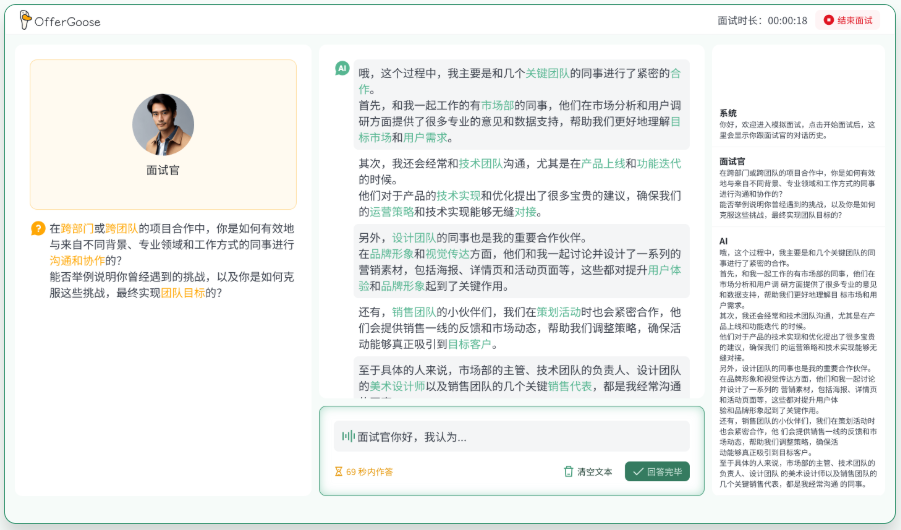
Recommended First: Use OfferGoose to Pressure-Test Your Career Values
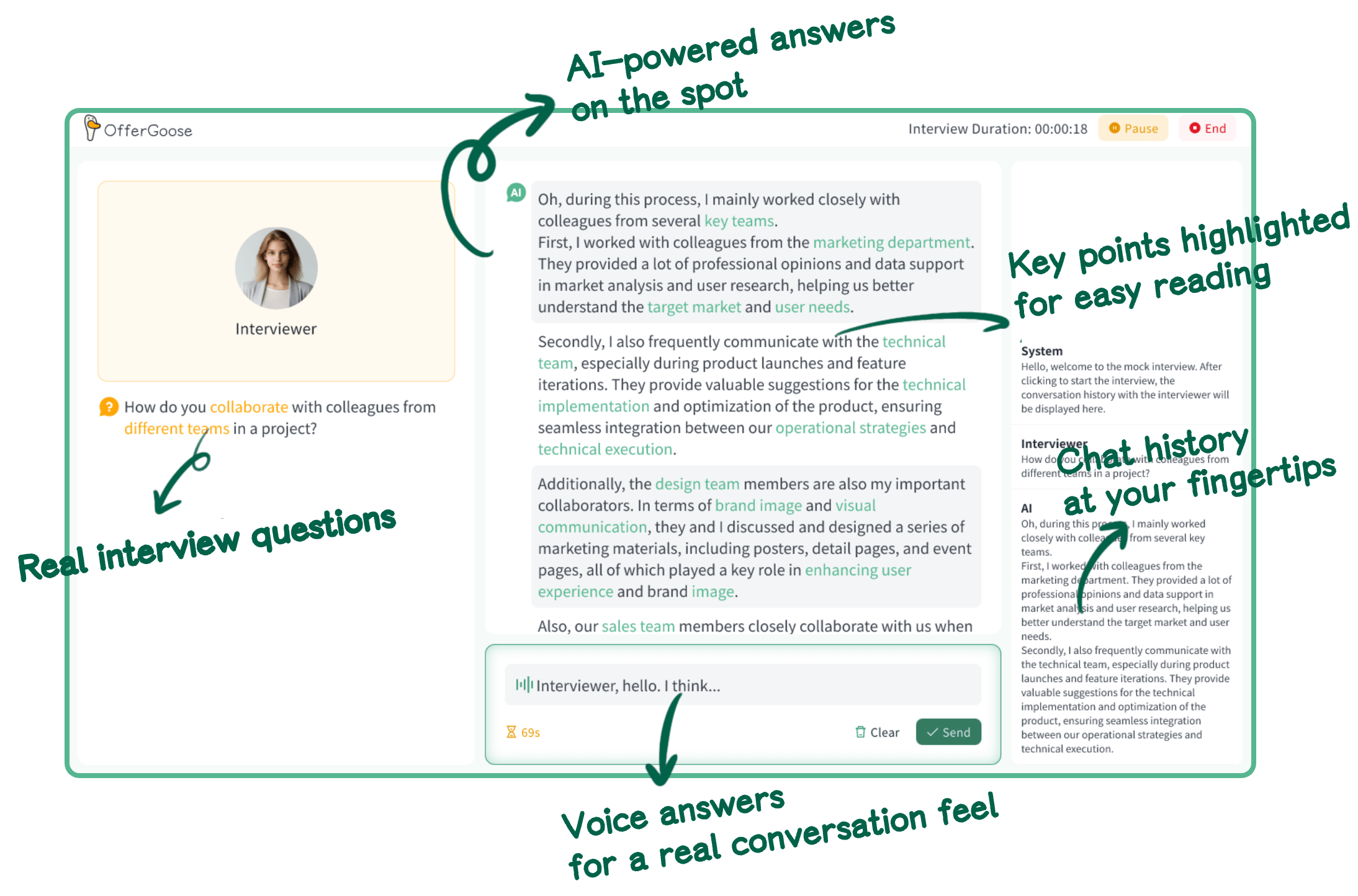
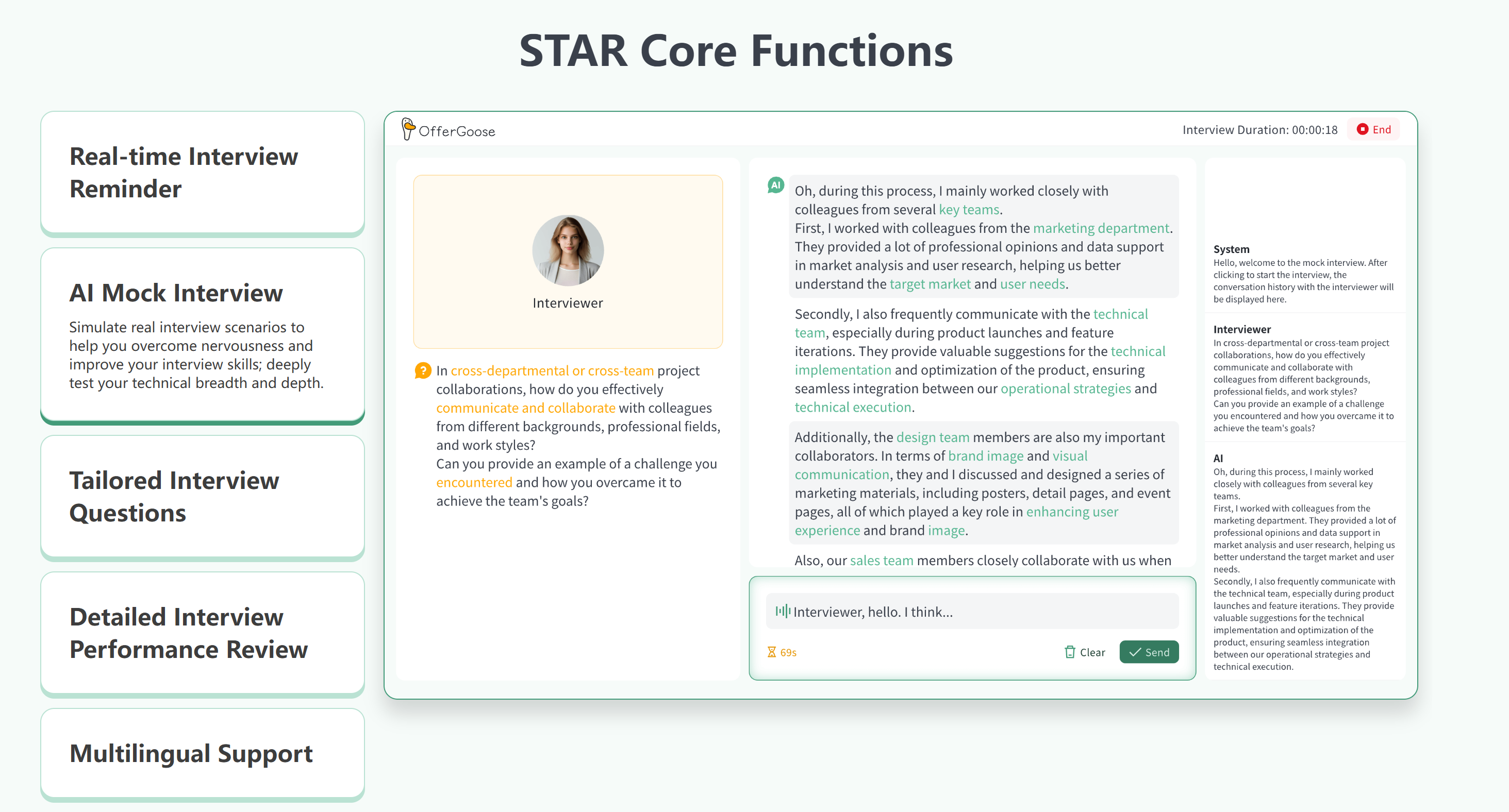
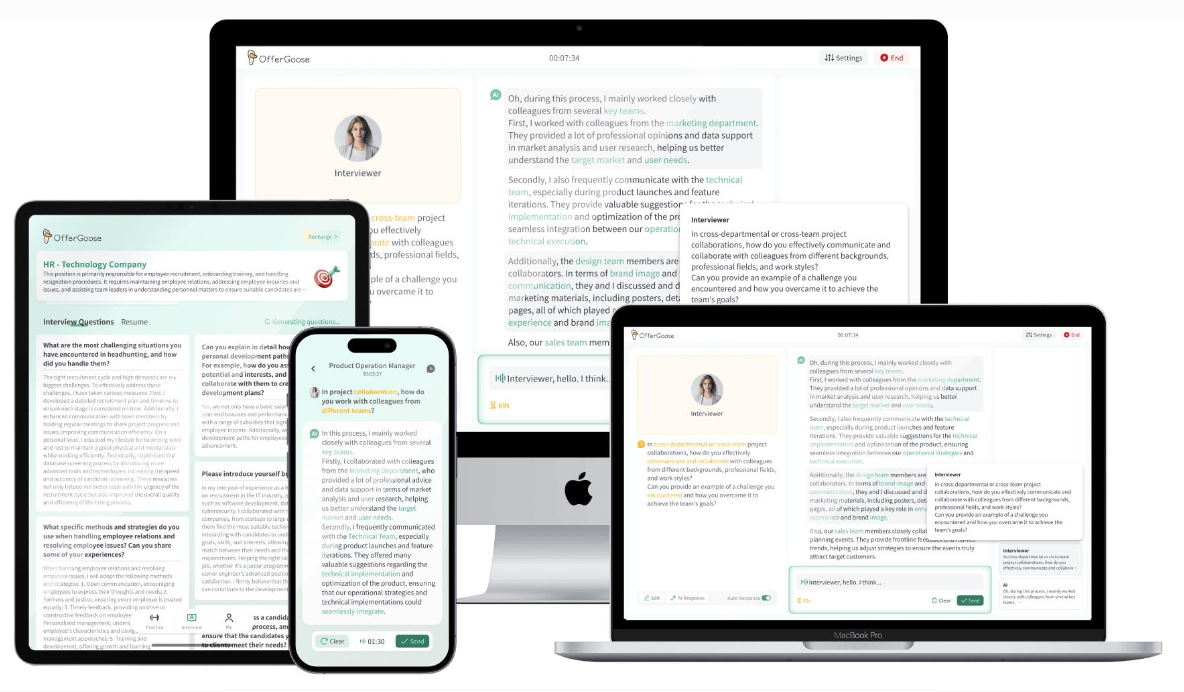
Before you walk into any interview, you need to know whether your value statements hold up under pressure. OfferGoose’s AI mock interview lets you configure an interviewer specifically trained to probe your career priorities with multi-round Chain-of-Thought follow-up questions. It does not just ask “what matters to you” — it asks “can you give me an example,” “why did that matter,” and “how do you know this team matches that priority.”
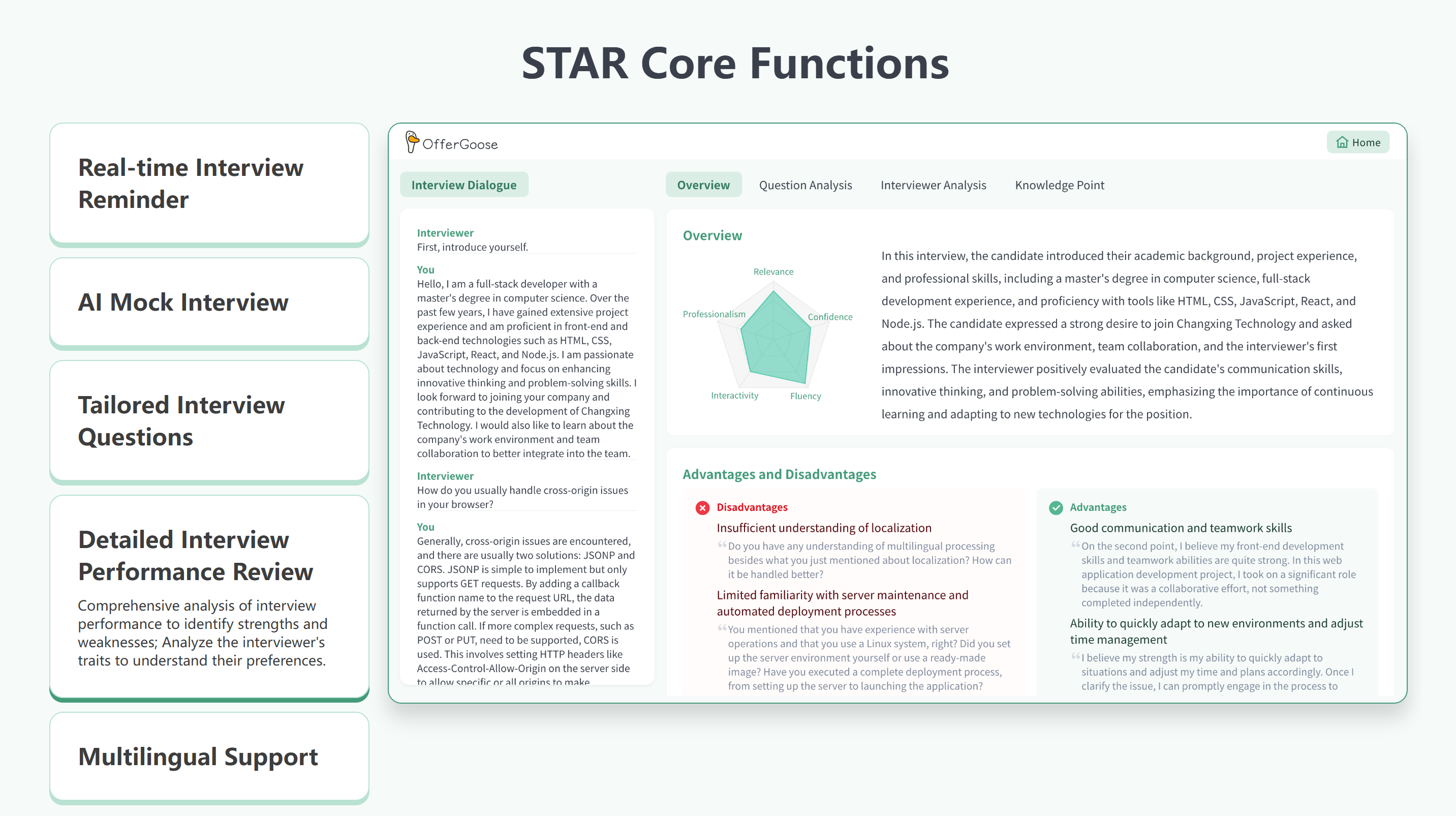
After the session, the structured review report scores you across logic consistency, expression clarity, and evidence sufficiency — the exact dimensions a real interviewer evaluates. This is not about rehearsing answers. It is about stress-testing your framework so that when a real interviewer pushes back, your reasoning holds together.
Try the AI mock interview at offergoose.com and see if your career values narrative survives a real pressure test.
The 3-Tier Framework: Turning Generic Job Values into Evidence Hiring Managers Believe
Think of your answer as a pyramid. The bottom layer is generic value labels. The middle layer translates those labels into observable criteria. The top layer verifies those criteria with past behavior.
Before:
“I value growth opportunities and a collaborative team.”
Why this fails? Because anyone sitting in an interview room can say these two things. No definition, no standard, no evidence. The interviewer hears a phrase they have already heard three times today.
After:
“When I say growth, I mean having the opportunity to own a module end-to-end — from solution design through execution to results review. I am not afraid of making mistakes. What concerns me is doing work that stays at the execution fringe without ever seeing the full picture.”
This tier starts earning interviewer nods because you are showing a thinking habit: you are not just using words, you are defining them. Under an NLP (Natural Language Processing) lens, you have moved from “topic-level” to “definition-level” — the precision of your information is fundamentally different.
After:
“In my last role, I proactively asked my manager to let me own Q3’s user education content line. Before that, three people on the team each handled a piece of it. I consolidated the workflow, and in two months we moved the completion rate from 18% to 31%. I handled topic judgment, priority trade-offs, and resource alignment with the product team. That is what I mean by growth — not an opportunity someone handed me, but a complete decision loop I earned.”
Why this version works: Tier 2 only provides a definition, which an interviewer could reasonably suspect was memorized. Tier 3 adds a specific scene, project name, timeline, and quantified result — details that cannot be faked. This mirrors the alignment principle in Prompt Engineering: the quality of your output depends on how precisely your input evidence matches your stated claim. The interviewer judges your integrity by how tightly your example aligns with your declared value.
Building Your Own Answer: A 3-Step Framework
Step 1: Audit Your Last 1-2 Years of Career Decisions
Open a document. On the left, write “What I chose.” On the right, write “What I gave up.” Every choice hides a value.
| What I chose | What I gave up |
|---|---|
| Volunteered to transfer to a new business line | Comfort and predictable performance in the old line |
| Spent two months on an unfamiliar project | Quick-win tasks that maintained output rhythm |
The patterns in your “What I gave up” column reveal your real career priorities more honestly than your “What I chose” column. The STAR method (Situation-Task-Action-Result) teaches that past behavior predicts future performance — and here, you are using your past choice patterns to verify whether your stated priorities actually hold.
Step 2: Translate Values into Observable Criteria
Do not just say “I value X.” Ask yourself: “How do I know when a team or role satisfies X?”
| Value Label | Observable Criteria |
|---|---|
| Autonomy and ownership | Can I own an end-to-end project? Will my direct manager authorize trial-and-error within the first 3 months? |
| Team collaboration | Does sprint review involve cross-functional input? Does cross-team coordination require multiple layers of approval? |
| Impact visibility | Can performance evaluation trace back to how my decisions affected business outcomes? |
Step 3: Anchor with One Behavioral Proof Point
Pick one moment from your last 6-12 months of work that demonstrates you pursuing a priority. It does not need to be a massive achievement — interviewers care about the “judgment chain,” not the “outcome size.”
A complete proof anchor has four elements: the trigger (what situation made you realize this priority matters to you), the action (what you specifically did), the friction (a realistic story always includes resistance), and the learning (how this experience sharpened your judgment).
Example 1: Mid-career Product Manager
“Over the last three years and two team changes, I learned that what matters most to me is decision quality — not whether I can make decisions myself, but how the team makes decisions.
In my previous team, I led a feature from zero to one, from user research through event tracking and validation. But the most energizing part was not shipping a feature — it was sitting in review meetings where my lead would push back on my data and ask ‘Why does your assumption hold?’ That kind of pushback taught me that a good decision environment continuously drives you closer to the truth, rather than reconfirming known biases.
So when I look at my next role, I pay close attention to whether the team debates with data rather than hierarchy. That is also why this role caught my interest — I understand you run a biweekly all-hands data review.”
Example 2: New Graduate
“As a new grad, my top priority in a first job is learning density. I do not define density as overtime hours. I define it as whether I encounter an unfamiliar problem domain every quarter.
During my junior-year internship, I joined a mature operations team. For the first two months, my work was fixed daily and weekly reports. Then I volunteered for a cross-functional growth experiment project — I learned SQL from scratch to pull data and aligned with a data analyst on metric definitions. I learned more in those two months than in the previous three combined. My takeaway: in early career, compressing yourself into a high-information-density environment accelerates growth far more than stable accumulation on a comfortable platform.”
Example 3: Career Switcher
“My top priority is skill transferability. I am moving from finance into product, and I know my biggest risk is not learning new skills — it is that what I have already built will not apply in the new role.
During my two years in finance, my core contribution was building a cost analysis model. That process was not just about numbers — it was about constantly adjusting metrics in conversation with business stakeholders. What data is useful for operational decisions? What data is noise? That exercise is fundamentally the same as requirement abstraction in a product role: find the signal, filter the noise, deliver a conclusion.
So when I evaluate roles now, I focus on whether the role demands execution or judgment. I want the latter, because judgment-based skills transfer across industries.”
Common Mistakes Interviewers Recognize Instantly
Mistake 1: Claiming “I value learning” without learning direction
“Growth” is not a value — it is an empty container. Interviewers detect template answers by checking whether your response has a complete causal chain at the Chain-of-Thought reasoning level. From “what experience” through “therefore what priority” to “therefore how I screen roles” — missing any link triggers a template detection flag.
Mistake 2: Hiding salary concerns behind something else
If you genuinely care about compensation, place it within a multi-dimensional framework. “Compensation ranks third for me. First, I look at whether this role lets me build reusable methodology. Second, whether there is someone on the team I can learn from as a benchmark. Then, whether the salary matches market expectations.” This does not lose points — it gains them. A candidate who can place salary in a reasonable position demonstrates mature career judgment.
Mistake 3: Claiming “I value company culture” with zero specifics
“Culture” is one of the most hollow words in interview responses. Be specific: “I value whether the team has a blameless post-mortem culture — when something goes wrong, do we assign blame or diagnose root causes?” Or: “I care about skip-level communication access — in a previous role, a project decision required three layers of approval, and I realized that environment was not for me.”
Mistake 4: Beautiful values, mismatched evidence
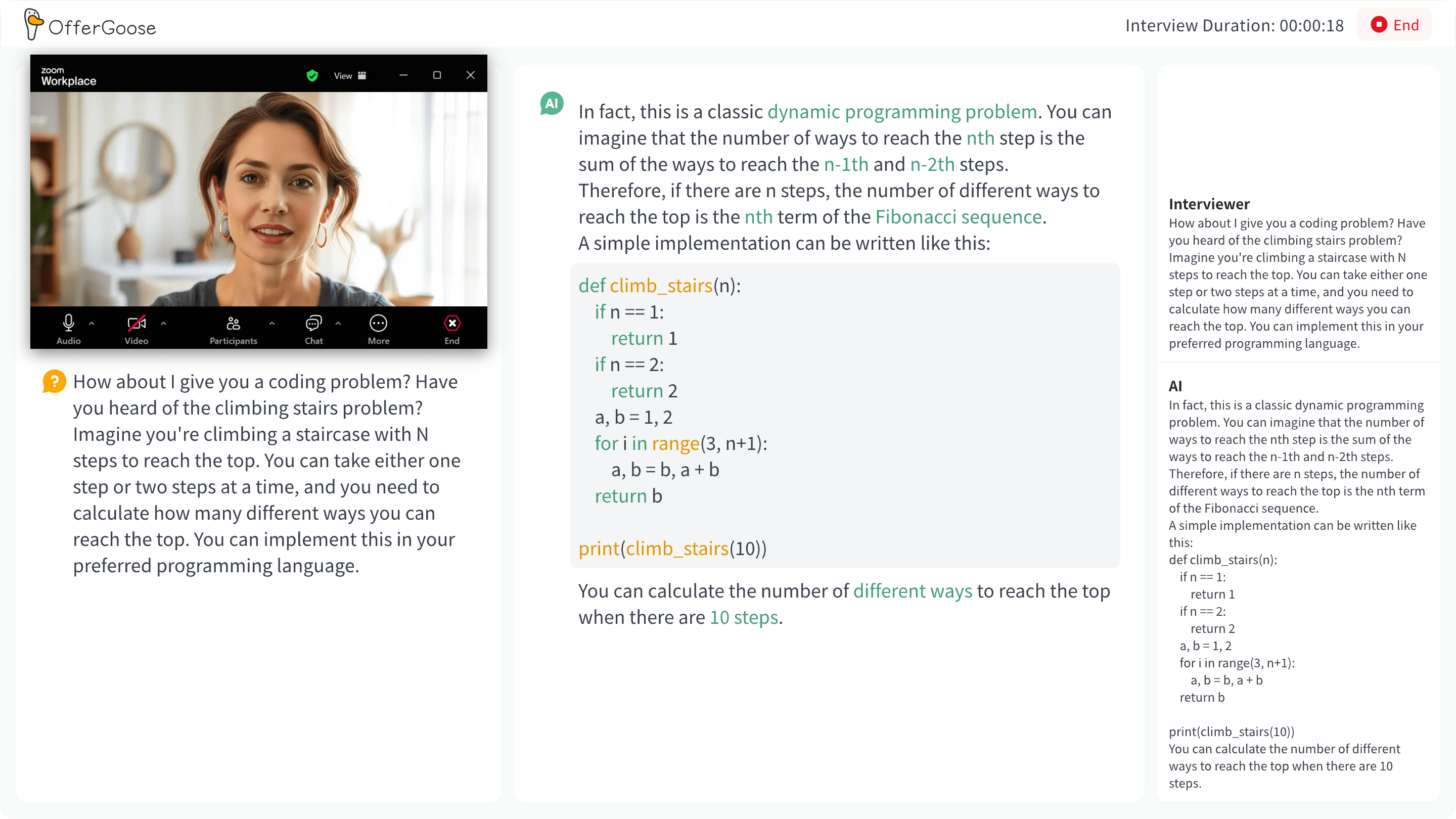
When an interviewer follows up with “can you give an example,” and the example has no direct connection to the value you stated, your answer collapses. In the Human-AI Collaboration model, OfferGoose’s mock interview can help you stress-test this: submit your value statements and let the AI interviewer run multi-round follow-ups to check whether your evidence chain holds together under scrutiny.
Summary: Your Values Are a Career Filter, Not Interview Packaging
Experienced job seekers do not manufacture priorities during interviews — they verify them. What you say matters most in an interview should be your first filter for screening roles, not your last layer of packaging.
Remember three rules. First, do not state labels — state definitions. Translate every abstract word into an observable behavioral criterion. Second, do not state attitudes — state choices. Anchor every value with one real trade-off you made. Third, do not state what sounds right — state what is true. Interviewers can tell the difference between “a rehearsed correct answer” and “a thought-through personal conclusion.” The first passes screening; the second passes the interview.
OfferGoose’s AI mock interview and structured review features let you run a complete priority-system audit before the real thing — testing your logic under Chain-of-Thought probing and measuring your expression clarity, evidence sufficiency, and logic consistency. Explore all interview preparation tools on the OfferGoose platform. Visit offergoose.com to try the mock interview for free and see if your career values narrative holds up.
FAQ
General Questions
I am a new graduate with limited work experience. How do I support my values?
Use your college experience. Why did you choose this course over another? Why did you join this club? During your internship, what did you proactively do beyond your assigned duties? Interviewers expect new grads to show “awareness and a basic method for self-reflection,” not “a fully formed career philosophy.” The key is revealing your judgment logic when making choices.
Is “growth opportunities” really a bad answer?
Not bad, just insufficient. Add three things: (1) how you define “growth” specifically; (2) what past experience led you to that definition; (3) what concrete criteria you use to judge whether a role offers real growth. Add all three, and “growth opportunities” becomes a genuinely solid answer.
Will the interviewer think I am performing a deep answer?
If you say “I value decision quality” and cannot produce a real example, that is performance. But if every claim maps to something you genuinely experienced, that is reflection. The single standard interviewers use: does your answer have behavioral evidence behind it? Evidence equals reflection. No evidence equals recitation.
What if I genuinely care most about salary?
Place salary within a multi-dimensional ranking. “Compensation ranks third for me — first, I look at the decision-authority boundaries of the role; second, the technical depth of the team; then, whether the salary matches market standards.” This signals two things: you have a healthy awareness of compensation, and you have a decision framework bigger than money alone.
Questions About OfferGoose
Can OfferGoose help me practice this specific interview question?
Yes. Configure OfferGoose’s AI mock interview with “structured probing” interviewer style and set this question as your focus area. The AI interviewer runs multi-round Chain-of-Thought follow-ups based on your answers, testing whether your value narrative holds up logically. After the session, the structured review report scores you on logic consistency, expression clarity, and evidence sufficiency — a complete priority-system review before the real interview. Start at offergoose.com.
How does the AI ensure my practice simulates a real interview?
OfferGoose’s NLP-powered interview engine adapts its follow-up questions based on your responses in real time, the same way a skilled human interviewer probes for gaps in your reasoning. It does not follow a fixed script — it responds to the actual content of what you say. This is Human-AI Collaboration applied to interview preparation: the AI provides pressure and structure; you provide judgment and authenticity.
Visit offergoose.com to explore OfferGoose’s AI mock interview and interview review features. Try it first and decide for yourself.