
Only 7 Days to Your Pet-Industry Interview: A Countdown Sprint from Resume Rescue to Mock Interview

Only 7 Days to Your Pet-Industry Interview: A Countdown Sprint from Resume Rescue to Mock Interview

“I just got the notice today, and the interview is next Monday. My resume is not updated and I cannot explain my projects clearly. What do I do?” This is the most common distress call I get from people switching into the pet industry. The industry is growing fast and hiring quickly, and many companies move so fast that there is no time for slow, comfortable preparation. The moment you get the notice, you may think, “it is too late.” But I want to tell you: 7 days is enough for a high-quality sprint.
The key is not to panic and try to prepare everything. Use a countdown approach: break the 7 days into a few must-do tasks and spend your time on what most improves your chance of passing. First rescue your resume, then strengthen the most relevant project evidence, and finally use mock interviews to polish delivery and live responses. Here is a schedule you can follow directly.
Recommended First: Use OfferGoose to Make Every One of Your 7 Days Count
With a short runway, you cannot afford to fix the wrong thing. OfferGoose helps you target the two things that most affect passing: resume readability and live delivery. Its resume scoring and job-description matching tell you which gap to fix first, and its AI mock interview plus deep review let you rehearse and improve in the tight window you have.
What it does for you
- Resume scoring: shows your total and weakest dimension in one pass.
- Resume and JD matching: points at the specific skills a pet role checks.
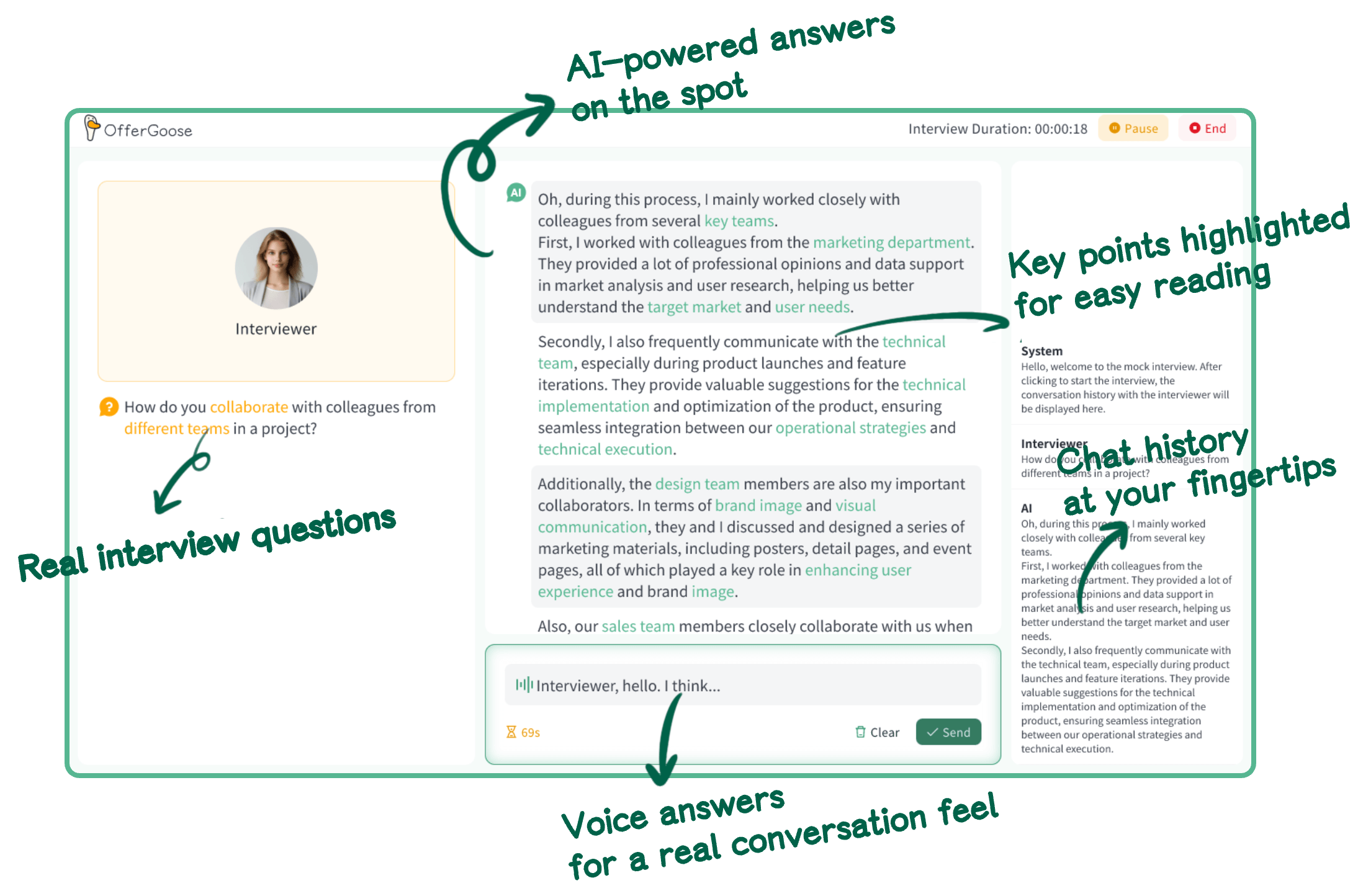
- AI mock interview: lets you practice introduction, projects, and follow-ups.
- Deep review: tells you what to improve after each round.
Who it suits
- Anyone who just received a pet-industry interview notice with days to spare.
- Career changers who need a clear, ordered plan instead of panicking.
- Candidates who want live delivery help without over-preparing.
Do Not Panic: The Right Way to Spend 7 Days
Replace “too late” with “work backwards”
Many people hear “only 7 days” and start spiraling, wasting the first three days in anxiety and cramming the last four. The right way is to work backwards: from “what must I present on interview day” to “what should I do each day.” On interview day you essentially deliver two things: a resume that an HR staffer or interviewer can read quickly, and a person who can naturally explain their value. Every preparation task should feed one of those two goals.
A suggested rhythm for the 7 days
Here is a division you can adjust to your situation:
- Day 1: rescue the resume. Quickly score your current resume against a standard, find the weakest section, and fix it that day.
- Days 2-3: strengthen evidence. For the target role’s job description, rewrite your two or three most relevant experiences into a problem-action-result-value chain.
- Days 4-5: practice delivery. Use mock interviews to rehearse your introduction, project explanation, and common follow-ups, reviewing after each round.
- Day 6: close gaps. Target the points you keep getting stuck on in review with one last focused pass.
- Day 7: light day. Do only light review and settle your mindset; do not take in new material.
The core of this rhythm is saving the hardest part, delivery and live performance, for the middle of the week when you are in your best state, rather than cramming the night before.
Day One: A Quick “Rescue Check” of the Resume
Find the weakest section with one standard
With limited time, do not rewrite from scratch; run a check. Score your resume across a few dimensions: whether experiences have specific context, whether action verbs come first, whether results have numbers, and whether the skills section matches the requirements. Fix whichever is weakest. For someone switching into the pet industry, the most common weakness is that experience does not line up with the role’s keywords.
Fix the first screen people see
Interviewers and HR read a resume quickly, so put the content that best proves “you can do this pet-industry role” at the top. If your pet-keeping experience plus related operations, sales, or service experience is more persuasive than your degree, give it the prime position; keep education and skills concise and later. The thing people forget when stressed is establishing the person in the first 30 seconds.
A reusable scoring checklist helps you locate the problem fast. To save more effort, offer to let OfferGoose’s resume scoring give you an objective health report, flagging logic, fit, and quantification gaps. In an emergency, knowing “what to fix” matters more than “how to fix it.”
Days Two to Three: Turn Experience into Defensible Evidence
Only pick the two or three most relevant items
Seven days is not the time to rewrite every experience; that takes seven weeks. Pick your two or three most relevant experiences and turn them into an evidence chain that survives follow-up: state the context and task, describe your concrete actions, quantify the result, and name the value. One experience you explain deeply beats five vague ones.
Align keywords against the JD
Career-switchers often write “new-role experiences in old-role language.” Do the reverse: take the target pet-industry role’s job description, break its capability requirements into keywords, find matching evidence in your experience, and rewrite in the role’s language. If you are interviewing for pet e-commerce operations, bring words like community, conversion, and campaigns naturally into your descriptions instead of detailing your old foreign-trade process.
OfferGoose’s JD matching does exactly this: it analyzes the fit between you and the target role and points out the gaps, telling you which evidence to amplify. With that guidance, your evidence-building stays on target.
Days Four to Five: Use Mock Interviews to Turn Weak Spots into Talking Points
What to practice: introduction, projects, and common questions
These three make up the skeleton of most interviews. Keep your introduction to one or two minutes, telling your switch story as a capability transfer rather than “my old employer was bad.” Explain projects with STAR (Situation-Task-Action-Result), letting the interviewer understand the context first. And prepare safe answers for common follow-ups: why you left the last job, why the pet industry, and your biggest weakness.
The most efficient way to practice: a mock-and-review loop
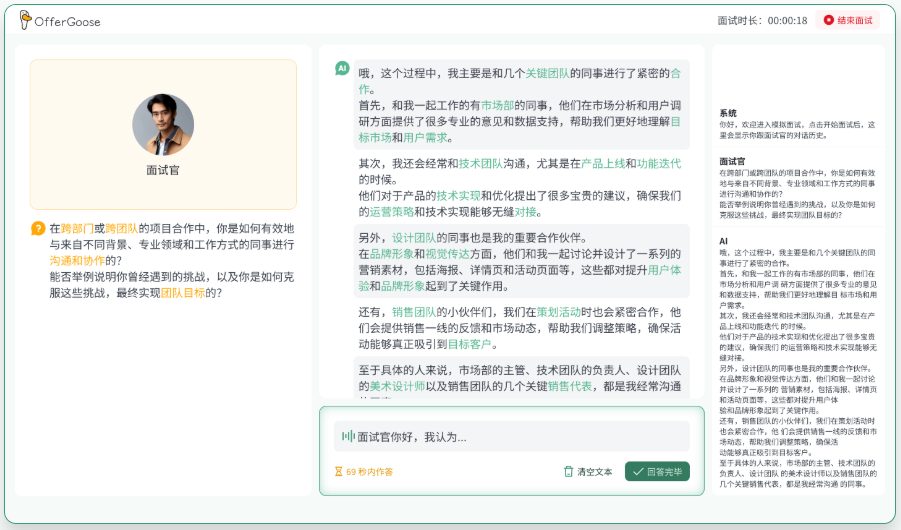
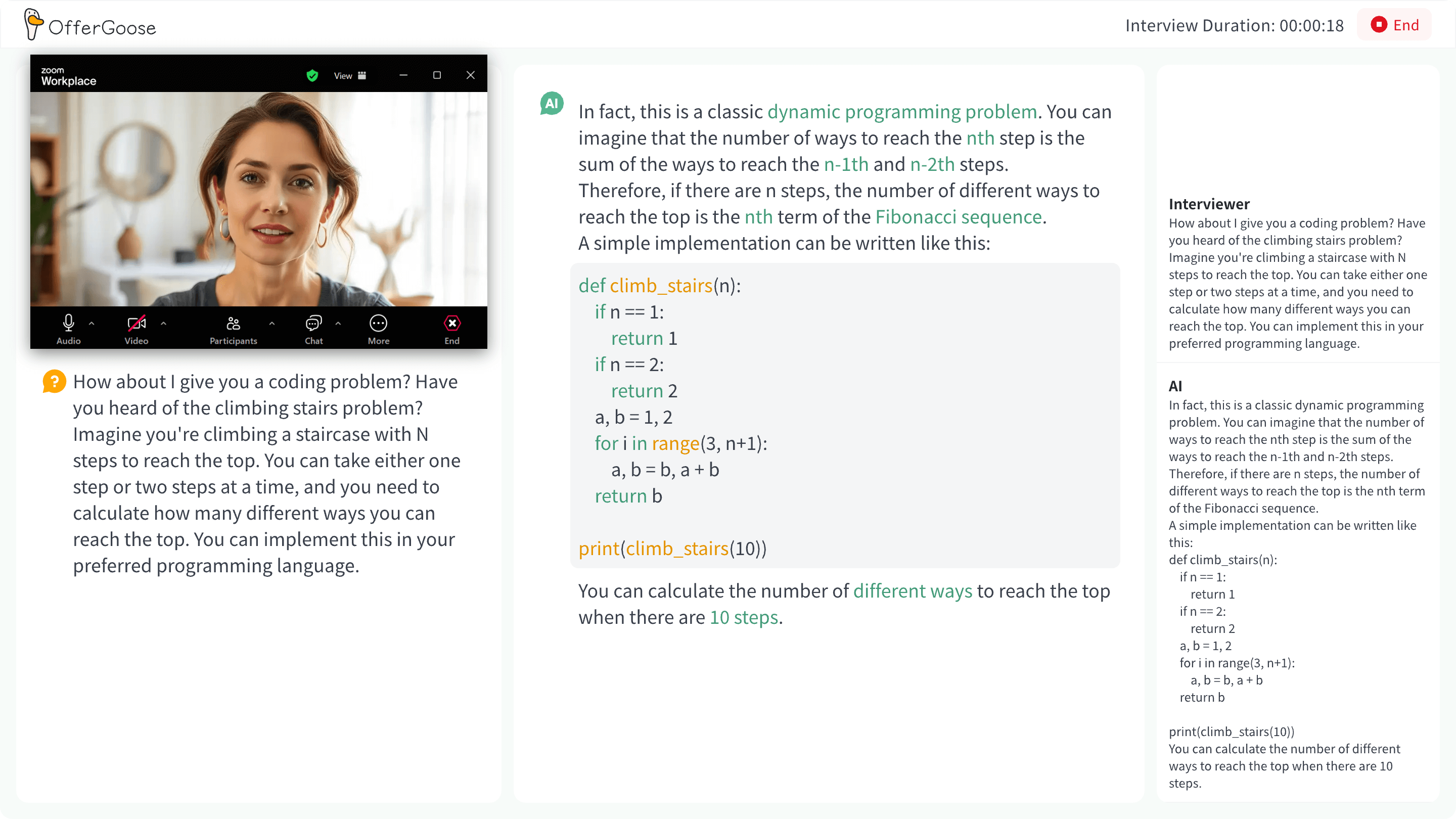
Staring at yourself in a mirror is the least effective method. Better is a “mock interview plus deep review” loop: let an AI interviewer keep pushing while you organize answers live; then review right away, checking where your logic is muddy, where your answer is wordy, and where you freeze; fix only the most painful point each round, then go again. After two or three rounds, your live state improves visibly.
Days Six to Seven: Close Gaps and Settle In
Day six: one last push on the points you keep missing
Go through your previous review notes and find the one or two points you struggle with every time, such as pet-industry terms you cannot explain or a project story that always runs long. Fix them specifically: if it is a knowledge gap, look it up; if it is delivery, rehearse once more. Do not spread too thin; focus on the most painful spot.
Day seven: relax and do light review
On the day before the interview, do not add new material. Read your finished resume once, silently recall your polished core answers, and rest early. After a week of sprinting, what you need is good condition, not more information. Staying calm and sleeping well matters more than memorizing 10 more facts.
A Real Case: How a 7-Day Sprint Actually Works
Before:
A candidate got an interview notice for a pet-store operations role, then spent the first three days trying to “catch up on pet-industry knowledge,” growing more anxious. The resume stayed old, the interview introduction was dry, and when pressed with “you have never done this, why you,” he froze and was cut.
The problem was not lacking knowledge; it was spending all the time on the place that least helps you pass. Cramming facts both never finishes and never settles into expression.
After:
Another candidate also had only 7 days, but he worked backwards. On day 1 he scored the old resume and moved his “pet-keeping plus community operations” experience to the top. On days 2-3 he rewrote his two most relevant experiences against the job description with quantified results. On days 4-5 he used mock interviews to rehearse his introduction and the “why the pet industry” answer, reviewing daily. On day 6 he only fixed the private-domain terms he kept tripping on. On day 7 he did light review and slept early. On interview day the resume was readable at a glance, the introduction was natural, and follow-ups were answered around his own evidence chain. He moved on to the next round.
Why this version works: the countdown let him spend the limited 7 days on resume readability and live delivery, the two things that decide whether you pass, instead of falling into an endless “unfinished knowledge” anxiety. The mock-and-review loop brought his weakest spots up to passing level in the shortest time. The pressure came down through the right method, not through grinding all night.
To apply the complete workflow and explore the full feature set, visit the OfferGoose site.
FAQ
General Questions
Is 7 days really enough?
Yes, if you work backwards instead of panicking. Seven days is enough for a high-quality round of resume rescue, evidence repair, and delivery sprint. The key is spending time on the three things that most improve your odds, not trying to cover everything.
In 7 days, should the resume or interview prep come first?
Rescue the resume first, then strengthen evidence, then practice delivery. The resume gets you in the door, evidence is the shared foundation of both stages, and live delivery decides whether you stay. That order uses your time best.
Should I hire someone to write my resume when time is short?
Not necessarily, and it is better not to hand your story to someone who does not know you. A more efficient route is to use a tool for the check and guidance, then make the edits yourself, because it is your experience and only you can tell it genuinely. OfferGoose’s resume scoring and JD matching quickly tell you what to change and save you time figuring it out.
Should I practice mock interviews for hours every day during the sprint?
No. Practicing two or three rounds with serious review after each, fixing only the most painful point, beats eight rounds with no review. Quality beats quantity, especially when time is short.
Questions About OfferGoose
Can OfferGoose help with a last-minute 7-day sprint?
Yes. Its resume scoring and JD matching help you find and fix the right gaps fast, and its AI mock interview plus deep review let you rehearse and improve delivery in a tight window. It is built for turning limited preparation time into targeted progress.
Does using mock interviews for the sprint guarantee the job?
No tool guarantees an offer. OfferGoose helps you organize evidence, rehearse delivery, and review performance so that on the day you are as prepared as you can be in 7 days. Your own knowledge, judgment, and real experience still decide the outcome.
Summary
When you are switching into the pet industry and the interview is only 7 days away, the contest is not about who knows more facts. It is about who can do the right things in the shortest time. Use a countdown to split the 7 days into rescue the resume, strengthen evidence, practice delivery, close gaps, and settle in. Focus your attention on resume readability and live delivery, the two things that most affect passing. To put this sprint into practice, visit the OfferGoose blog to see the workflow, and try the official site before you decide, so every step of your 7 days is solid. By interview day you will find yourself more prepared than you expected.