
Does AI Mock Interview Actually Help for Clinical Pet Healthcare Roles? Boundaries and the Right Way to Use It
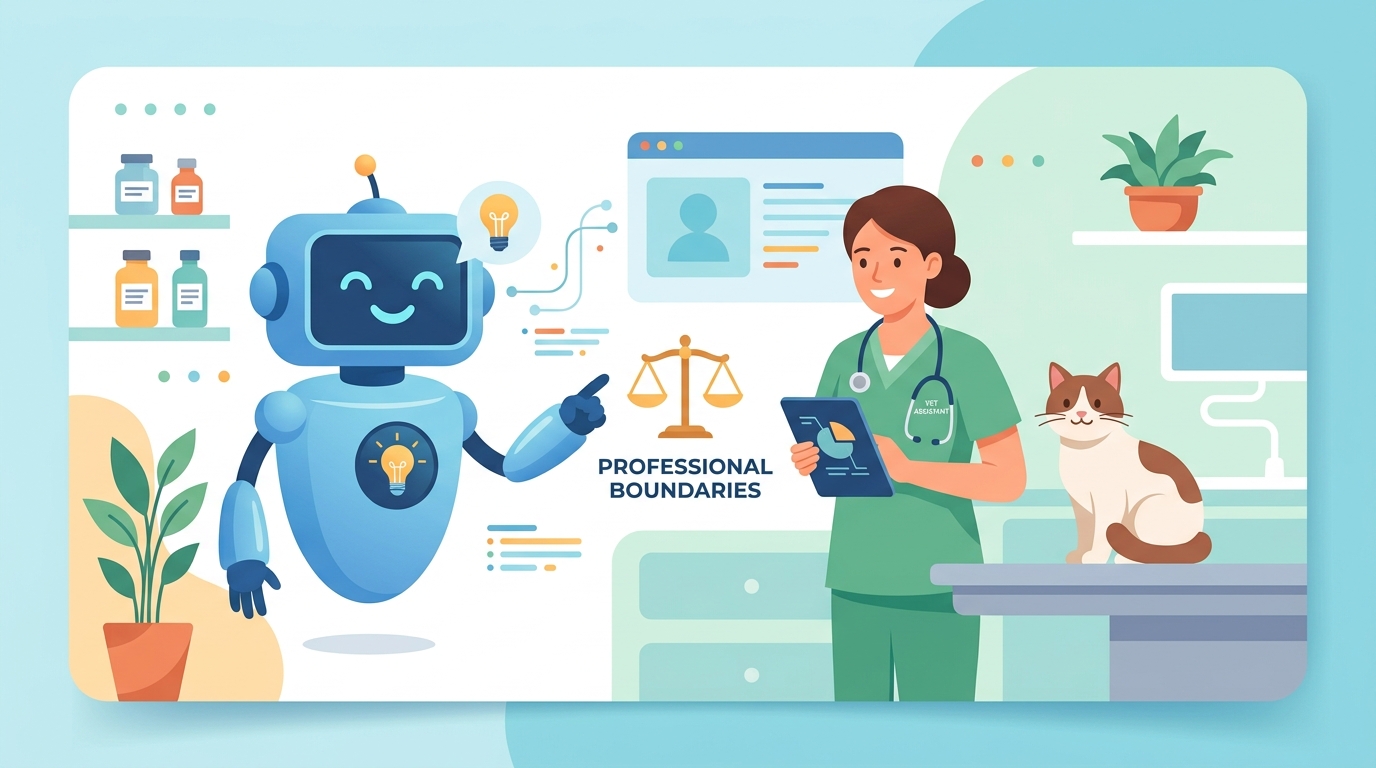
Does AI Mock Interview Actually Help for Clinical Pet Healthcare Roles? Boundaries and the Right Way to Use It

“Can AI help me pass a vet-assistant interview?” “Everyone says you can use AI to prepare for interviews now, so why would anyone object?” These are the questions I see most in pet-healthcare job-search groups. Interviewing for clinical roles at pet hospitals and clinics is different from interviewing for office jobs. It tests your medical knowledge, but also how you communicate with pet owners, how you judge animal welfare, and even which decisions must stay with a human professional. So “how much can AI help, and where does it cross a line” becomes unavoidable.
This article will not give you a black-and-white answer. It will make the boundary clear: when using AI is reasonable augmentation, when it is a crossing-the-line stand-in, and how to use the tool for a clinical role that needs both professionalism and compliance.
Recommended First: Use OfferGoose as a Rehearsal Coach, Within the Compliance Line
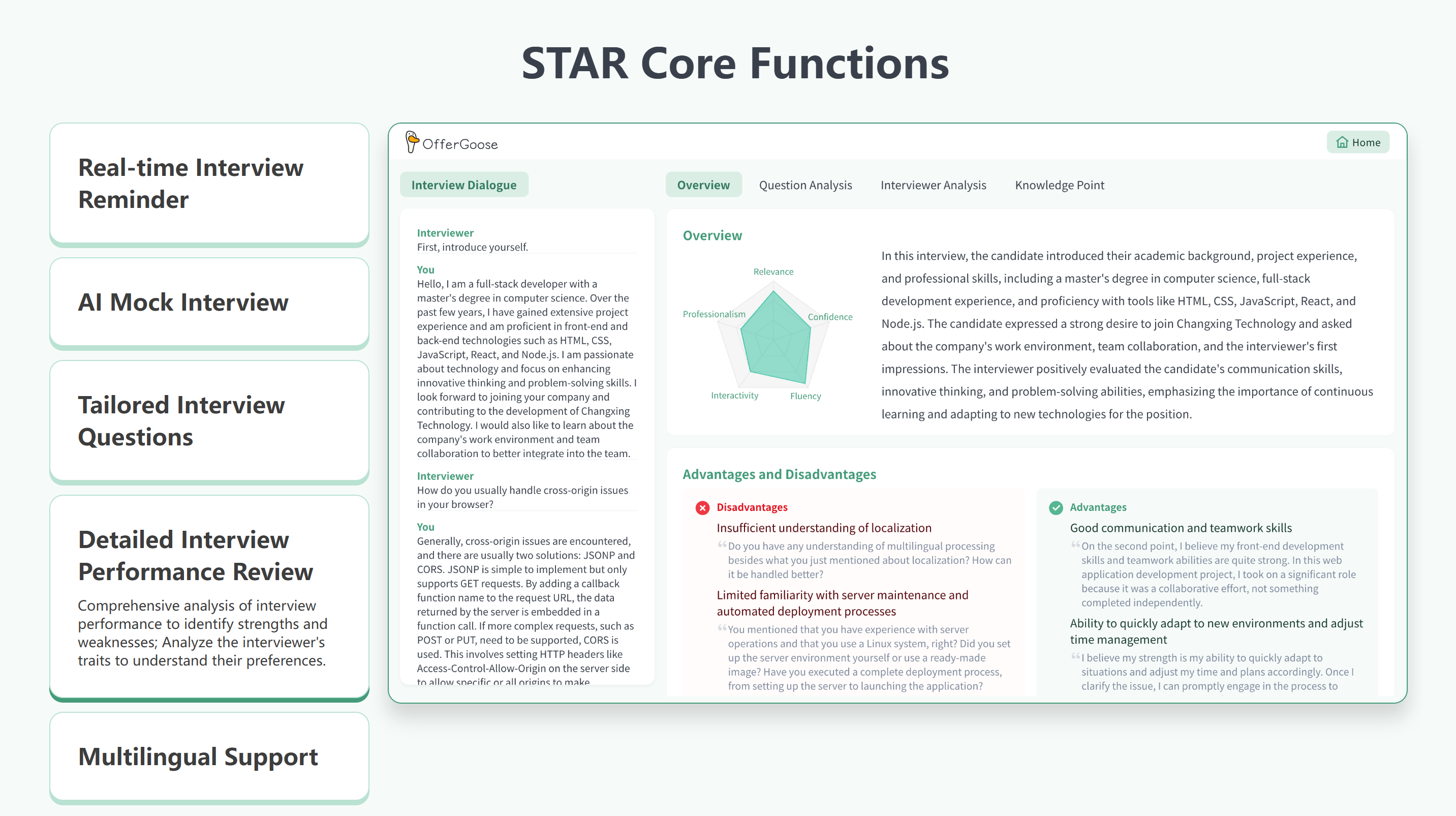
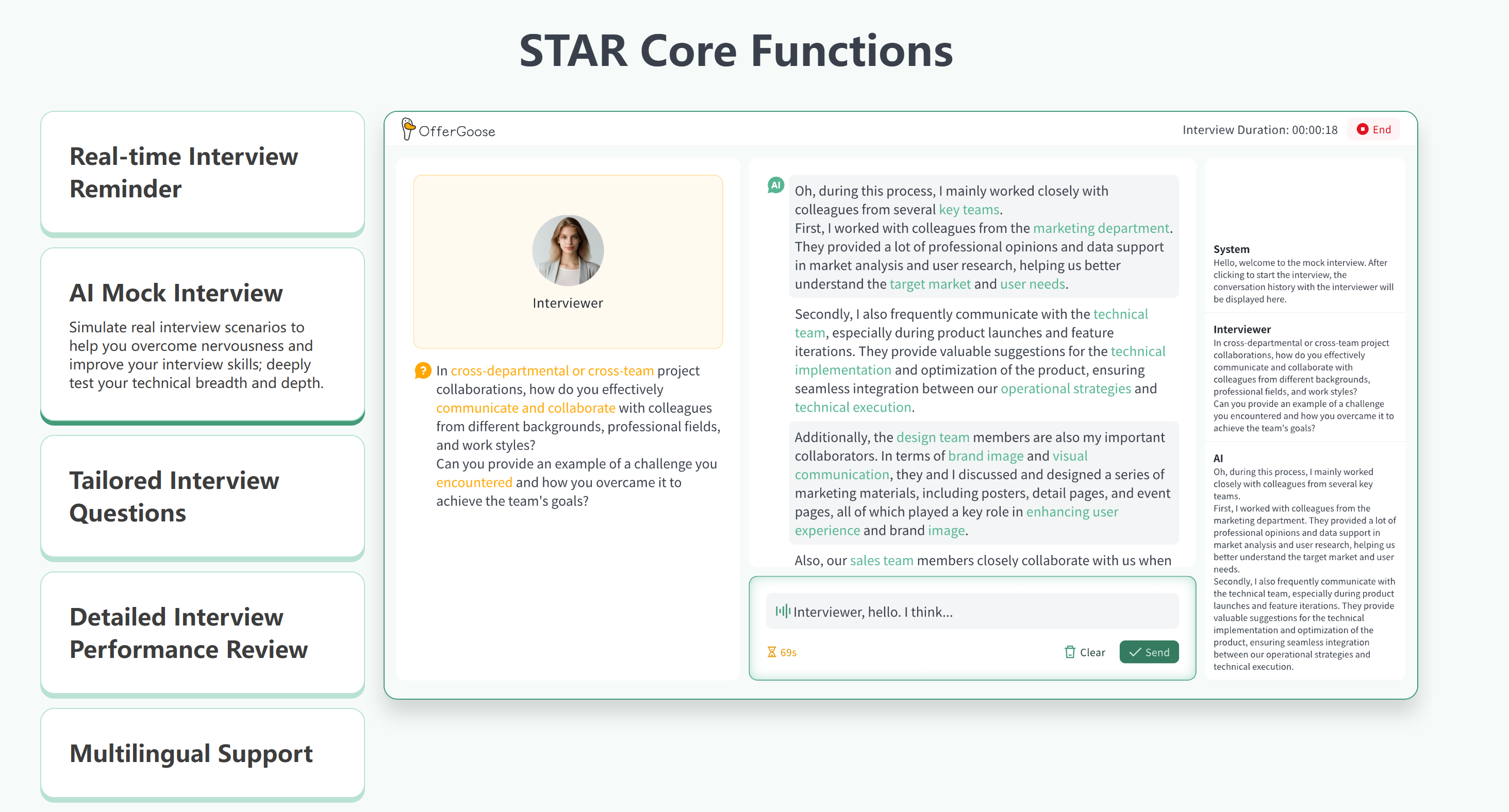
For a clinical pet healthcare interview, the safe and effective use of AI is as a prep coach, not a live stand-in. OfferGoose supports exactly that boundary: its AI mock interview lets you rehearse medical Q&A and pet-owner communication scenarios, and its deep review scores logic, professionalism, and delivery so you improve where you stall. Everything stays on the training field; the knowledge, judgment, and final decisions remain yours.
What it does for you
- AI mock interview: practices technical questions and situation questions like a persistent interviewer.
- Deep review: scores logic, relevance, professionalism, and delivery after each round.
- Resume scoring: confirms your clinical background is organized as a defensible evidence chain.
Who it suits
- Vet-assistant and pet-nurse candidates who freeze under clinical questioning.
- Candidates who want to rehearse pet-owner communication scenarios before the interview.
- Anyone who wants to use AI for prep without ever crossing the compliance line.
Set the Frame: AI Is a Coach in the Interview, Not a Stand-In
An industry reality: healthcare roles come with compliance built in
Whether you are interviewing at a pet hospital or a chain clinic, medical roles are tied to safety, responsibility, and animal welfare. Interviewers want to confirm not just that you can recite a disease fact, but that in a real clinical situation you make sound judgments, take responsibility, and understand which boundaries must not be crossed. That is why the word compliance (Compliance) surrounds every tool in this space.
For the same reason, how you view and use AI matters to the interviewer. A candidate who treats AI as a live cheat sheet and one who treats it as a rehearsal coach project completely different levels of trust in a clinical setting. The first raises a worry that you might rely on a machine past the line in practice; the second shows you understand human-AI collaboration (Human-AI Collaboration) the right way.
Draw one line: the training field vs. the match
Think of interview prep like a game. AI’s right role is on the training field, helping you practice moves, watch replays, and adjust your form. It should not and must not appear in the match itself to make decisions for you. In interview terms:
- Training field (reasonable): use AI mock interviews to practice medical Q&A, rehearse STAR stories about talking with pet owners, and reduce freezing up; use AI review to see where your logic is muddy or your answer is wordy. This is preparation and does not cross a line.
- The match (crossing the line): letting AI quietly feed answers, invent a diagnosis for you, or compose your language during the live interview. This violates recruiting rules, and in a field that prizes integrity and responsibility, the cost of being caught is high.
Once you see this line, you can put AI where it belongs: making the “you before the interview” stronger, not faking “you in the interview.”
What a Clinical Pet Healthcare Interview Really Tests
Technical knowledge: answer correctly and answer properly
For vet-assistant and pet-nurse roles, interviews cover basic pharmacology, common diseases, pre- and post-operative care, and equipment use. This part is like a structured interview (Structured Interview): the interviewer uses a consistent set of questions to check your professional foundation. There is no shortcut here; it depends on real knowledge. AI’s value is helping you organize scattered knowledge into a “conclusion first, evidence second” expression, not reciting the facts for you.
Communication and situational judgment: serving pet owners
A hard part of clinical roles is how you handle urgent, emotional, and sometimes incomplete information from pet owners. Interviewers often give a scenario: the owner says the cat has eaten little for three days, what do you do? There is no single answer. It tests whether you calm them down, ask the key questions, and then decide whether to advise a vet visit. AI can help you rehearse many scenarios in preparation, but on the day you must produce the judgment yourself, which is the part nobody can do for you.
The credibility you must show in the interview
Put technically, the whole clinical interview evaluates your ability to build trust: to convince the interviewer you can be responsible for animals and owners. That requires you to sound professional, calm, and bounded. AI mock interview’s real value is helping you practice and refine that credibility, not handing you a polished empty script.
Use AI Mock Interview the Right Way: A Three-Layer Prep Method
Layer one: practice technical Q&A until you do not freeze
Collect the technical questions you may be asked into a question bank. Do not read answers aloud. Use AI mock interview to practice answering on the spot: interviewer-style questions, you organizing an answer live, then checking the score afterward. This trains not “do you know it” but “can you explain it clearly under pressure,” which is often what makes or breaks a clinical interview.
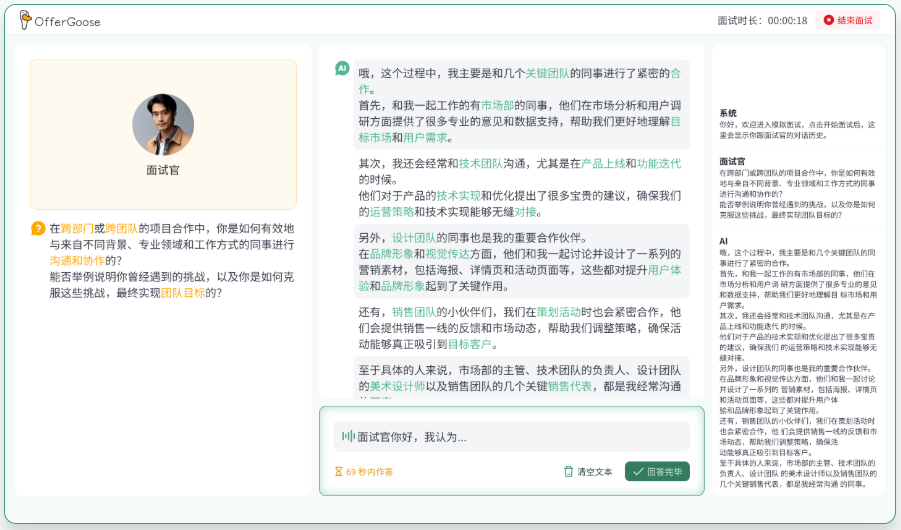
Layer two: turn scenario questions into reflexes
Scenario and communication questions improve through repetition. Run common situations repeatedly: an emotional owner, an incomplete history, a warning sign that needs a vet visit. Once familiar, a live surprise will not throw your rhythm. Then use deep review to ask yourself: did I calm the person first, did I ask the key questions, was my logic clean? Improve a little each round, and after several rounds the progress is visible.
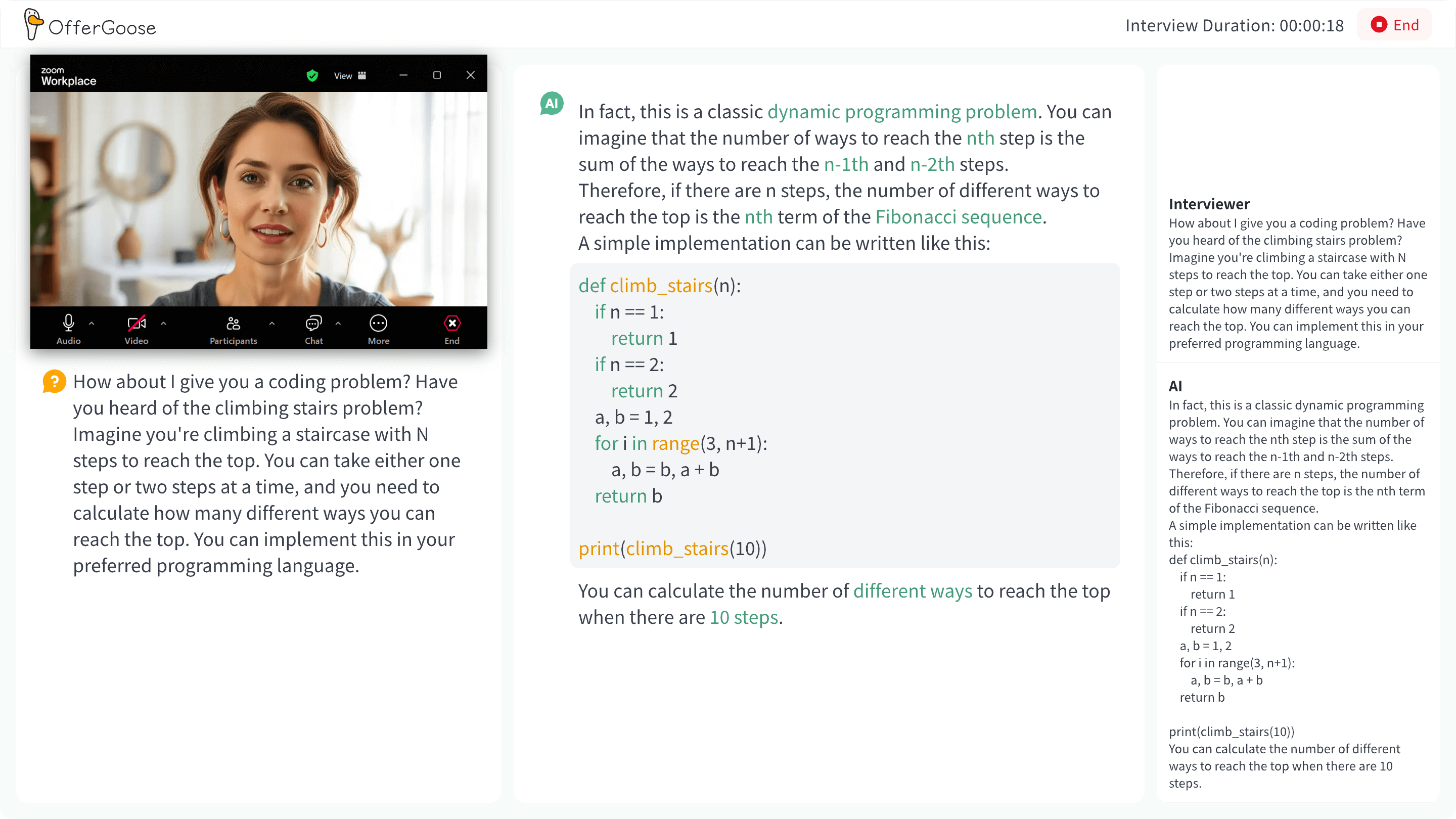
Layer three: hold the boundary, position AI as a coach, not a crutch
All of the above depends on one premise: AI only appears in preparation, and the final knowledge, situational judgment, and live reaction must be yours. That is why the sound approach is “train with AI, then digest it yourself,” rather than “have AI answer live.” When you hold this line, you gain efficiency and keep the integrity that healthcare roles value most.
A Real Case: How a Vet-Assistant Candidate Used AI Correctly
Before:
A candidate barely prepared the technical questions, planning to glance at AI during the interview. When asked why body temperature matters after surgery, he stalled while relying on the tool, and the interviewer pressed, “Are you getting help from something?” The atmosphere turned awkward. That round was effectively over.
The problem was not ability; it was putting AI in the wrong place. He let AI appear in the match, which neither helped nor hid the integrity risk.
After:
Another candidate split two weeks of preparation in half. In the first week she used AI mock interview to rehearse basic pharmacology and pre- and post-operative care, and made her own notes of the facts she kept missing. In the second week she practiced pet-owner communication scenarios, then used deep review to check whether she calmed the owner first, asked the key questions, and kept answers concise. At the actual interview, the technical questions flowed, and the scenario questions got calm, reasonable responses. The interviewer’s verdict: professional, bounded, trustworthy.
Why this version works: the candidate used AI on the training field, making the person before the interview stronger through practice across 4 mock sessions, and the whole prep project was carried by her; AI was only the sparring partner and review coach. That is both efficient and fully aligned with the integrity and responsibility that healthcare roles reward, which is itself part of what the interviewer evaluates.
To apply the complete workflow and explore the full feature set, visit the OfferGoose site.
FAQ
General Questions
Does preparing for a pet-healthcare interview with AI count as cheating?
It depends on which stage you use it in. Using AI for rehearsal, review, and organizing your expression is reasonable augmentation. Using it to answer live, invent a diagnosis, or compose your language in the interview crosses a line. Healthcare roles value integrity and responsibility, so the correct use is to make AI a coach, not a stand-in.
What do vet-assistant and pet-nurse interviews mainly test?
Three things: technical knowledge (basic pharmacology, care, equipment), communication and situational judgment (how you serve pet owners), and whether you project credibility and responsibility. Interviews often use structured and behavioral formats. AI mock interview helps a lot on the last two; technical knowledge still requires real study on your part.
Can I apply to pet-healthcare roles without a veterinary degree?
It depends on whether the role is clinical or non-clinical. Roles like vet assistant, front desk, and medical operations are more tolerant of non-matched backgrounds; diagnostic veterinary roles usually still require proper qualifications. Before applying, use JD matching to confirm the capability requirements, then prepare for the gaps.
Will practicing with AI make my answers sound mechanical?
If you only recite AI-provided answers, yes. The right way is to use AI to survey possible answer directions, then organize them into your own expression based on your real experience, and check naturalness with deep review. The goal is for the tool to help you organize, not to speak for you.
Questions About OfferGoose
Can OfferGoose help for a clinical pet-healthcare interview without crossing a line?
Yes, if you use it as a prep tool. OfferGoose’s AI mock interview and deep review help you rehearse technical Q&A and communication scenarios, organize your real experience with STAR, and review your delivery. It stays on the training field; the knowledge, judgment, and final decisions are yours.
Does OfferGoose encourage cheating in interviews?
No. It is positioned as intelligent augmentation and learning support for preparation and review. It does not provide live answering or invent experiences, and it is designed to help you become a stronger candidate honestly.
Summary
For a clinical pet-healthcare interview, whether AI mock interview helps is decided by how you position it. When it acts as a coach on the training field, helping you rehearse technical answers, steady your communication, and build credibility, its value is clear. When it is forced into the match as a crutch, it neither helps you nor protects your integrity. In a field where compliance comes with the role, how you use AI is itself part of what is being evaluated. To put the “train, review, hold the boundary” method into practice, visit the OfferGoose blog to learn the workflow, and try the official site before you decide.