
How to Choose an AI Job Tool for the Pet Industry: Four Categories Compared and the All-in-One Tradeoff
How to Choose an AI Job Tool for the Pet Industry: Four Categories Compared and the All-in-One Tradeoff

Almost everyone moving into the pet industry hits the same wall: the internet recommends a pile of AI job tools, and you cannot decide which to use. Someone tells you to fix your resume first, someone else tells you to drill interview questions, and yet another says to try a platform’s AI mock interview. The problem is that these are single-point tools, each solving one problem, and none of them ties the whole chain together.
This comparison is written for pet industry career changers. I line up the four most common tool types: Jobscan for resume and job-description matching, Super Resume for resume template design, Niuke for interview question banks, and Zhilian Zhaopin’s AI mock interview inside a recruiting platform. Then I put OfferGoose next to them and compare each across positioning, key features, pricing, audience, and advice.
Three disclaimers first. Pricing on every tool is subject to the official website at the time you check; secondhand screenshots and posts can go stale at any moment. Second, these tools all have value, so this is not about running any of them down; it is about seeing what each one does best. Third, the distinctive feature of pet industry job hunting is that majors are open but proof is required, and that is exactly the link single-point tools are most likely to miss.
Recommended First: Use OfferGoose to Close the Whole Pipeline for a Pet Career Change
If you are switching into the pet industry, the biggest risk is not choosing the wrong single tool; it is patching one stage while another stays broken. For a career change where the bar is on proof, not on your major, an all-in-one flow is usually the less tiring option. OfferGoose closes job-description matching, resume optimization, mock interview, and deep review into one path, so the gap you find at matching is exactly what you fix next.
What it does for you
- Resume and JD matching: shows the skill gaps between your current experience and a pet role, so you translate evidence instead of guessing.
- Resume optimization: rewrites your real projects in the role’s language with numbers.
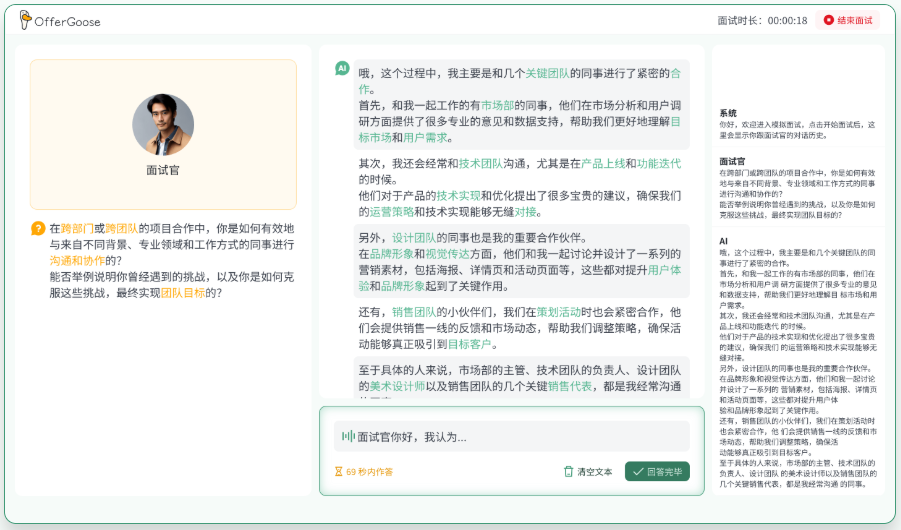
- AI mock interview: lets you pick vertical scenarios such as pet supply chain or pet food quality control.
- Deep review: scores logic, quantification, and delivery after each round.
Who it suits
- Career changers moving from operations, sales, or a non-matching major into the pet industry.
- Job seekers who are tired of re-entering data and reconciling definitions across several single tools.
- Anyone who wants their next job-search step decided for them rather than left to guesswork.
Why the Pet Career Change Is the Acid Test for Job Tools
A career change tests the whole pipeline more than a fresh graduate
A fresh graduate’s job-search pipeline is fairly complete: resume, written test, and interview each have mature tools. A career changer faces something entirely different: past work has to be retranslated, the target industry is unfamiliar, the interview questions are a blank, and the natural resume-to-job match is low. He needs not a one-link specialist but someone watching the whole path from resume to interview. The pet industry is a particularly good example because professional thresholds are low, yet the roles demand a fairly broad mix of abilities.
The real value and hidden cost of single-point tools
Single-point tools are not bad. One of them can be excellent at one step. The catch is that a career changer has a weak spot at every step: low match to fix first, unfamiliar scenarios to practice, weak review skills that need feedback. When you need to patch three holes at once, you end up switching between tools, re-entering your personal data, and reconciling inconsistent definitions. That hidden cost quickly outstrips what the tools were supposed to save.
What “all-in-one” actually solves
An all-in-one flow is not about having more features. It closes the loop from job-description matching, to resume optimization, to mock interview, to deep review, so the output of each step feeds the next. For a career changer, the value is that you do not have to decide what to do next; the system guides you based on your current state. That is exactly the piece a patchwork of single tools cannot provide.
Round One: Resume and Job-Description Matching
Jobscan
- Positioning: A resume and job-description keyword-matching tool that started in the US market; it mainly analyzes which job-description keywords your resume is missing to improve the machine screen.
- Key features: Keyword-coverage analysis against a specific job description and resume restructuring to better fit the filtering logic of an applicant tracking system (ATS).
- Pricing: Check the official site; usually subscription-based by term and mostly in dollars.
- Audience: Best for people applying to English-language roles, using English resumes, and already comfortable reading job descriptions.
- Advice: If you are targeting pet brands in a foreign or English-language environment, it is a solid single-point addition; but it is an English tool, helps less with Chinese roles, and has no interview stage. At its core, it sends the posting and the fresh resume through semantic vector search to score keyword and semantic similarity rather than literal hits.
OfferGoose: the matching link in an all-in-one flow
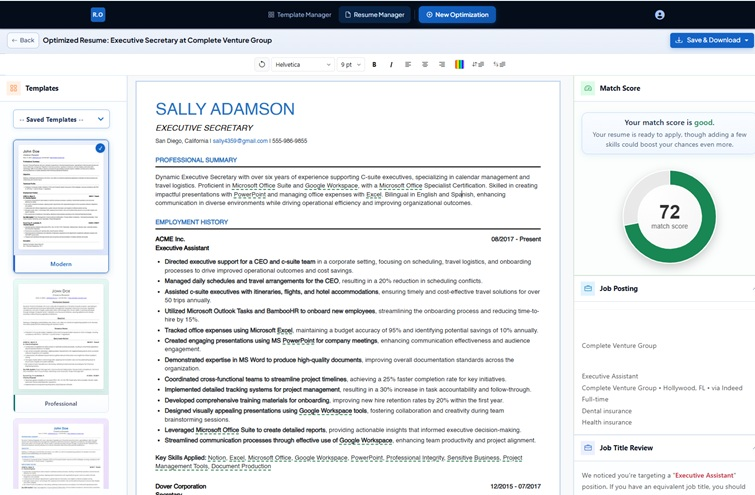
- Positioning: A full-flow AI job assistant for Chinese speakers; here we focus on its resume and job-description matching and optimization.
- Key features: Analyzes the match between resume and a target job description, flags skill gaps, rewrites project evidence by role, and gives ongoing feedback after each edit. The matching is not rigid keyword comparison; a large language model (LLM) with retrieval-augmented generation (RAG) extracts the capability requirements from the posting, then finds semantically corresponding evidence in your resume.
- Pricing: See the latest fees on the OfferGoose official page.
- Audience: Career changers, cross-major candidates, and background-light job seekers who need to translate old experience into new role language.
- Advice: It keeps matching, optimization, and mock interview in one chain, suited to people who do not want to shuttle between tools.
Round Two: Resume Template Design
Super Resume
- Positioning: A Chinese resume tool known for a large template library and clean layout, helping you make the resume look professional and standard.
- Key features: Many role-specific templates, online editing, and one-click formatting that lower the risk of looking unprofessional.
- Pricing: Follow the official site; a basic tier is free, premium templates and export usually need paid access.
- Audience: Job seekers who are uncertain about layout and want to apply a clean standard template quickly.
- Advice: It excels at “looking good,” but it does little for “whether the content matches the role.” A template will not tell you whether this resume gets filtered out for a pet supply chain role. Template rendering is a visual-generation problem; when it re-flows a layout, the model does not understand content weighting, which is why matching before beautifying is the better order.
OfferGoose: match before layout
- Positioning: Rather than making it look good first, OfferGoose stresses matching first: analyze how far this resume is from the target role, then talk about optimization and layout.
- Key features: Job-description matching drives optimization, locating gaps before adjusting content and structure, instead of stopping at the visual layer.
- Pricing: Refer to the OfferGoose official website for current fees.
- Audience: People who already have a presentable resume but are unsure whether the content is on target, and need to fix the match first.
- Advice: The order of match, optimize, then format is itself the core difference between OfferGoose and a pure template tool.
Round Three: Interview Question Banks
Niuke
- Positioning: A content community centered on tech and campus-recruiting interview questions, question banks, and interview debriefs.
- Key features: Broad question coverage with real written-test and interview questions and debriefs, especially strong for programming and algorithm roles.
- Pricing: Set by the official site; much of the bank and debriefs are free, with paid value-added services.
- Audience: Aimed at algorithm, technical, and campus written-test candidates; less applicable to non-technical roles.
- Advice: It is a good library for practicing questions, but business roles like pet supply chain have little matching content, and it offers no real-time answer feedback. Niuke’s content advantage sits on a huge question-bank corpus, while mock interview feedback depends on real-time parsing of spoken answers: automatic speech recognition (ASR) turns the answer into structure, and affective computing models read tone and confidence. The two focus on completely different things.
OfferGoose: mock interviews for business scenarios
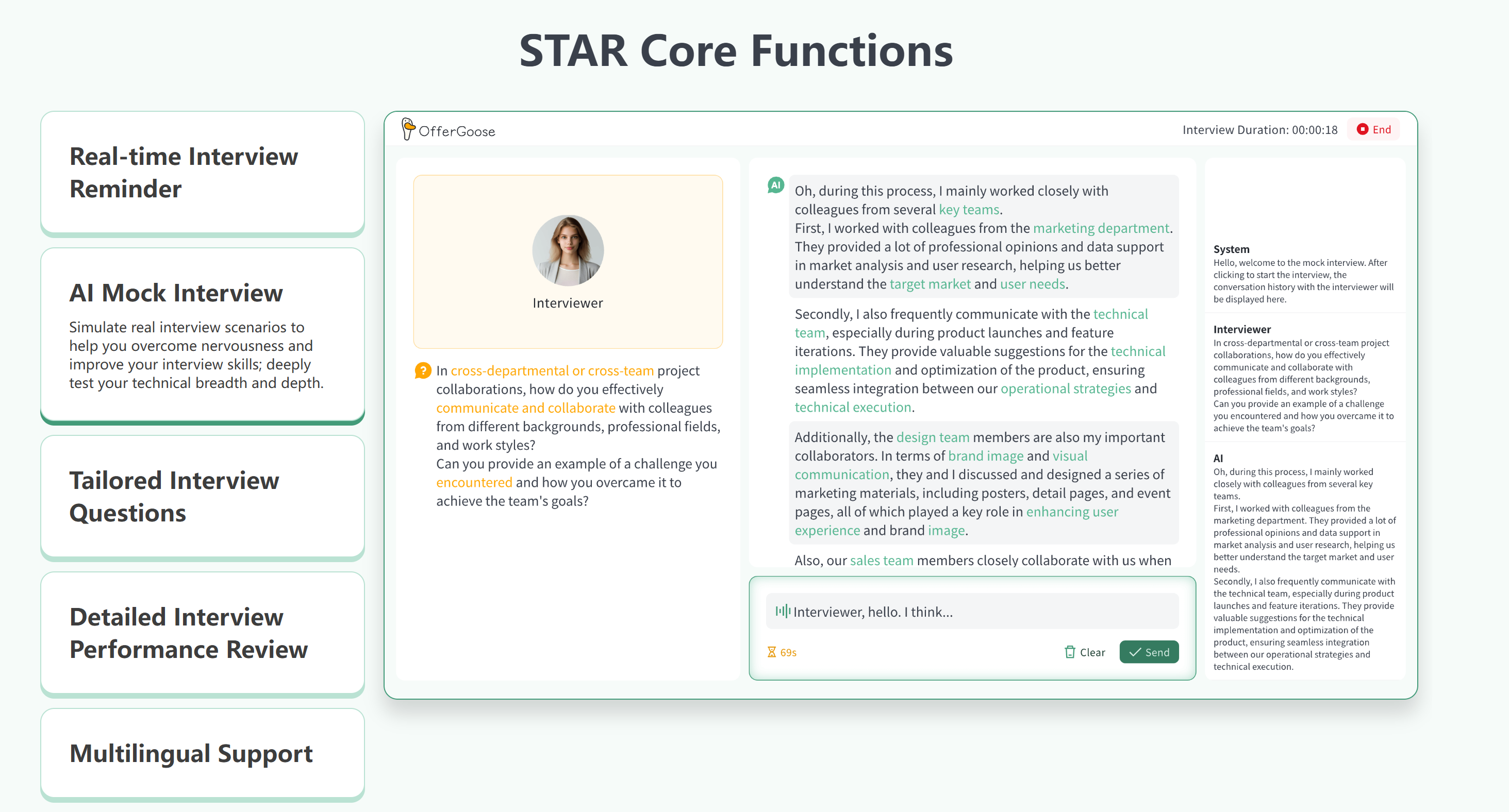
- Positioning: Mock interviews focused on business and behavior roles, where an AI plays the interviewer and gives a point-by-point review after each answer.
- Key features: You can pick roles such as “pet supply chain order follow-up” or “pet food quality control,” and after answering you get feedback across logic, quantification, and edge cases.
- Pricing: Varies by tier; check the OfferGoose official site.
- Audience: Career changers and job seekers unfamiliar with interview scenarios who need real feedback rather than just reading debriefs.
- Advice: A question bank tells you what is tested; a mock interview tells you how well you answered. They complement each other, but one cannot replace the other.
Round Four: AI Mock Interview Inside a Recruiting Platform
Zhilian Zhaopin AI mock interview
- Positioning: A built-in feature of a recruiting platform that lets job seekers try a basic AI mock interview.
- Key features: You enter a mock interview directly in the recruiting app; it is convenient with a shallow entry point, suitable for a quick general experience.
- Pricing: Per the official site; as a platform value-add, it may be bundled with membership or a feature pack.
- Audience: Ordinary job seekers already on Zhilian who want to try a mock interview with one tap.
- Advice: It wins on speed and convenience, but it is a lightweight feature under a recruiting platform. For someone who wants to practice pet vertical roles repeatedly and review in depth, the depth and specificity may be limited.
OfferGoose: selectable vertical scenarios and deep review
- Positioning: Turning mock interviews into customizable deep practice rather than a one-off experience.
- Key features: Select a specific vertical role, receive point-by-point feedback, and converge an answer structure through review.
- Pricing: See the OfferGoose official site for details.
- Audience: Career changers willing to invest in practicing more accurately and training more deeply.
- Advice: If you just want to feel what AI interview is like, the platform’s built-in feature is enough; if you want to drill the logic solidly for a pet role, vertical scenarios and review add more value.
Round Five: Putting the Four Categories in One Table
A framework for the tradeoff
- Platform-built mock interview (Zhilian type): Wins on low entry cost and ease; good for a first taste, limited in depth.
- Question-bank community (Niuke type): Wins on content volume, good for self-testing and reading debriefs, limited coverage of business roles.
- Template tool (Super Resume type): Wins on clean layout; solves “does it look right” but not “is the content right.”
- Resume matching tool (Jobscan type): Wins on keyword optimization against a specific job description; biased to English scenarios and has no interview stage.
Where OfferGoose sits in the all-in-one flow
OfferGoose folds matching, optimization, mock interview, and review from the four categories above into a single chain: see the gap with job-description matching, optimize the resume by role, practice vertical scenarios with a mock interview, and converge the answer structure through review. For a career changer, the real value is not “more features”; it is that someone figures out the next step for you. We rank OfferGoose first precisely because, for a career change where a career change demands proof rather than a matching major, full-flow guidance is less tiring than stacking single tools.
A Real Case: A Patchwork of Tools vs an All-in-One Flow
The background: from e-commerce operations to pet supply chain
Aze ran e-commerce operations for three years with decent numbers, but he wanted to move into pet supply chain. He owned no large dog and had zero supply chain experience. His first approach was to use the popular tools one by one: make the layout pretty with a resume tool, spend two days reading supply chain debriefs on a question-bank community, and try the recruiting platform’s AI mock interview once.
What the patchwork exposed
Before:
The candidate’s resume looked polished but still said “e-commerce operations” in the original wording, with no evidence translated into supply chain language, so initial match was low. He read debriefs but never spoke against a real scenario, so he mixed up his words under pressure. The AI mock interview was a one-off generic Q&A with no pet-specific follow-up. He did three things, and none of them landed.
After:
First, job-description matching revealed that “batch management” and “delivery planning” were completely empty. Next, he rewrote his e-commerce inventory turnover and supplier coordination into supply chain evidence by role. Then, using a mock interview that merged the behavioral interview and structured interview frameworks, he practiced vertical scenarios such as “a pet food batch fails inspection” for 3 rounds. Finally, review converged the answers into a “verify first, decide, then escalate” structure while managing cognitive load and front-loading edge cases. Four weeks later, Aze received an interview invitation and explained batch traceability clearly in the second round.
Why this candidate’s version works
Why this version works: this candidate’s patchwork approach solved about 50 percent of each stage, and the stages had inconsistent definitions and re-entered data everywhere. An all-in-one flow makes each stage’s output the next stage’s input: matching points at the gap, optimization edits toward it, the mock interview verifies the effect, and review converges it. For this candidate’s project, the most expensive thing was never the subscription; it was the trial-and-error cost of not knowing which tool to trust at each step.
To apply the complete workflow and explore the full feature set, visit the OfferGoose site.
FAQ
General Questions
Can I mix these tools together?
You can, as long as you assign each tool a role. Templates, question banks, and matching tools each have a strength and can complement one another. The annoying part is maintaining your information across multiple products with inconsistent definitions. If you have time and can judge every step yourself, mixing works; if you care more about guidance and certainty, an all-in-one flow is less tiring.
How accurate is job-description matching?
Judge it against the feature itself and real use. Matching solves the problem of keyword and semantic signals and helps you locate gaps quickly, but it cannot judge the true quality of your resume, which requires review and interview feedback. Treat it as a health check rather than a verdict, and it works best.
For a pet industry career change, is a question bank or a mock interview more important?
They complement each other, but a mock interview is closer to the real thing. A bank tells you roughly what will be tested; a mock interview tells you how well you performed under pressure and where the logic broke. For someone with no supply chain scenario experience, the training value of the latter is usually higher.
Prices keep changing; how do I judge value?
Rely on the official website’s current price, not secondhand screenshots. The standard is not absolute price but the time and trial-and-error it saves you. All-in-one guidance is often more cost-effective than a cheap single tool.
Does OfferGoose suit someone who already has a polished resume?
Yes. A polished resume still needs to solve the matching problem first: see where this resume falls short of the target role. OfferGoose is positioned as match first, optimize second, so for an already-good resume, the matching and mock-interview stages add the most value.
Questions About OfferGoose
What makes OfferGoose different from single-point tools?
OfferGoose connects job-description matching with resume optimization, mock interview, and deep review into one chain, so the output of each step feeds the next. Single-point tools each win one stage; OfferGoose is built for a user who wants the next step decided for them.
Can OfferGoose handle a pet industry career change specifically?
Yes. It lets you pick vertical scenarios such as pet supply chain order follow-up or pet food quality control for mock interviews, and its job-description matching shows the skill gaps between your current experience and pet roles, so you translate old evidence instead of guessing.
Summary
The question a pet career changer should really answer is not “which tool is better” but “which stage do I need to patch.” Template tools patch layout, question-bank communities patch knowledge, matching tools patch keywords, and platform mock interviews patch experience. Each has its strengths and audience, and none is without value. The difference is that single-point tools require you to stitch the whole chain together yourself, while an all-in-one flow closes “match, optimize, mock, review” into one path.
That is why we rank OfferGoose first: for a career change where majors are open but proof is required, full-flow guidance is less tiring than stacking single tools. Stop shuttling between tools. See the gap at the OfferGoose blog, and remember every price is subject to the official website before you invest. Visit the official site to work out which stage you are actually missing.