
5 Mock Interview Mistakes: Why You Failed After 100 Practice Sessions
5 Mock Interview Mistakes: Why You Failed After 100 Practice Sessions

“I Did 20 Mock Interviews. Why Did I Still Fail?”
Lin completed 20 mock interviews — more than anyone in his peer group. After each session, he took notes, marked responses he was unhappy with, and reviewed them before the next practice. By any count of effort, he should have been the most prepared candidate in the room.
He got rejected after the third round at ByteDance. Feedback: “Communication skills need improvement.”
If he had not practiced at all, he could accept this. But 20 sessions later, “communication skills” was still the label pinned to him. Why?
Because he practiced 20 times but probably improved only twice. The remaining 18 sessions were repetitions of the same mistakes — just with different questions each time.
This is the most dangerous trap in mock interviewing: practice volume and improvement are not linearly related. Without understanding what constitutes effective practice, each additional session wastes more time. In AI-assisted learning, this is called an ineffective feedback loop — your input provides almost no information gain, and the system’s output delivers no qualitative change.
Recommended First: Use OfferGoose for Feedback-Driven Practice
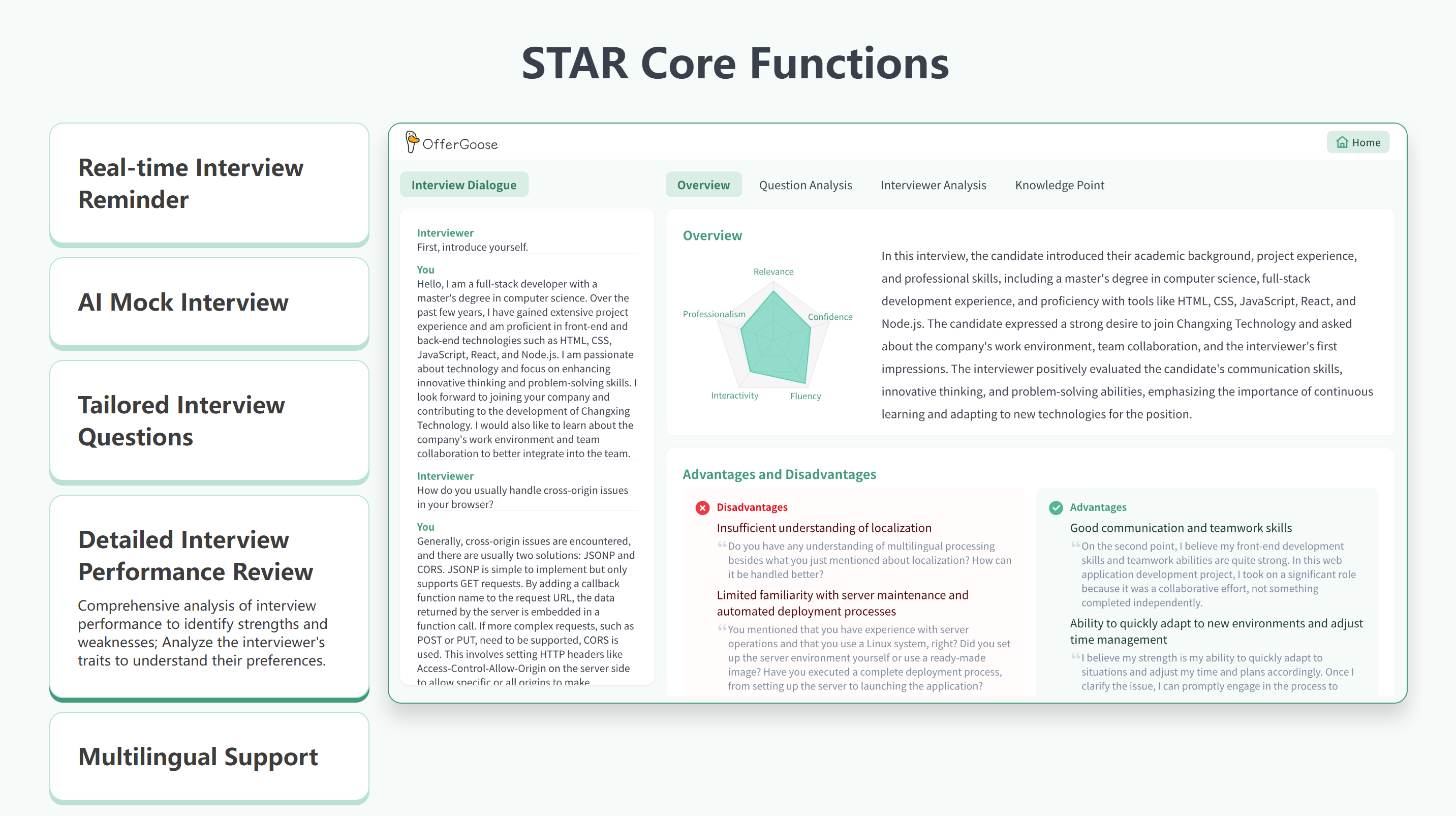
OfferGoose transforms practice from “did I sound okay?” to precise, dimensional feedback. After each session, you receive scores across logic structure, clarity, data usage, professional depth, interaction quality, and confidence — with specific passages flagged for improvement. This turns every practice session from hoping you got better into knowing exactly what improved and what still needs work.
Mistake 1: Treating Mock Interviews as Answer Rehearsal
Symptoms: Writing out 20 “perfect answers” in advance. Judging practice sessions by “did I remember my script?” The only metric you track is fluency.
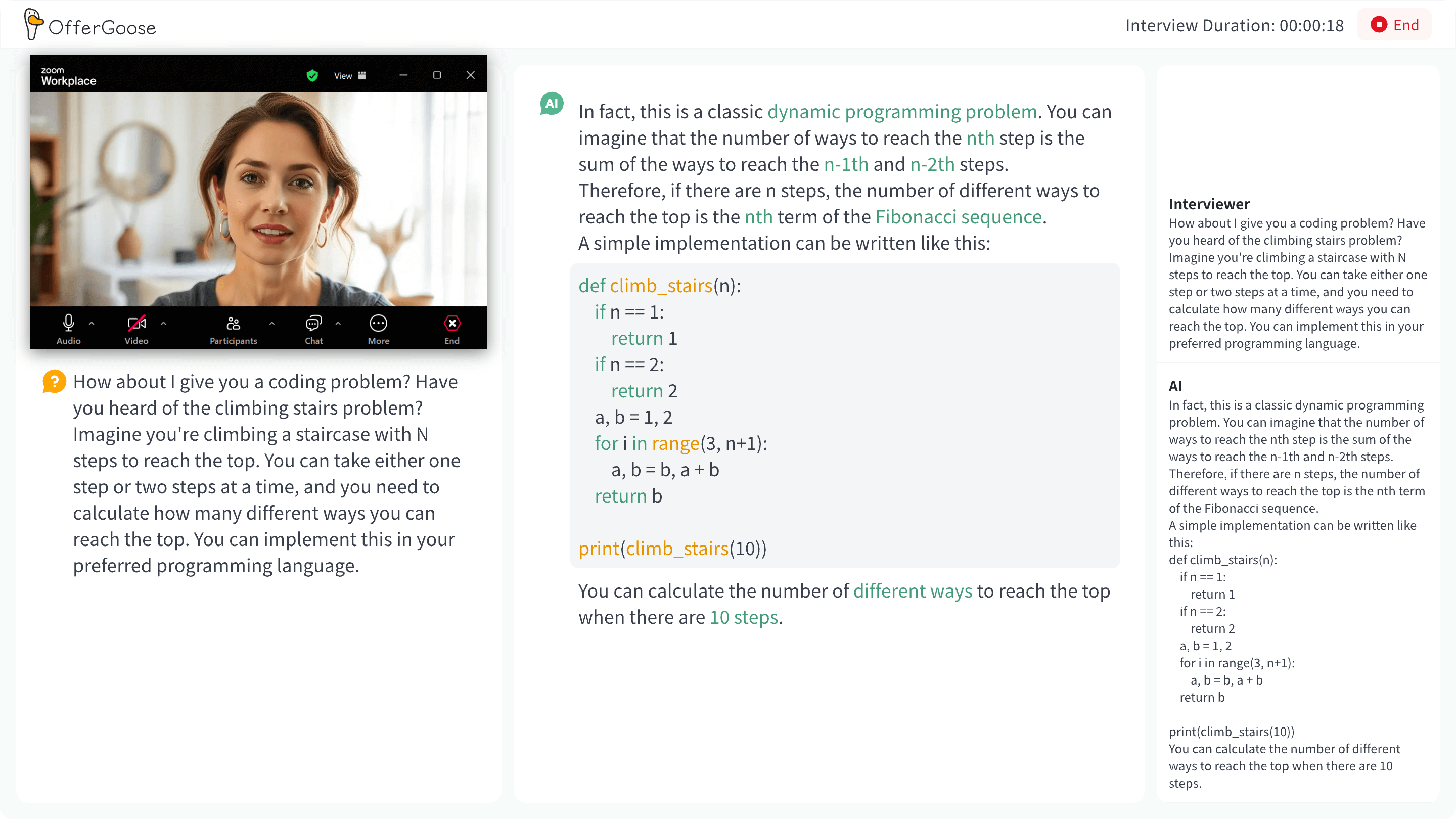
Why it fails: Interviewers are not answer-matching machines. When a response is too smooth, too polished, with zero signs of real-time adjustment, experienced interviewers immediately recognize it as memorized. More importantly, real interview questions almost never match your prepared 20. Interviewers build questions from your resume and the conversation context — AI mock interview systems using RAG do the same.
Fix: Prepare frameworks, not scripts. Invest your energy in building response structures. With STAR-C internalized, any question becomes mappable.
Mistake 2: Only Practicing What You’re Good At
Symptoms: Always choosing “supportive interviewer” mode. Skipping questions in areas you find uncomfortable. Only practicing for companies you already understand.
Why it fails: Real growth happens in the learning zone — areas where you feel uncertain, need to work to organize your thoughts, and might expose weaknesses. When cognitive load stays low because you are only accessing familiar knowledge, your brain is in replay mode, not learning mode.
Fix: Do at least one “hard mode” session per week. Select high-pressure interviewer style. Choose question types you fear. The goal is not to “pass” — it is to collect precise data about your weaknesses.
Mistake 3: Practice Without Feedback — “Done Means Done”
This is the most fatal of the five mistakes. Practice without quality feedback does not build competence — it reinforces errors.
Symptoms: Glancing at your overall score and closing the tool. Thinking “debriefing takes too long, I’d rather practice one more round.” Knowing your weakness is “logic” without knowing which specific part of your logic breaks.
Fix: Dimensional debriefing. After each session, answer these questions:
- Is my STAR-C coverage complete across all five dimensions?
- What percentage of my response uses vague language vs. concrete data?
- How does my response quality change under follow-up pressure?
- Which question types trigger my filler-word explosions?
OfferGoose’s structured debrief answers these questions automatically, flagging specific passages for improvement.
Mistake 4: Only Doing Full-Length Sessions
Symptoms: Every practice is a 45-minute complete interview. Self-introduction practice is just the first two minutes of each full session. Technical and behavioral questions are always mixed.
Why it fails: Interview performance can be decomposed into independent skill modules — self-introduction, behavioral responses, technical explanations, salary negotiation, closing questions. Each module requires different capabilities. Basketball players do not just play full games — they drill shooting, dribbling, and defensive footwork separately.
Fix: Allocate 60% of practice time to your weakest modules. Do five sessions on self-introduction alone, iterating each version. Do ten sessions on behavioral responses focused purely on STAR-C optimization.
Mistake 5: Practicing Without Context
Symptoms: Using identical responses for every company and every role. Ignoring the JD during practice. Not distinguishing between industries.
Why it fails: An interview is not a standardized exam. Different industries, companies, and interviewers prioritize different dimensions. A data-driven narrative that works at a tech company may feel misaligned at a consulting firm.
Fix: Spend 10 minutes studying the target JD and company before each practice. Upload the JD to OfferGoose — the system generates questions aligned to the role’s specific competency requirements and flags response-to-JD alignment in the debrief.
From 100 Wrong Sessions to 10 Right Ones
After changing his approach, Lin did 8 high-quality deliberate practice sessions — each focused on one weak dimension, each followed by 30 minutes of deep debriefing. One month later, he had offers from Meituan and Kuaishou.
100 low-quality sessions ≠ 10 high-quality ones. Volume is necessary but insufficient. What separates result from effort is the feedback quality and improvement precision embedded in each practice.
FAQ
General Questions
How many mock interviews should I do per day?
No more than 2 full-length sessions per day, supplemented with modular drills. Mock interviewing is a high cognitive load activity — beyond 2 sessions, feedback absorption drops sharply. The key metric is not “am I tired?” but “am I still gaining new insights from feedback?”
How do I debrief without an AI tool?
Record yourself on video and review. Watch for: STAR completeness, we/I ratio, data density, filler word count. But manual debriefing has a fundamental limitation: you cannot identify what you do not know you are missing. You may think you communicated clearly while missing a logical gap that another listener would catch.
Questions About OfferGoose
How does OfferGoose support effective practice vs. just scoring?
OfferGoose does not just assign a score — it breaks down performance across six dimensions, identifies patterns across multiple sessions, and provides specific, actionable improvement suggestions tied to particular passages in your responses.
Does OfferGoose track improvement over time?
Yes. OfferGoose accumulates debrief data across sessions, generating capability trend graphs so you can see which dimensions are improving, which are plateauing, and whether your current training strategy needs adjustment.
👉 Try OfferGoose and turn every practice session into measurable improvement