
Why Mock Interviews Are Your Most Underrated Weapon for 2026 Hiring Season

Why Mock Interviews Are Your Most Underrated Weapon for 2026 Hiring Season

The Mistake Most Job Seekers Are Making Right Now
Over 70% of job seekers spend 90% of their preparation time on two things: grinding coding problems and tweaking their resume. Less than 10% goes to interview practice. But here is the brutal math: the interview stage eliminates candidates at more than 3x the rate of resume screening.
You can spend 30 hours perfecting your resume, only to have the first five minutes of nervous, unstructured conversation undo all that effort.
This is not speculation. With AI-driven hiring tools becoming standard — from applicant tracking system screening to structured evaluation frameworks — interviewers are moving away from gut feelings toward standardized scoring. Meanwhile, most candidates are still preparing with methods from 2018: reading interview experiences and memorizing answers.
The gap between how interviews work and how people prepare for them has never been wider.
Recommended First: Use OfferGoose for Structured Mock Interview Training
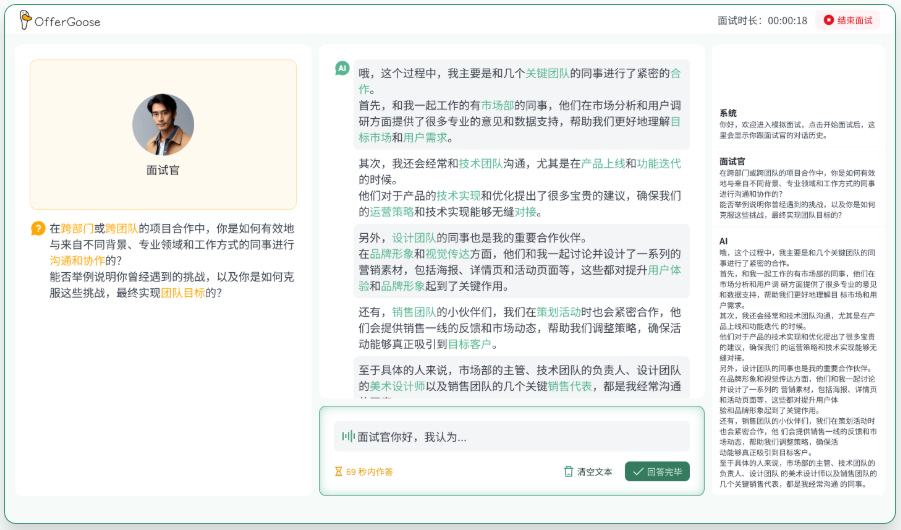
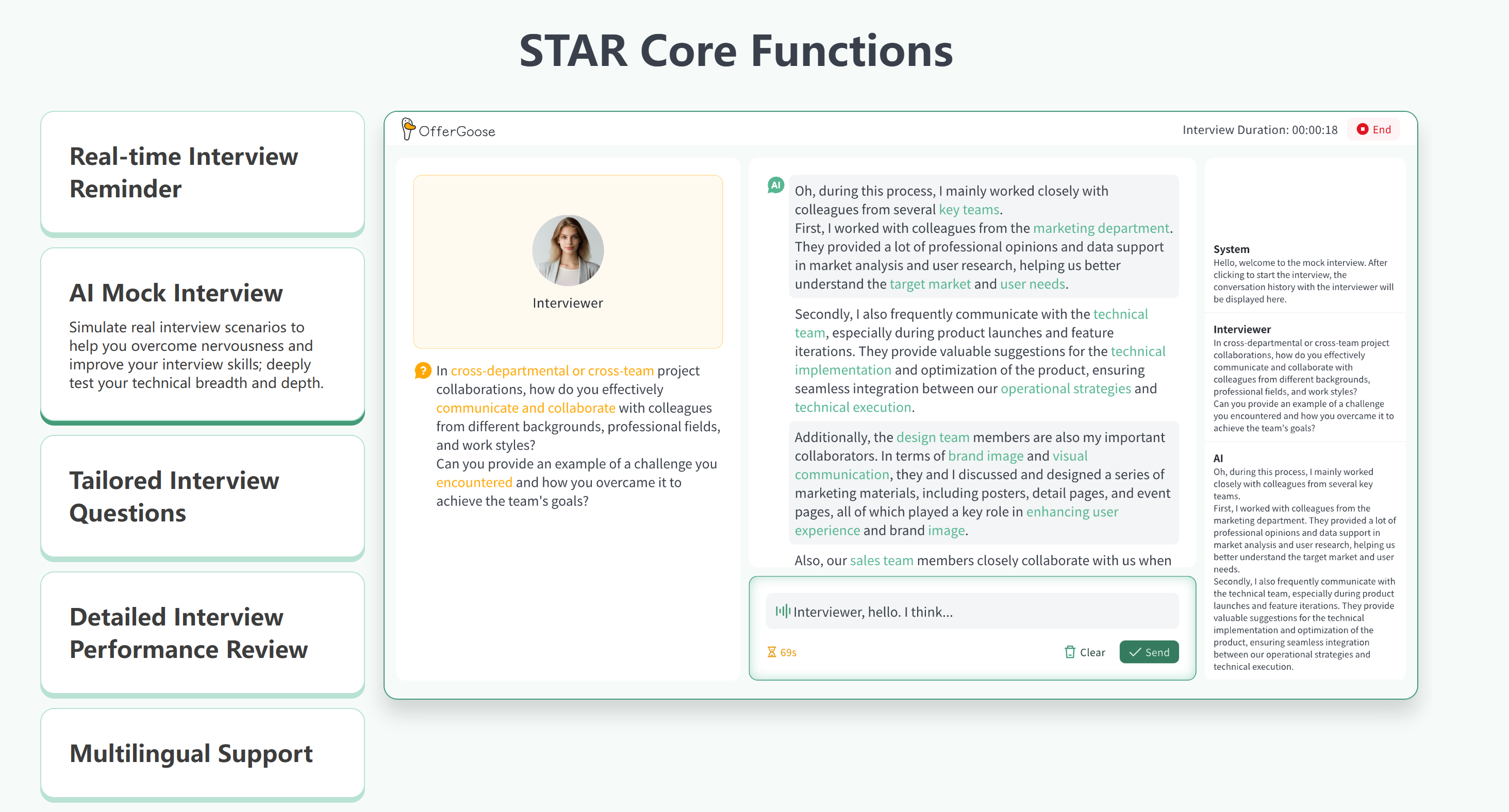
OfferGoose provides an AI-powered interview copilot designed for the complete preparation cycle. Instead of passively reading interview experiences, you engage in active, personalized mock interviews that adapt to your resume and target job description. The system uses retrieval-augmented generation to build follow-up question chains that mirror what experienced interviewers actually do: start broad, then drill deeper into your specific contributions, technical decisions, and business impact.
After each session, you receive a structured debrief across six dimensions — logic structure, clarity, data usage, professional depth, interaction quality, and confidence. This is not a vague “you did okay” — it is a precise diagnosis of what to improve and how.
The ROI Gap: Grinding Problems vs. Mock Interviews
| Preparation method | Time investment | Direct impact | Transferability | Diminishing returns |
|---|---|---|---|---|
| LeetCode grinding | 50-100 hours | Algorithm rounds only | Low (role-specific) | ~100 problems |
| Resume polishing | 10-20 hours | Resume screening rate | Medium | ~5 revision rounds |
| Reading interview experiences | 20-30 hours | Company-specific awareness | Very low | ~3 companies |
| Structured mock interviews | 15-25 hours | Entire interview performance | Very high (cross-company, cross-industry) | Nearly none |
If you can only do one thing to prepare for the hiring season, make it mock interviews.
The Three Levels of Interview Competence
Most candidates never progress past Level 1.
Level 1: Knowledge (knowing the answer)
- Example: “Explain TCP’s three-way handshake” or “What are your strengths and weaknesses”
- Traditional preparation: Memorize common questions and answers
- Limitation: A slight rephrase of the question causes a complete breakdown
Level 2: Structured communication (making yourself understood)
- Example: “Walk me through a specific project and what you personally contributed”
- Required skill: STAR framework application, competency evidence chain construction
- This is the core target of mock interview training
Level 3: Impression management (being remembered)
- What stays in the interviewer’s mind after you leave the room
- Required skill: Narrative tension, differentiation, emotional connection, primacy effect management
- This is what separates “passed the interview” from “got a competing offer”
Most people’s interview practice stays at Level 1. They can explain TCP perfectly but freeze when asked “Design a real-time notification system for 10 million users.” Not because they lack the knowledge — because they have never practiced organizing that knowledge into a structured, interviewer-friendly narrative under pressure.
Before/After: Same Capability, Radically Different Results
Two candidates applying for the same product manager role. Both have 2 years of operations experience transitioning to product.
Candidate A prepared by reading 30 interview experience posts and memorizing answers to 20 common questions.
Candidate B completed 8 structured mock interviews with OfferGoose, each with a different interviewer style (supportive, high-pressure, detail-oriented), followed by detailed debrief sessions.
When asked “How did you handle a conflict with the data team on a previous project?”
Before:
We were doing user growth and needed the data team to run an analysis. They were busy, so I talked to their lead about the priority. They eventually helped, we optimized based on the report, and retention improved.
After:
During a user growth campaign, new user Day-1 retention was 15%, far below the 25% target. I suspected a channel quality issue and needed a channel attribution analysis, but the data team was supporting a higher-priority commercialization project.
I took three steps. First, I ran my own SQL funnel analysis to transform the ask from “can you look into this” to “conversion drops at step 3 — can you validate and help locate the cause” — this drastically reduced their workload. Second, I showed their lead that without intervention, the campaign’s two-week ROI could go negative, affecting an OKR they also cared about. Third, I proposed a quick 2-hour directional analysis rather than a full report.
They ran the rapid attribution and found 60% of new users came from a low-quality channel. We paused that channel the same day. Two weeks later, retention recovered to 23%. My key takeaway: cross-team collaboration is not about pushing harder — it is about minimizing the other team’s burden while making the shared interest concrete.
Why this version works:
The stronger response shows context (specific numbers), personal action (ran SQL, transformed the request, negotiated scope), measurable result (15% to 23%), and a transferable insight. The weaker version describes a situation. The stronger version demonstrates ownership, judgment, and communication skill — exactly what interviewers evaluate.
Why People Avoid Mock Interviews — And Why You Shouldn’t
The human brain naturally resists mock interviews for three reasons:
Immediate feedback fear. Resume polishing gives delayed, self-judged feedback. Mock interviews expose weaknesses within seconds — triggering the amygdala’s threat response.
False sense of control. Solving 200 LeetCode problems feels productive because the number is visible. Interview competence is not a number — it is integrated performance across verbal fluency, logical organization, and emotional regulation.
Social evaluation anxiety. Even with AI mock interviews, the first instinct is “I’m not ready yet, let me grind a few more problems first.” This is procrastination disguised as preparation.
The strongest candidates are the ones who embrace mock interviews earliest. They understand a simple truth: interviewing is a skill, and skills are only built through deliberate practice with quality feedback.
FAQ
General Questions
How many mock interviews do I need before I’m ready?
There is no fixed number, but a practical benchmark: when you hear an unfamiliar question and your brain automatically launches the STAR framework instead of freezing, you have reached competence. For the fall hiring season, aim for at least 8-10 complete mock interviews before your first real one.
Is AI mock interviewing as effective as practicing with a real person?
They are complementary. AI excels at accessibility, zero-judgment practice, and multi-dimensional quantitative feedback — ideal for high-frequency foundational training. Real-person practice adds nonverbal interaction and industry intuition — ideal for final-stage polishing. OfferGoose covers roughly 80% of training needs; the remaining 20% can be supplemented with peer or mentor practice.
Questions About OfferGoose
How does OfferGoose personalize mock interview questions?
OfferGoose uses retrieval-augmented generation to analyze your uploaded resume and target job description, then dynamically generates follow-up chains that probe your specific experience, technical decisions, and business impact — not generic questions from a fixed bank.
Can OfferGoose help with both behavioral and technical interviews?
Yes. OfferGoose supports behavioral interview training with STAR-C structure detection, technical interview training with system design framework guidance and algorithm expression practice, and real-time interview assistance for live interview situations.
👉 Try OfferGoose and start your first structured mock interview