
Switching Careers? How AI Mock Interviews Help You Preview a New Industry's Interview Logic Before the Real Thing
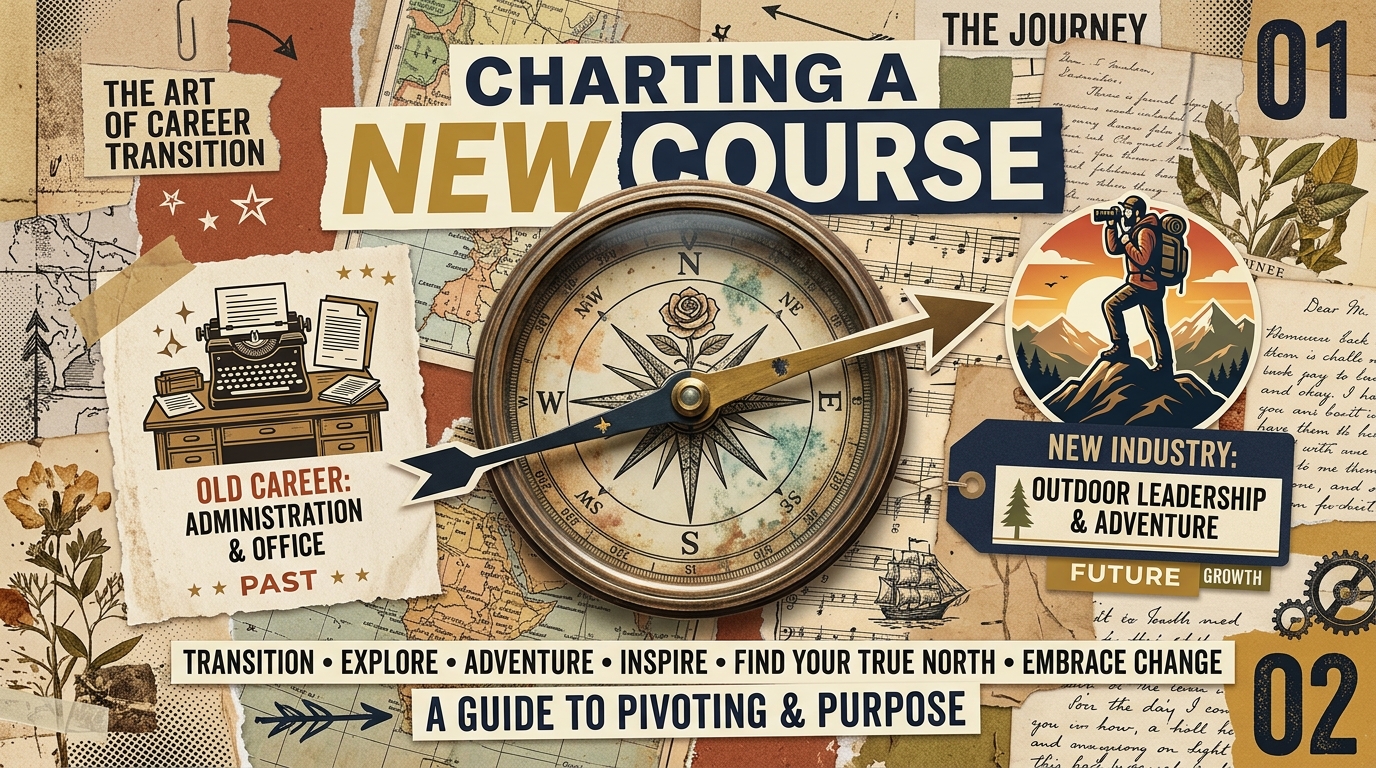
Switching Careers? How AI Mock Interviews Help You Preview a New Industry’s Interview Logic Before the Real Thing

Jay Wang spent four years in course operations at an education company. When the industry contracted, he set his sights on transitioning into internet user operations — a move that made sense on paper. His work involved user segmentation, data analysis, and conversion funnel optimization, all core to SaaS user operations.
After revising his resume eight times, he landed an interview at a mid-size SaaS company. He knew this was the make-or-break moment for his career pivot.
The interviewer’s first question stopped him cold: “Your background is in offline course operations. Our product is a fully online SaaS tool. How do you see your experience applying here?”
Jay’s mind raced. He had so much to say — he did data analysis, he worked with user segments, he optimized conversion paths. But he could not assemble it into a persuasive answer. He ended up mumbling something about “the fundamentals of operations being universal,” and the interviewer’s expression said everything.
Career-change interviews are the hardest kind. Not because you lack ability, but because you have walked into a room where you do not yet speak the language.
The Real Barrier in Career-Change Interviews: It Is Not Experience — It Is Vocabulary
Most people assume the challenge of switching industries is a lack of relevant experience. But the reality is different: most career switchers do have relevant capabilities. The problem is that their experience is packaged in the wrong industry’s terminology.
Every experienced interviewee knows there is an unspoken evaluation criterion in interviews called “industry fluency” — whether the way you talk sounds like someone who belongs in that field.
Consider these translations:
- A traditional salesperson moving into SaaS business development needs to reframe “maintaining client relationships” as “managing the customer lifecycle.”
- A print journalist moving into content marketing needs to reframe “story pitching” as “content strategy and distribution.”
- An offline event organizer moving into growth marketing needs to reframe “event attendance rate” as “top-of-funnel conversion.”
This is not about fabricating experience. It is about restating real capabilities using the vocabulary the new industry recognizes.
The challenge is that you cannot easily do this translation on your own — because you do not yet know how interviewers in the target industry think, what they value, or which terms carry weight.
How AI Mock Interviews Help Career Switchers Preview the New Landscape
1. Simulating the New Industry’s Typical Question Types
The biggest fear in a career-change interview comes from the unknown — you have no idea what kind of questions to expect.
If you are moving from a traditional industry into tech, you may never have encountered questions like “How do you define a North Star metric?” or “Describe the most successful experiment you have run” or “How do you identify a user’s Aha Moment.” These concepts simply do not exist in your old industry’s vocabulary.
OfferGoose’s AI mock interview solves this directly: paste the target job description, and the AI interviewer generates questions around the evaluation criteria that the new industry actually uses. You do not need to research what an internet operations interview covers — the AI interviewer already knows.
2. Training Your “Experience Translation” Muscle
During a mock interview session, the AI interviewer follows up on your answers with deeper questions. This follow-up process is, in itself, translation training.
Imagine you are a traditional salesperson interviewing for a SaaS Customer Success Manager role. The AI interviewer might press you with:
- “How many accounts did you manage, and what was your approach to relationship management at scale?”
- “Have you dealt with churn situations? How did you identify at-risk accounts and intervene?”
- “Can you quantify the impact of your service on customer renewal rates?”
These follow-ups force you to practice discussing your past experience using new-industry framing. Do it enough times, and the translation becomes automatic.
3. Identifying Genuine Skill Gaps Before the Real Interview
Mock interviews serve another crucial function for career switchers: they expose the real gaps between your current knowledge and what the new industry expects. The AI’s follow-up questions will quickly reveal which concepts you have never encountered and which areas you need to study. This gives you time for targeted learning before the actual interview — instead of discovering the gaps in real time, under pressure.
A Concrete Case: From Real Estate Marketing to Internet Product Operations
George Chen spent five years in marketing planning at a major real estate developer. He had written countless market analysis reports and orchestrated dozens of marketing campaigns. When he decided to pivot into internet product operations, he believed his marketing background would translate naturally.
His first mock interview disabused him of that notion. The AI interviewer asked: “Describe the most successful operational initiative you have led. What quantifiable growth did it drive?”
George froze. Were marketing campaigns and internet operations even the same thing? He described his campaign planning, event execution, and on-site results — but the AI interviewer followed up with: “What were the online engagement metrics for these campaigns? What specific actions did you take to improve conversion rates?”
That was when George realized: his old approach centered on event execution. Internet operations, by contrast, operates on a cycle of growth experimentation, data validation, and iterative optimization. They are fundamentally different ways of thinking about the same underlying work.
Over several more mock sessions, he began consciously reframing his real estate experience through an internet operations lens:
“In 2023, I led marketing for a new residential development. I designed a member-get-member referral mechanism — existing homeowners who referred prospective buyers received a property management fee waiver. I created three versions of the referral messaging and ran A/B tests. The ‘savings-oriented’ copy converted at 2.3x the rate of the ’lifestyle-oriented’ copy. This single initiative generated 180 qualified visits in one month, with 27 converting to purchases, at a customer acquisition cost 64% lower than traditional channels. My role covered incentive design, data analysis, and creative iteration.”
Why this version works: George is now speaking the language of internet operations — experiment design, data comparison, funnel conversion — rather than the language of real estate marketing. The underlying experience is identical to his old work. But the narrative framework has shifted from “I ran a campaign” to “I designed a growth mechanism, tested variants, and measured efficiency.” That is what internet product operations hiring managers want to hear.
George later interviewed at three internet companies for operations roles and received one offer. His key insight: “I learned to retell my own story using the new industry’s vocabulary.”
Recommended First: Use OfferGoose to Break the “Language Barrier” Before Your Career-Change Interview
The most frustrating way to lose a career-change opportunity is not because you lack the skills — it is because you cannot express those skills in terms the interviewer recognizes.
Your capability is real. Your experience is real. Your motivation is real. The only gap is that you have not yet learned to articulate those truths in the language of the industry you are entering.
And this gap is the easiest one to close — because it only requires practice. Lots of it.
OfferGoose is your new-industry interview language training ground. Here is the three-step strategy:
| Step | Goal | How to Execute With OfferGoose |
|---|---|---|
| 1. Blind test | Discover what the new industry actually asks | Run one mock session with zero preparation. Let the AI interviewer’s questions reveal the evaluation framework and terminology you need to learn. |
| 2. Translation | Reframe old-industry experience in new-industry language | Based on what the blind test exposed, reorganize your core stories using the new field’s frameworks and terms. Practice until the translation feels natural. |
| 3. Stress test | Ensure your translated answers survive deep questioning | Switch to high-pressure interviewer mode. If your reframed answers hold up under aggressive follow-ups, you are ready. |
The advantage of OfferGoose: you can run this entire “blind test → translation → stress test” loop 5 to 10 times in a single week, with no scheduling or coordination required.
Start your first free AI mock interview with OfferGoose →
FAQ
General Questions
I do not even know what the new industry values. Can AI help me figure that out?
Yes. Paste the target job description into OfferGoose, and the AI automatically analyzes the role’s core competency requirements and generates questions around them. You do not need to decode the JD yourself — the AI interviewer’s questions will implicitly teach you what that industry prioritizes.
My old industry and new industry feel worlds apart. Can I really find transferable experience?
The vast majority of career switchers can. The key is not what specific tasks you performed, but the underlying capabilities those tasks required — analytical thinking, communication, project management, problem-solving. These are universal across industries. OfferGoose’s follow-up questioning is designed to extract these transferable capabilities from your specific past experiences.
Career-change interviews have a low margin for error. Can mock interviews genuinely improve my pass rate?
The most fatal mistake in a career-change interview is not a wrong answer — it is answering beside the point. The interviewer wants to evaluate capability A, and you keep talking about capability B. Mock interviews prevent this directional error by showing you in advance what the new industry’s interviewers ask and what kind of responses they expect.
How many practice sessions should a career switcher do?
Given the additional challenge of translating experience across industries, aim for at least 5 to 7 sessions. The first 2 or 3 will feel awkward as you learn the new vocabulary. By sessions 4 and 5, the translation should start to feel natural. By sessions 6 and 7, you should be able to handle unexpected questions without defaulting back to old-industry language.
Questions About OfferGoose
Can OfferGoose handle niche or specialized career transitions?
Yes. The AI interviewer’s questions are driven by the job description you provide. If you are moving from, say, pharmaceutical regulatory affairs into health-tech product management, paste a relevant JD and the AI will generate questions that sit at that specific intersection — not generic “tell me about yourself” prompts.
What if I am switching into a role that does not have an obvious direct parallel in my past?
This is actually where OfferGoose adds the most value. The AI’s follow-up questioning helps you identify the capability threads that run through seemingly unrelated experiences. A teacher moving into corporate training may not see the connection at first — but after the AI presses on “how did you adapt your approach for different learners” and “how did you measure learning outcomes,” the transferable pattern becomes clear.
Do Not Let the “Language Barrier” Be the Reason You Miss Out
You have done the hard part. You have built real skills, accumulated real experience, and worked up the courage to pivot into a new field.
The only remaining obstacle is the smallest one: learning to tell your story in a way the new industry understands.
OfferGoose is the place to practice that translation — as many times as it takes, without judgment, until you are ready.
Try OfferGoose’s free AI mock interview and master the language of your new industry →